











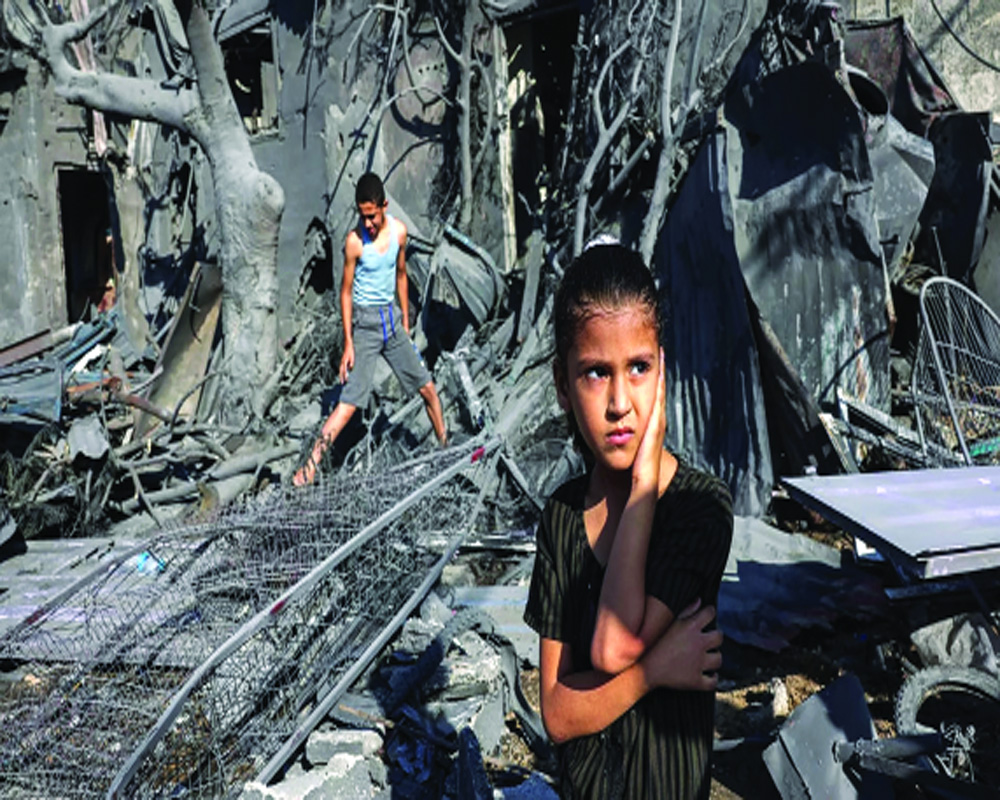
The Gaza truce between Hamas and Israel may be fragile but it is still welcome as it offers some relief to beleaguered people
The recent announcement of a potential truce between Israel and Hamas has brought a mix of cautious hope and lingering fear to those on both sides of the conflict. After months of violence and suffering following the devastating events of October 2023, which saw Hamas’s deadly incursion into Israel and the subsequent retaliatory offensive, the prospect of a ceasefire offers a moment of relief. However, the road ahead remains fraught with uncertainty. The conflict has left deep scars on both Israeli and Palestinian communities. For Israelis, the abduction of hostages—including women, children, and elderly civilians—has been a source of immense anguish. The release of 33 hostages as part of the initial phase of the ceasefire would bring some relief, but many fear the fragile agreement could collapse, leaving their loved ones in limbo. In Gaza, the humanitarian crisis is dire. The death toll exceeds 46,000, with women and children accounting for over half of the fatalities. Massive displacement has left 90 per cent of the population—approximately 2.3 million people—homeless. Entire neighbourhoods lie in ruins, and the lack of basic necessities has pushed residents to the brink of famine.
The proposed truce, brokered by the United States, Egypt, and Qatar, outlines a three-phased agreement. The first phase involves the exchange of hostages and Palestinian detainees, with the release of women, children, and the elderly prioritised. Subsequent phases would address the release of soldiers and other male captives, along with broader discussions to halt hostilities. A crucial component of the ceasefire includes a surge in humanitarian aid to Gaza. This would enable displaced Palestinians to return to their homes and help rebuild critical infrastructure. Yet, the long-term success of this agreement hinges on both sides’ willingness to engage in meaningful negotiations during the second phase. The fragile nature of previous ceasefires—such as the one in November 2023 that lasted only a week—underscores the difficulty of achieving lasting peace. Key obstacles include Hamas’s insistence on maintaining its military capabilities and Israel’s objective to dismantle Hamas’s governing structures. Both sides are under immense domestic and international pressure, but deeply entrenched mistrust makes compromise elusive. For hostages’ families, uncertainty looms large. Many remain haunted by the possibility that their loved ones may not survive captivity if the true fails. Meanwhile, Palestinians fear that a breakdown in talks could trigger renewed violence, exacerbating an already catastrophic situation. If the ceasefire holds, it could mark the beginning of a much-needed reprieve for Gaza’s beleaguered population. Immediate priorities include addressing food insecurity, medical shortages, and the rebuilding of homes and infrastructure. International aid would play a critical role in alleviating the humanitarian crisis, but long-term recovery would require substantial investment, political stability and lasting peace.



