Global indices have never carried as much influence as they do today. Rankings on development, hunger, democracy, the environment, happiness, and peace shape how nations are perceived, how policies are debated, and how investments flow. In moments of uncertainty, the world turns instinctively to these numerical summaries to make sense of global progress. Yet this dependence has grown precisely when the world itself has become more fragmented, more unequal, and more difficult to measure with conventional tools.
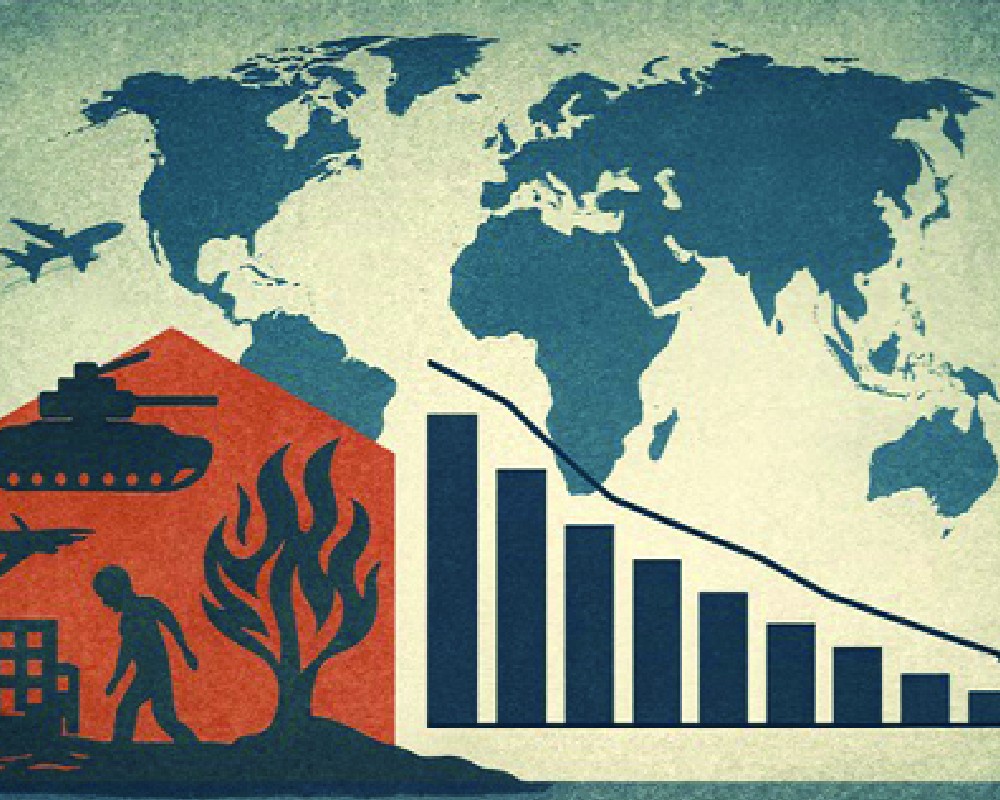
The backdrop to this reliance is a world in crisis. Humanitarian disasters from Gaza and Sudan to the Sahel and Myanmar have pushed global displacement to its highest levels since the Second World War. Conflicts in Eastern Europe, the Red Sea, and the Horn of Africa reinforce a broader pattern of instability that no longer feels exceptional but systemic. Climate distress deepens this sense of upheaval.
The year 2024 was the hottest ever recorded; extreme weather events have become almost seasonal, and their impacts fall hardest on the Global South - regions least responsible for historical emissions.
The global economy, too, is splintering. Sanctions, export controls, technology bans, and now tariff escalations reflect a widening trend of coercive economic statecraft. Strategic decoupling, rivalry over critical minerals and semiconductors, and the securitisation of supply chains have begun to replace the old narrative of globalisation.
Meanwhile, trust in global governance continues to erode. Institutions meant to uphold multilateral order — whether the UN system, the WTO, or global climate mechanisms - struggle to deliver equitable outcomes or restrain geopolitical exceptionalism.
It is in this volatile landscape that global indices assert their authority. They claim to offer clarity amid chaos, order amid disorder. But there is an overlooked reality: when the world becomes more complex, simplistic measurement becomes more dangerous. The very tools designed to interpret global reality are themselves riddled with methodological flaws, cultural assumptions, and structural biases, raising the question of whether they illuminate global progress or distort it.
When the World Is Fractured, Measurement Must Be Exact — Yet It Is Not
Global indices were once conceived as instruments to democratise development knowledge. Their mission was noble: simplify complex realities to create global reference points. However, the growing political and economic consequences of these indices mean their limitations are no longer academic concerns; they now have material and normative implications. At a time when the world desperately needs trustworthy, culturally plural, and empirically robust measurements, many internationally influential indices rely on methodological shortcuts, cultural assumptions, and opaque data foundations.
A clear example is the World Happiness Report (WHR), which has gained disproportionate global influence. According to its published methodology, the ranking is derived solely from a single subjective life-evaluation question — the Cantril Self-Anchoring Striving Scale — which asks respondents to place their life on a ladder from 0 to 10. This is not a multi-indicator composite index, nor does it incorporate objective well-being metrics into its ranking formula.
This simplicity enhances transparency but raises major concerns about cross-cultural comparability. Psychological research shows that populations differ in how they respond to self-evaluation questions: Nordic societies tend to answer more directly; East Asian societies may avoid high self-ratings due to cultural modesty norms; Latin American societies often give more affective responses. The WHR does not claim any cultural bias and presents the ladder as a universal tool, yet the possibility of cultural response biases cannot be dismissed - especially when life-evaluation patterns align more closely with cultural self-expression norms than with objective well-being indicators.
The Global Hunger Index faces a more fundamental problem than data inconsistency or statistical asymmetry: narrative overreach. The index presents itself as a definitive global barometer of “hunger”, yet the construct it measures is not hunger in any holistic or lived sense. Instead, it merges disparate indicators - child stunting, child wasting, child mortality, and population-level undernourishment - into a single score, even though these phenomena do not move together, do not share determinants, and do not reflect the same type of deprivation. Compressing multidimensional nutritional realities into one rank creates a misleading storyline: that a country’s complex food landscape can be captured by a solitary ordinal position. The result is less an analytical tool and more a narrative device — one that travels easily through headlines, reinforces simplistic comparisons, and shapes global perceptions while doing little to illuminate the structural causes of food insecurity.
Democracy and freedom indices reveal yet another concern. Freedom House, V-Dem, and the Economist Intelligence Unit generate global authority but depend heavily on expert-coded assessments. The identities of these experts, their epistemic frameworks, and their evidentiary standards are only partially disclosed. Many indicators hinge on interpretive questions - such as whether public discourse is “pluralistic” or whether media autonomy is “adequate” —that vary significantly with ideological predispositions. These indices often present precise numerical scores without confidence intervals, giving perception-based judgments the illusion of scientific certainty. Because they feed into broader governance tools like the World Bank’s Worldwide Governance Indicators, they influence sovereign ratings and investment patterns.
Environmental indices such as the Environmental Performance Index (EPI) and the Climate Change Performance Index (CCPI) face a different critique: they tend to apply uniform decarbonisation expectations to societies with vastly different historical emissions, development responsibilities, and energy transitions. By rewarding alignment with European policy pathways, they risk penalising countries that prioritise developmental equity or energy-access imperatives. Taken together, these examples show that the crisis of measurement is not about flaws in individual indices; it is structural, epistemic, and systemic. It raises a fundamental question: Who measures the world — and through whose worldview? Today’s global ranking ecosystem does not merely reflect global asymmetries - it reinforces them. The current global ranking system is deeply flawed because it rewards self-interest, privileging nations and institutions whose worldviews, data capabilities, and ideological assumptions align with the metrics they design.
A Measurement Architecture Dominated by One Part of the World
More than 85 per cent of the world’s population lives in the Global South, yet close to 90 per cent of global indices are conceptualised, designed, and produced by institutions in the Global North. This asymmetry shapes what is measured, which indicators are deemed meaningful, and which developmental pathways are legitimised. It generates narrative power: indices become the lens through which the world interprets itself.
It generates policy power: rankings influence negotiations, investments, and climate finance priorities.
And it generates civilisational power: most indices embed Western philosophical assumptions — individualism, liberal-democratic norms, institutional templates — even when applied to societies grounded in entirely different ontologies. Most importantly, it produces epistemic power: the authority to define progress itself.
Reimagining How the World Should Be Measured
The world needs not fewer indices but better indices — those transparent in methodology, explicit in epistemology, and cognisant of civilisational diversity. A new global metrics architecture must begin with radical transparency: raw data, methodologies, expert identities (with safeguards), margins of error, and sensitivity analyses must all be publicly accessible.
Cross-cultural response patterns must be recognised rather than ignored. Clear distinctions must be made between empirical indicators, model-generated estimates, and perception-based judgments. Above all, the Global South must move from being a passive consumer of indices to an active producer of them.
Plurality is the antidote to epistemic concentration. When multiple frameworks exist — rooted in Global South realities, civilisational ethics, ecological justice, and social responsibility — the world gains not confusion but balance. In an age of polarisation and fragmentation, the objective should not be to rank nations in a single global hierarchy but to understand them on their own terms.
Conclusion: Reclaiming the Right to Measure
At a time when the world is struggling with wars, environmental collapse, economic fragmentation, and failing global governance, the very tools we use to understand progress must themselves be trustworthy. Today, they are not. The crisis of global governance is mirrored by a crisis of global measurement. This crisis is also a clash between inadequate quantitative proxies and unexamined qualitative judgments — a reminder that measurement without context can distort more than it reveals.
Reclaiming the right to measure is therefore not only a statistical necessity but a civilisational and epistemic imperative. Only when the world measures itself through plural, transparent, and culturally grounded lenses will it be able to imagine a more equitable future.
Hemangi Sinha is Project Head, World Intellectual Foundation, and Pravin Kumar Singh is Senior Project Associate, World Intellectual Foundation; views are personal