As India reimagines its role in the Indo–Pacific, this quiet yet profound pivot signals not only a strategic response to China’s growing presence, but also a deeper civilisational reawakening rooted in partnership, not patronage
When Prime Minister Narendra Modi first outlined India’s SAGAR vision — Security and Growth for All in the Region — in 2015 during a visit to Mauritius, few could have predicted how it would evolve into a sweeping geopolitical doctrine encompassing not only the Indian Ocean but the western coasts of Africa and beyond. Nearly a decade later, India’s maritime strategy is undergoing a quiet yet profound transformation. From SAGAR, the nation is now navigating toward Mahasagar — literally, the “Great Ocean†— signalling a decisive pivot in India’s foreign and security policy with Africa in clear sight. The SAGAR initiative, initially conceived to promote maritime security and economic cooperation among Indian Ocean nations, has served as a foundation for India’s role as a “net security provider†in the region. But today’s reality demands more than regional stewardship. The increasing footprint of China in the Indian Ocean, from Gwadar to Djibouti, and the growing strategic relevance of the western Indian Ocean island states, have prompted India to recalibrate. The shift to Mahasagar (Mutual and Holistic Advancement for Security And Growth Across Regions) represents not just a change in terminology but a fundamental reimagining of India’s role in the Indo–Pacific.
At the heart of this transformation lies Mauritius, a small island nation with outsized significance. More than a maritime partner, Mauritius shares a cultural and civilisational bond with India that predates diplomatic relations. Home to a large Indian-origin population, Mauritius has become a trusted partner in India’s security calculus. Over the years, India has extended grants, built infrastructure, supplied patrol vessels and aircraft, and helped set up coastal surveillance radar systems across the Mauritian archipelago. But it is the development of the Agalega Islands — with an airstrip and jetty capable of supporting military-grade assets — that best symbolises the quiet assertiveness of the Mahasagar vision.
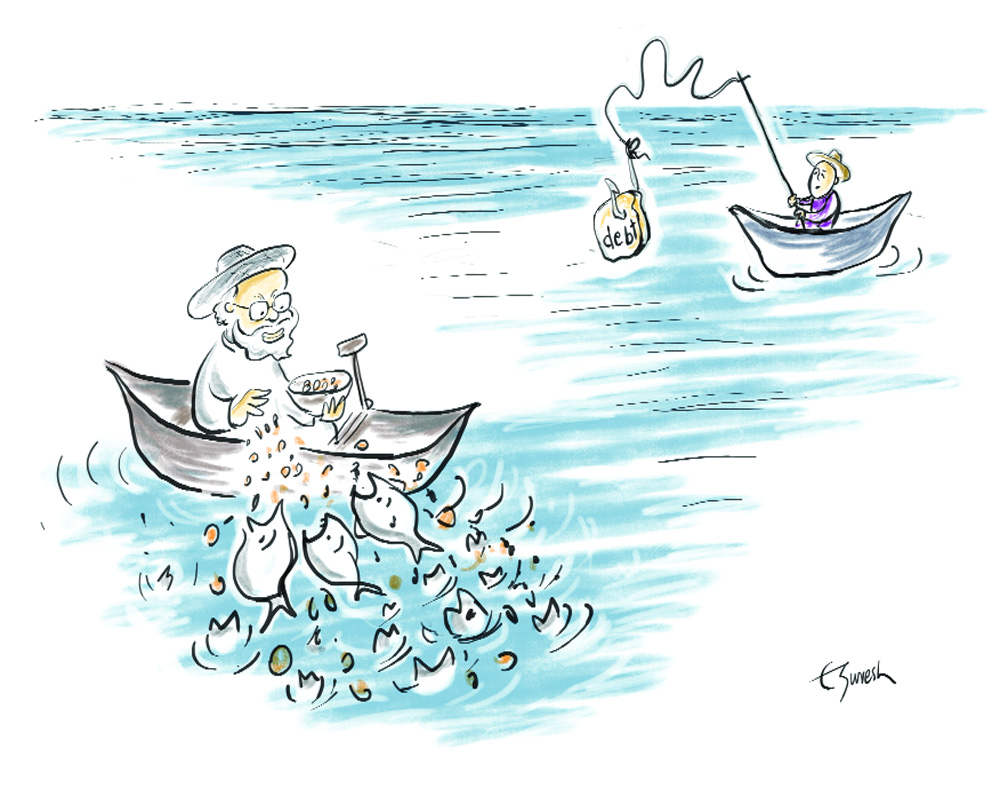
Critics argue that India’s investment in Agalega mimics the Chinese playbook of dual-use port development seen in Hambantota and Gwadar. However, the crucial difference lies in the nature of India’s partnerships. Unlike China’s debt-driven port diplomacy, India’s maritime engagement rests on mutual respect, development cooperation, and the principle of shared security. The Indo–Mauritian relationship is one of kinship diplomacy — one that grows not just from strategic needs but from shared history and people-to-people ties.
But the Mahasagar doctrine does not stop at Mauritius. It casts a wider net — one that spans from Seychelles and Madagascar to Kenya, Mozambique, and Tanzania. India is increasing its naval engagements, signing logistics and defence agreements, and offering capacity-building assistance across the African coast. The logic is strategic: the western Indian Ocean is not just a transit zone but a critical maritime highway for global trade, energy routes, and naval mobility. With China making aggressive inroads through the Belt and Road Initiative and military bases like the one in Djibouti, India is asserting its own footprint — not by coercion, but through collaboration. The pivot to Mahasagar also highlights India’s ambition to become a blue-water navy with global reach. Indian naval ships are now a common sight in African ports. Naval exercises, hydrographic surveys, humanitarian missions, and training programmes have become regular features of India–Africa maritime relations. The Indian Navy is no longer a regional patrol force; it is fast becoming a symbol of India’s strategic confidence, capable of shaping the security architecture of the entire Indo–Pacific. Importantly, this transformation is not purely militaristic. The Mahasagar vision also embraces the idea of the blue economy — a sustainable use of ocean resources for economic growth, improved livelihoods, and ecosystem health.
India’s support for maritime infrastructure, fisheries development, and coastal tourism in partner countries underscores its commitment to holistic maritime growth. It is a model that seeks not just security but shared prosperity.
The messaging is also clear. As China intensifies its presence through military bases and commercial ports, India is building friendships. Where Beijing offers loans, India offers trust. Where China sets up surveillance posts, India establishes radar stations with shared access. Where China builds harbours that could dock submarines, India helps build coast guard stations to fight piracy, smuggling, and maritime crime. This contrast is not lost on African nations seeking partners who respect sovereignty and sustainability. Domestically, the Mahasagar strategy aligns with India’s broader geopolitical identity. As a civilisational power with ancient maritime traditions — from Chola expeditions to trade with East Africa and the Gulf — India is reclaiming its historical place in the oceanic realm. The Indian Ocean is not a frontier — it is India’s historical highway, linking cultures, religions, and commerce. By integrating Africa into this vision, India is not expanding its reach; it is reawakening a dormant maritime consciousness.In geopolitical terms, this shift could not come at a more crucial time. As the global order becomes increasingly multipolar and the Indo–Pacific emerges as the new theatre of strategic competition, India’s Mahasagar doctrine provides a distinct alternative.
It blends hard power with soft diplomacy, regional ambition with global responsibility, and tradition with modern strategy. It positions India not just as a counterweight to China, but as a civilisational ally to Africa — one whose rise is guided by partnership, not patronage. What began in 2015 as a regional security initiative has now matured into a grand ocean dream. The journey from SAGAR to Mahasagar is more than a maritime shift — it is a statement of intent.
It tells the world that India is ready to lead not by dominance, but by example. And in doing so, it has found a natural partner in Africa and a reliable anchor in Mauritius. “An ocean for all, free and open, where every nation may sail in peace and security,†aptly said Woodrow Wilson.
(The author is Professor, Centre for South Asian Studies, School of International Studies and Social Sciences, Pondicherry Central University, India. Views are personal)