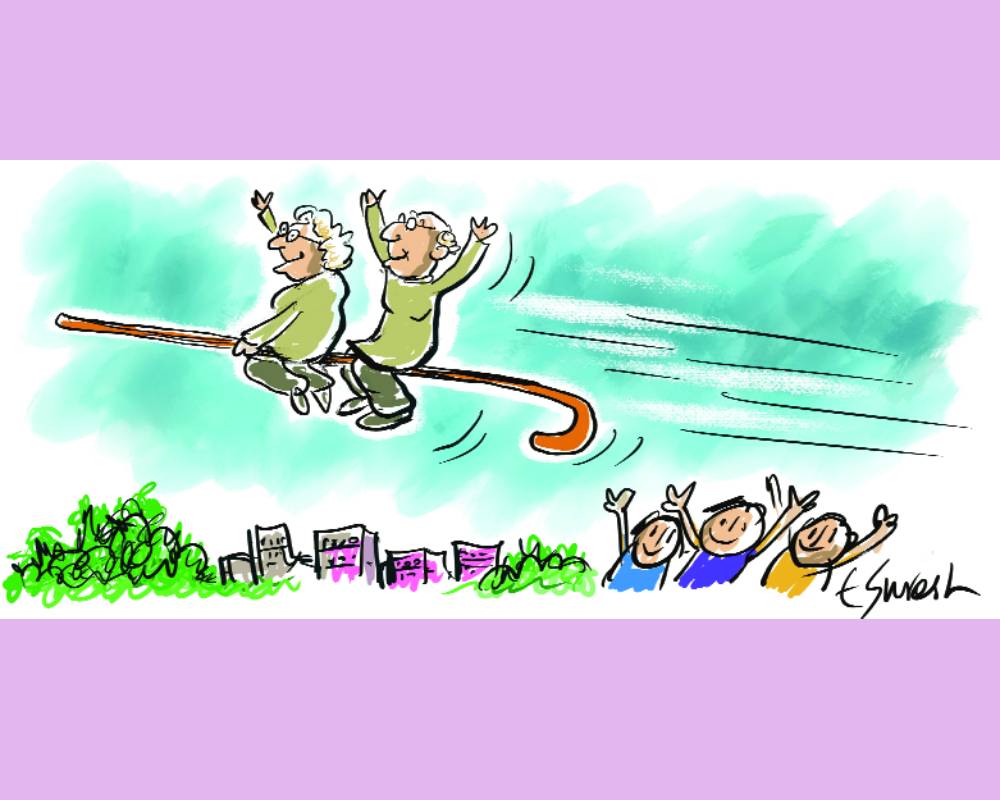
Much has been written about India’s demographic dividend—the great advantage of having the world’s largest working-age population. Yet, while this dividend is often seen as the country’s greatest economic strength, an equally powerful but less discussed demographic gain lies ahead. This new dividend stems from another profound transformation: the steady rise in longevity and healthspan. Over the last fifty years, life expectancy in India has climbed from about fifty years in 1970 to more than seventy today. Increasingly, people are living into their eighties and nineties, and centenarians are no longer rare. But this phenomenon is not merely about adding years to life-it is about adding purpose, vitality, and engagement to those years.
More and more Indians are entering their sixties with energy, experience, and a desire to stay active contributors to society. This is not a small trend. By 2050, India’s older population—those aged sixty and above—is projected to cross 300 million, nearly double today’s 150 million. That means one in every five Indians will be a senior citizen. This demographic transition will undoubtedly pose challenges for our systems of healthcare, finance, social security, and caregiving. But it also opens up a tremendous opportunity: a rising, vibrant market segment and a vast demographic reservoir of wisdom, skill, and social capital waiting to be engaged. These are people who have spent decades building families, businesses, institutions, and communities—as doctors, teachers, engineers, artists, homemakers, farmers, and artisans—and now have the chance to give back in new ways.
Each year, the International Day of Older Persons reminds the world to reflect on the contributions of senior citizens. For India, as we move toward the vision of Viksit Bharat 2047, it is an apt moment to redefine what life after sixty means. It need not be a slow winding down but rather a new chapter of purpose and participation. National policies already acknowledge that senior citizens are a valuable resource, not merely a dependent group. Organisations like HelpAge India have been advancing this idea, shifting focus from welfare alone to empowerment and engagement. They highlight stories of resilience and contribution and are steadily building a new social narrative—one that sees ageing not as decline, but as an advantage.
The elderly of the twenty-first century are breaking free from old stereotypes. They seek continuity, connection, and contribution well beyond the conventional retirement age. A 2022 HelpAge India study found that nearly 40 per cent of elders wish to remain employed for as long as possible. A study found that while many young people still see the elderly as dependent, most also view them as wise and deserving of respect—signaling a generational shift. Older adults want to stay engaged, and younger Indians increasingly recognise their value. Though many elders still need welfare support—healthcare, pensions, and caregiving—a growing number, in both cities and villages, are ready to contribute meaningfully. They bring experience, emotional intelligence, and institutional memory, eager to mentor, volunteer, or begin anew. The question is whether India is ready to harness this immense human potential.
Despite this promise of longevity, the current ecosystem is still unprepared for active ageing. There are too few opportunities for elders to engage meaningfully with society. Structured platforms, inclusive workplaces, and enabling environments that recognise older adults as assets rather than burdens are urgently needed. Around the world, leaders well past seventy continue to shape nations. A study found that while many young people still see the elderly as dependent, most also view them as wise and deserving of respect—signaling a generational shift.
Older adults want to stay engaged, and younger Indians increasingly recognise their value. Though many elders still need welfare support-healthcare, pensions, and caregiving—a growing number, in both cities and villages, are ready to contribute meaningfully. They bring experience, emotional intelligence, and institutional memory, eager to mentor, volunteer, or begin anew. The question is whether India is ready to harness this immense human potential. Across India, China, Russia, and the United States, leaders well past seventy continue to shape nations. In business, science, literature, and the arts, countless older individuals innovate and inspire. Yet beyond these visible figures lies a silent majority of seniors who quietly contribute every day-running small enterprises, growing food, cooking, or caring for grandchildren. It is for this vital generation that we must build an environment of dignity, purpose, and opportunity. To truly tap the elder asset pool, India must reimagine ageing across work, learning, and community life. Workplaces should evolve to include those wishing to continue beyond retirement, with flexible or project-based roles.
A “Senior Talent Exchange” could link experienced professionals with organisations that value their insight. Government programs like “Senior Able Citizen for Re-employment in Dignity” are promising beginnings. Volunteering pathways must also be strengthened. Initiatives such as Tata Engage and Seniors in Seva show how retired individuals can contribute to education, the environment, and community building. A national “Silver NSS,” modelled on the National Service Scheme, could channel senior citizens’ expertise into nation-building. Mentorship is another crucial frontier. Seniors can offer guidance to youth and startups, creating bridges of learning and empathy. Lifelong learning opportunities—digital literacy, financial awareness, and creative education-can help elders remain confident participants in a changing society.
Strengthening community-based elder collectives is equally essential. Senior citizens’ associations and local networks can become platforms for economic and social engagement. Empowering these groups with training and digital access will help elders lead in livelihoods, governance, and social change. Creating such an ecosystem is not just about elder welfare; it is nation-building. The longevity dividend is here—India must now embrace it as a defining strength of its development journey.
Kiran Karnik is the former President of NASSCOM and current Chairperson of HelpAge India; Rohit Prasad is the CEO of HelpAge India