Is centrism the alternative to extremism?
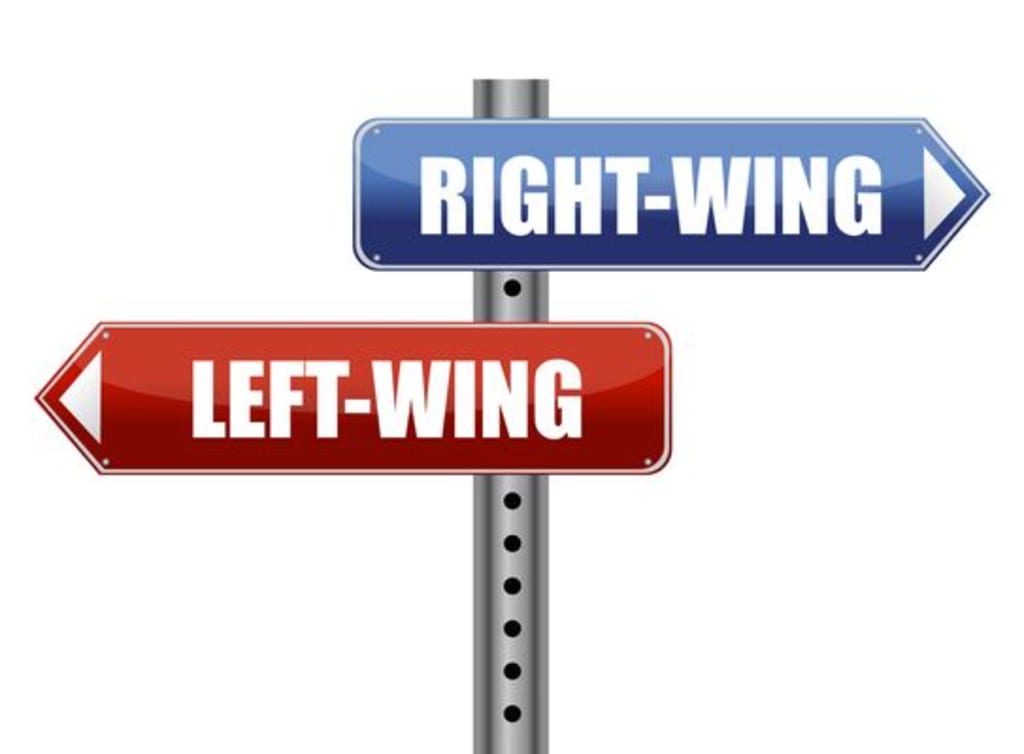
Which is the better ideology, the Left or the Right? The question is like asking a physician: which disease should I choose? The physician will say: choose health. But health, the state of not being seated in any ideological row, seems unimaginable to us. We have grown accustomed to sitting in camps, identifying ourselves by which chair we occupy.
The very terms “Left” and “Right” came from an accident of seating. In 1789, during the French Revolution, supporters of the King sat to the right of the president’s chair in the National Assembly; supporters of the revolution sat to the left. What began as a furniture arrangement hardened into identity. Rows became doctrines. Positions became personalities.
The Left now speaks of equality, redistribution, and collective welfare. The Right speaks of tradition, order, and the preservation of inherited structures. The Left says, “A better future awaits, once equality arrives.” The Right says, “The best is behind us; preserve what was.” One leans into the future, the other clings to the past. Broad distinctions, yes, but this tension between the pull of what should be and the weight of what has been is ancient: Plato imagined the ideal and Confucius honoured the ancestral. What 1789 offered was not a new conflict but new seats, and we have since mistaken the seating for the substance.
Yet notice something deeper: both camps, while quarrelling over their chairs, keep gazing outward: to society, systems, others. Neither asks the question that dislodges the entire arrangement: Who is the one so eager to sit on either side? Who is this “I” that seeks nostalgia or utopia? Without asking this, the Left and Right become opposite costumes worn by the same actor.
Opposites Are One
In 1954, psychologist Hans Eysenck surveyed hundreds of British subjects and found that the radical Left and radical Right shared almost identical psychological traits: dogmatism, authoritarian submission, a hunger for certitude. The extremes, supposedly enemies, curved toward each other like ends of a horseshoe. They resembled each other not in ideology but in psychology.
Look around today and you will see the same pattern, amplified. Social media now performs what parliaments once did: it seats us into rows, rewards outrage, and convinces each camp that hatred is loyalty. The extremist Leftist and extremist Rightist despise each other’s conclusions, yet share the same inner architecture: the same fear of ambiguity, the same dependence on enemies, the same relief that comes from belonging to a row.
Is centrism the alternative to extremism? No. The centrist who prides himself on balance and splits every difference as a habit is merely an extremist of moderation, just as seated, just as identified. The problem is not which chair you occupy, but the inner compulsion that you must occupy one.
History exposes this vividly. In 1939, Nazi Germany and the Soviet Union—two ideological opposites—signed the Molotov–Ribbentrop Pact and divided Eastern Europe between them. Enemies by speech, twins by method. The pact was not an aberration but a revelation: when pushed far enough, ideologies converge into the same structure of fear, domination, and dependence on unquestioning followers.
Mussolini offers the same lesson. Until 1914, he was a rising star in the Italian Socialist Party; within years, he founded fascism. The man had not changed in essence, only in seating. The ego kept its taste for totalism; only the banner shifted.
The Ego’s Need for Ideology
Why do the extremes converge? Because every ideology, when carried to its limit, serves the same master: the unexamined human ego. The ego is terrified of groundlessness, so it grabs a chair. It clings to labels because labels give it continuity. When someone says, “I am a Leftist” or “I am a Rightist,” this is not identity but insecurity. The chair is a crutch. The row is a refuge. The ego loves ideology because ideology is a respectable form of bondage. The prisoner paints his cage in party colours and calls it conviction.
Ideological people are rarely found acknowledging virtues on the opposite side. I must criticise whoever sits across the aisle. This is bondage. Something outside has acquired the right to dictate what you must think, approve, and attack.
Before analysing the world, ask the sharper question: What is this mind that needs an ideology in the first place? This is the pivot. The investigation must now turn inward.
The Illusion of External Order
If the Left speaks of equality, ask: where is true equality possible? Not in the body, for bodies differ. Not in the mind, for minds vary infinitely. Not in circumstances, for no two lives match. Equality is genuinely possible only at the level of the Self, which is the same in all beings. Whatever truth the Left points toward is already completed in this understanding.
If the Right speaks of order, ask: whose order? Which tradition? Every tradition was once an innovation; every order was once a disruption. The conservative clings to the past because the ego fears the unknown. But if there is a tradition worth preserving, it is the tradition of self-inquiry, the willingness to know oneself without bias.
And order? True order arises from individuals aligned with their inner clarity. A society of inwardly chaotic people will produce outward chaos despite endless laws. The order the Right seeks cannot be imposed, only discovered. Not all positions are equally distant from the truth. The abolition of slavery was not “Leftist” but a recognition of the Self in the other. The preservation of genuine wisdom traditions is not “Rightist” but fidelity to what liberates. But insight becomes poison when it hardens into a camp identity.
Engagement Without Enslavement
In the real world, policies must be made, and elections happen. Must I not choose a side? A fair question, and it deserves a fair answer. Freedom from ideology does not mean withdrawal from action; it means acting without being owned. In a world of limited time and information, some heuristics are inevitable. Coalitions require coordination. The person who refuses all labels may find herself politically homeless.
But the issue is not whether you take positions. The issue is whether your positions take you.
Can you revise your stance when evidence demands it—even if your row disapproves?
Can you advocate without demonising?
Can you see the human being behind the opposing chair?
The test is not detachment but honesty.
Self-inquiry alone enables such honesty. Not the adoption of yet another ideology of “non-ideology,” but a relentless questioning:
Why do I believe what I believe?
What fear is being defended?
What image is being preserved?
Who am I, beneath all this seating arrangement?
The Freedom of Fearlessness
When roots are deep, the tree welcomes storms; when roots are shallow, even a mild breeze terrifies. The weak sapling needs walls and fences. The strong tree stands open to the sky. So too with the ideological mind. The frightened ego closes windows; the fearless mind says: show me everything. No thought scares me; no tradition threatens me. Because truth is limitless, inquiry cannot be fenced.
“All the scriptures of the world are mine,” says the seeker rooted in truth. “I can read Marx and Adam Smith. I can sit with a Hindu or a Muslim. No danger arises, for there is no seat I must defend.” Civilisations grow through such openness. India’s oral wisdom received paper from elsewhere; the camera and microphone came from other lands; other cultures received zero and algebra from us. Exchange is natural when there is no inner boundary to maintain.
The Question Beyond Ideology
An era of narrowness sweeps the world. Walls rise everywhere: ideological, national, religious. We divide and subdivide, then subdivide again. Rows within rows, seats within seats. But wisdom exists to dissolve seating plans. If truth is limitless, then every boundary is self-imposed.
The real question is not Left versus Right. The real question is: Who am I, and what is the purpose, if any, of life? Any answer that binds you to a row, demands enmity, sacrifices your independent inquiry, is not truth, but an ideological prison. You were not born to sit on the Left or the Right. You were born to stand free.
The author is a spiritual teacher, founder of the PrashantAdvait Foundation, and author on wisdom literature.