North India’s Floods: Not Seasonal Wrath, but Climate Collapse

Over the past weeks, North India has been brought to a standstill. The monsoon, once awaited as a lifeline, has turned into a chain of disasters with floods, landslides and waterlogging. What should have replenished the soil has instead uprooted families, erased livelihoods, and scarred the land.
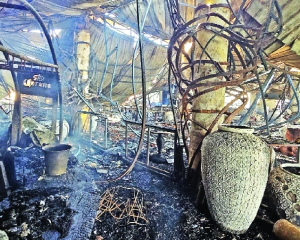
The scale of this devastation is staggering. Himachal Pradesh alone has lost over 340 lives since 20 June: 182 to landslides, flash floods and collapsing houses, the rest to rain-triggered accidents. More than 1,300 roads lie blocked, including four national highways; over 2,100 transformers are down; nearly 800 water supply schemes are disrupted. Entire tourist districts like Shimla, Kullu and Chamba are cut off. The State Disaster Management Authority has warned that restoring access to many remote villages may take weeks.
In Jammu & Kashmir, the Tawi and Chenab rivers have surged past danger levels, schools are closed, and evacuations are underway. Punjab reports devastation across 1,400 villages in 23 districts: 350,000 people affected, 148,000 hectares of crops gone. Delhi and NCR, too, wade through waterlogged streets, schools shut, and transport paralysed. Northern Railway has cancelled 68 trains; the Pathankot-Jammu line remains blocked. Relief teams are in the field, but the scale of loss dwarfs every effort.
It is tempting to see these floods as seasonal wrath. But they are not accidents of weather; they are a mirror to our misplaced idea of progress. Describing them as “natural calamities” dangerously denies their man-made roots.
Fragile Mountains, Fractured by Greed
Himachal’s hills are collapsing because we drilled, blasted, and cemented them year after year. When rivers are forced into concrete and wetlands into real estate, the monsoon is bound to return the debt.
The Himalayas are geologically young, their slopes precariously held together. Yet we have treated them as construction sites. Every highway cut through rock, every tunnel bored into the mountain, every dam raised across a river has weakened what was already fragile. So when the rains come hard, the mountains do not simply get wet, they collapse. In Uttarakhand, too, the red alerts keep coming. The India Meteorological Department has warned of extremely heavy rainfall in Dehradun, Nainital, Rudraprayag, and Udham Singh Nagar. District administrations fear fresh landslides and cloudbursts in zones already scarred. These are not isolated accidents; they are the cumulative outcome of years of taking more from the hills than they can yield.
;
Cities That Engineer Their Own Floods
There is also a stark contrast between rural helplessness and urban negligence. Villages in the Himalayas collapse because they are too weak to resist. But what excuse do Delhi and Gurgaon have? These are the richest cities. They don't come from poverty, but from negligence: storm drains are buried, floodplains are encroached, and public responsibility is traded for private convenience.
Urbanisation was meant to expand our horizon. Instead, it has imported the village’s narrowness into skyscrapers: responsibility ends at the boundary wall. Inside, polished roads and manicured lawns; outside, chaos and waterlogging. The annual drowning of our richest cities is not a failure of funds, but a failure of mindset.
The Climate Crisis Is Not Distant, It Is Here
Climate change is the decisive force behind today’s devastation. Asia is heating nearly twice as fast as the global average, which means more violent bursts of rain and more frequent cloudbursts. NASA confirms floods and droughts have already doubled worldwide in two decades.
According to the Council on Energy, Environment and Water, the average number of flood-affected districts in India has jumped from 19 a year (1970-2004) to 55 a year (2005-2019). This is not seasonal wrath; it is climate collapse unfolding before us. Yet three out of four of India’s flood-prone districts still lack proper early-warning systems.
This crisis is inseparable from global feedback loops: permafrost is releasing methane, glaciers are vanishing, coral reefs are dying. Once these cycles begin, they drive themselves. To dismiss floods as accidents of weather is not realism; it is denial. This is not pessimism, it is physics. Inequality of Emissions, Inequality of Suffering.
The world’s richest 10% drive emissions with private jets and excess lifestyles, while farmers and labourers lose lives and crops. Climate change is not only an ecological crisis. It is the violence of the rich upon the poor.
Yet it is not the elites who die in landslides or lose their crops to floods. It is farmers in Punjab whose fields are destroyed, labourers in Himachal whose houses collapse, and migrant families in Delhi who lose what little they had. Climate change is not only measured in degrees or millimetres of rainfall, it is measured in uprooted families and broken livelihoods.
And inequality is not just global; it is domestic too. In India, urban elites consume far more energy, fuel, and goods than the rural majority, yet it is the poor who live on riverbanks, in fragile hillside settlements, and in unplanned colonies most exposed to disaster. The climate crisis is layered upon pre-existing injustice, deepening every faultline of class and geography.
Redefining Progress Before It Is Too Late
We need to redefine progress. A “good life” cannot remain defined by bigger cars, bigger houses, more air miles. That definition was implanted by those who profit from our desires.
Urgent reforms are overdue: restore wetlands and floodplains, tax carbon-heavy consumption, and disclose the footprints of corporations and celebrities. But there is a warning: no reform will hold without a shift in human consumption. Policies will fail unless minds change. Festivals need not mean firecrackers. Joy need not mean excess travel or display. The climate outside reflects the climate within, and when the inner self is restless, nature too collapses.
This is why the PrashantAdvait Foundation has launched Operation 2030, a mission to awaken citizens before the UN’s climate deadline. Scientists warn that unless warming is capped at 1.5°C by 2030, feedback cycles-melting glaciers, rising seas, collapsing ecosystems-will lock us into irreversibility. Operation 2030 rests on one insight: only inner clarity can anchor outer change.
A Civilisational Test
Looking again at this week’s disasters: highways blocked, villages drowned, pilgrims stranded, crops ruined, it is clear that these are not just damages to be compensated; they are reminders of what reckless choices bring. Mountains can bear only so much blasting, rivers only so much encroachment, cities only so much concrete. When the limits are crossed, collapse follows. If we hurry to rebuild on the same foundations of ignorance, the next disaster is already assured. If we pause, reflect, and change direction, this moment could still become a turning point.
The Gita reminds us: action born of inner clarity liberates, while action born of delusion destroys. Development without wisdom is rehearsal for the next tragedy. The monsoon has spoken. The question is, will we listen? And if we refuse to listen, it will not only be us who pay. It will be our children and grandchildren who inherit a land where the monsoon is feared, not welcomed; where rivers mean devastation, not fertility. History will ask what we were doing in 2025, when the signs were so clear. Our silence then will be the loudest testimony of all.