By replicating real-world medical emergencies, this innovative training method bridges the gap between theoretical knowledge and practical expertise
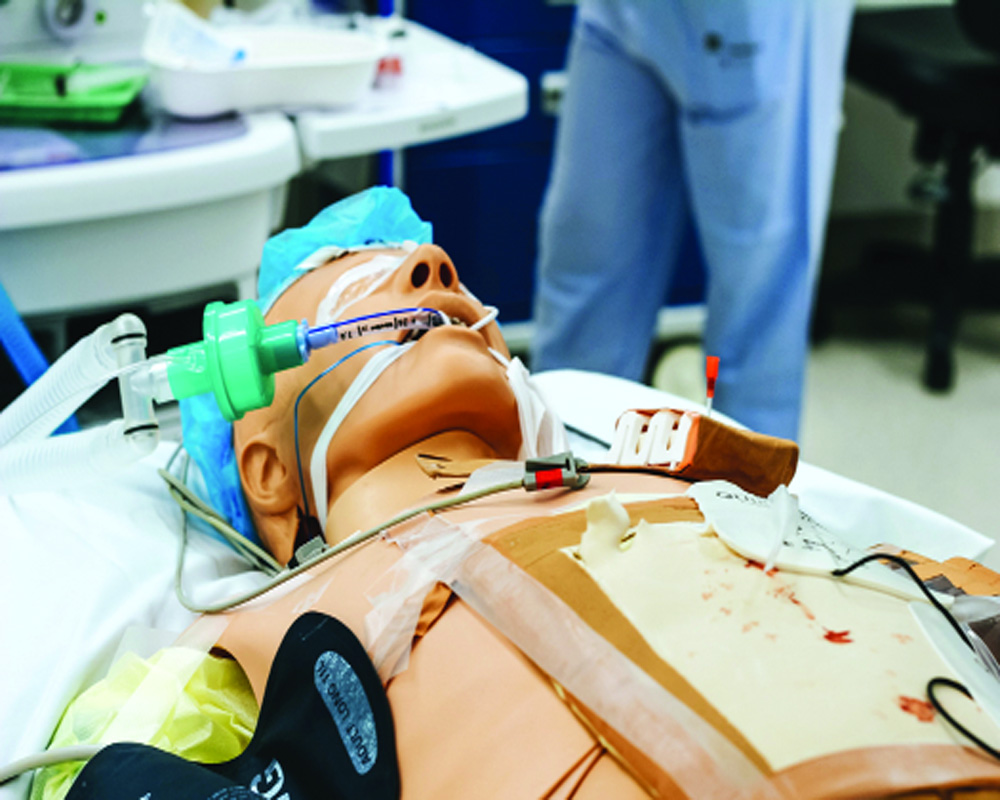
Simulation refers to the imitation of real-world processes or systems for training, education, or evaluation purposes. In emergency medical learning, simulation creates realistic scenarios that replicate medical emergencies, allowing healthcare providers to practice and refine their skills in a safe, controlled environment. The implementation of Competency-Based Medical Education (CBME) by the National Medical Council (NMC) has shown that simulation significantly enhances clinical competence for both undergraduate and postgraduate medical students.
One of the most significant advantages of simulation is that it enables learners to practice handling critical and high-stakes situations without risking patient safety. This is particularly important in emergencies, where errors can have severe consequences. By engaging in simulated scenarios, participants can repeatedly practice emergency protocols, improve technical skills such as intubation and defibrillation, and gain confidence in their abilities.
Simulations replicate the high-pressure environment of real emergencies, helping individuals develop the ability to make rapid, informed decisions under stress. They also provide a risk-free setting to identify and correct mistakes, enabling participants to learn how to prevent such errors in real-life situations. Additionally, exposure to diverse scenarios prepares learners to adapt to unexpected complications effectively.
Teamwork plays a critical role in emergency medical training, and simulation emphasises the importance of collaboration and communication. Learners develop skills in articulating observations, providing updates, and conveying instructions clearly, which are essential in high-pressure situations. Simulation allows team members to define roles, such as team leader or airway manager and practice seamless coordination. Through repeated practice, team-based simulations foster trust, cohesion, and an understanding of each member’s strengths, weaknesses and working styles.
Structured debriefing sessions after simulations promote a culture of continuous learning by encouraging open discussions about successes and areas for improvement. These sessions help build leadership and followership skills, enabling team leaders to hone their abilities while fostering supportive and adaptive team dynamics.
The benefits of simulation extend to faster and more efficient responses in real emergencies, reduced stress and burnout for healthcare providers and improved patient care outcomes. Familiarity with high-stakes scenarios enables teams to act cohesively and manage stress more effectively, ensuring better results in critical situations.
Simulation learning is an essential tool for building individual competence and strengthening medical teams. In a field where zero-error tolerance is crucial, particularly in emergency departments, simulation-based learning equips medical students with both confidence and competence. The future of medical education lies in recognising the importance of practical skills alongside theoretical knowledge, making simulation a cornerstone of training programmes.
(The writer is professor & HOD, Dr. D Y Patil Medical College, Hospital & Research Centre, Pimpri, Pune; views are personal)