










At the heart of India’s climate crisis lies a neglected truth: while reckless development and climate change accelerate risks, India’s most powerful line of defence — its forests — remains underutilised. Forests are living systems that regulate water, stabilise slopes, cool cities, buffer coasts, and act as carbon sequester
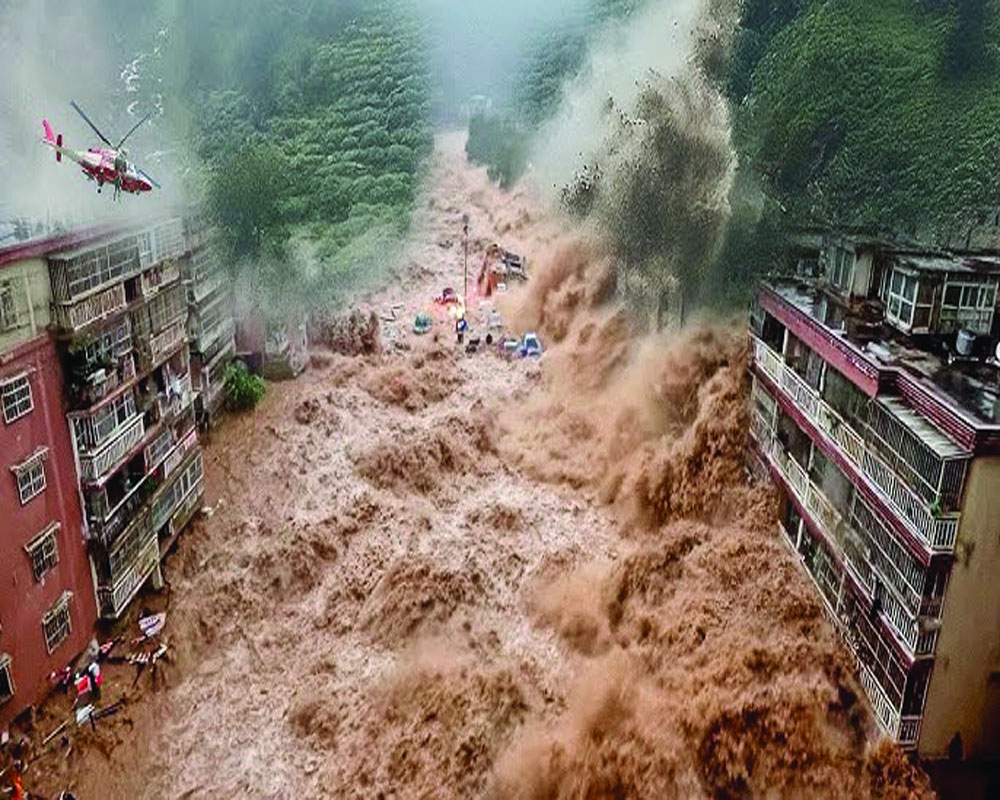
India is currently facing a rise in disasters. The record-breaking heatwaves of 2024, with temperatures in parts of Rajasthan exceeding 50 °C, served as a stark warning of the extremes ahead. Cyclones Asna and Fengal caused widespread damage along the coasts, while Himalayan states endured snowstorms, flash floods, landslides, and the looming threat of glacial lake outbursts.
The year 2025 has proven to be equally harsh. Uttarakhand and Himachal Pradesh have experienced unexpected cloudbursts, slope failures, and swiftly retreating glaciers that continue to destabilise fragile mountain ecosystems. Himachal Pradesh, specifically, faced repeated cloudbursts and flash floods that ravaged communities. At the beginning of August, the Himalayan village of Dharali was ravaged by a devastating flood, believed to have been caused by a glacial lake outburst.
Just weeks later, a sudden cloudburst in Kishtwar, Jammu and Kashmir, unleashed torrents of water that devastated houses, livelihoods, and lives.
These calamities are no longer isolated shocks but part of a systemic crisis. They are driven by a changing climate, reckless development in vulnerable areas, and most significantly, the degradation of natural buffers. Among the strongest of these natural buffers are forests — living systems that regulate rainfall, stabilise slopes, store carbon, and shield vulnerable communities from the worst impacts of climate extremes.
Forests: Nature’s Climate Regulators
Forests are not merely scenic landscapes; they function as dynamic, self-supporting ecosystems that regulate climate and risks. They capture rainwater and slow its runoff, reducing flood peaks. Their root structures stabilise soils and slopes, reducing the risk of landslides. Coastal mangroves absorb the energy of storm surges, while in arid areas, shelterbelts protect farmlands from dust storms. In cities, tree cover lowers surface temperatures and reduces flash flooding by absorbing rainwater.
The India State of Forest Report 2023 reveals that forests and tree cover now extend over 25.17 per cent of the country’s geographical area — 827,357 square kilometres — marking a modest but significant increase from 2021. The estimated total carbon stock in the nation’s forests is 7,285.5 million tonnes. The carbon stock of the country has risen by 81.5 million tonnes in comparison to the previous assessment. Regarding status on achievement of target under Nationally Determined Contribution (NDC) related to carbon sequestration, the current assessment shows that India’s carbon stock has reached 30.43 billion tonnes of CO2 equivalent; which indicates that as compared to the base year of 2005, India has already reached 2.29 billion tonnes of additional carbon sink as against the target of 2.5 to 3.0 billion tonnes by 2030.
Forestry Throughout the Disaster Cycle
Forests play a clear role throughout the entire disaster management cycle. During the prevention and mitigation phase, forests serve as buffers by managing water flow, minimising erosion, and reinforcing terrain stability. Coastal plantations protect inland regions from cyclonic winds and tidal waves, whereas inland forests lessen the intensity of droughts and sandstorms.
Preparedness also benefits from forestry. In Uttarakhand, forest watchtowers linked to satellite telemetry have been integrated into wildfire early warning systems, enabling quicker responses and timely evacuation. Forest departments regularly provide training to communities in fire management, enhancing their capacity to deal with disaster risks.
When disaster strikes, forests become a critical lifeline. Bamboo and wood serve as materials for temporary shelters, fodder supports livestock, and non-timber products offer food and medicine when supply chains fail. Forests also speed up recovery. Following Cyclone Fani, the restoration of mangroves in Odisha improved coastal defence while also rejuvenating livelihoods via fisheries and activities related to forests. In Bundelkhand, reforestation of watersheds enhanced groundwater recharge, turning drought-stricken villages into more resilient agricultural communities. In the Himalayas, focused reforestation has secured slopes and revived essential water regulation services.
Perspectives from India and Other Regions
India’s forest programs illustrate how effectively focused actions can mitigate hazard risks. The restoration of mangroves in Odisha has shielded against cyclones. In the Kendrapara district of the state, villages shielded by mangroves suffered far less damage during the 1999 super cyclone and Cyclone Phailin (2013) than areas where mangroves had vanished. Uttarakhand’s reforestation efforts in delicate catchments have minimised erosion and decreased flooding. In Rajasthan, establishing shelterbelts of resilient local species has safeguarded agricultural areas from desert winds and enhanced local microclimates.
In Himachal Pradesh’s Shiwalik hills, afforestation and watershed programs have reduced soil erosion and landslides, protecting slopes and water resources. In cities like Delhi and Hyderabad, urban forests and green belts have lowered temperatures by 2-3°C and reduced flood risks.
These lessons resonate globally. Japan has historically preserved coastal forests as a form of green infrastructure to reduce the effects of tsunamis. Chile incorporates forestry into its climate and disaster strategies. These instances emphasise a significant reality: forests represent more than biodiversity; they embody survival and resilience.
A Centre of Excellence in Forestry
To effectively realise the potential of forestry in enhancing resilience, India should pursue well-planned and forward-looking measures. At the core of this transformation lies the vision to establish a Centre of Excellence in Forestry for Climate and Disaster Resilience (CEF-CDR) at the Indira Gandhi National Forest Academy — on the lines of the Centre for Disaster Management at the Lal Bahadur Shastri National Academy of Administration, Mussoorie — positioning it as a leading centre for forestry-based knowledge, innovation, and leadership in resilience building. Designed as a centre for knowledge, innovation, and application, its mission would be: “to utilise forestry as a primary defence against climate change and disasters, integrating science, technology, and local wisdom.”
This centre could promote specialised training, facilitate applied research, encourage technology adoption, and foster international partnerships — making sure forestry stays integral to India’s resilience framework. This must be complemented by better incorporation of forestry into national and state climate and disaster resilience plans, regarding forests as essential infrastructure for resilience rather than an afterthought. Requiring Disaster Impact Assessments in addition to Environmental Impact Assessments for all significant projects will enhance the protection of vital forests from immediate economic compromises.
The capacity of institutions also needs to be enhanced.
The Cost-Benefit Advantage
The economic argument for forestry is as strong as the environmental one. Strategies for disaster risk reduction based on ecosystems provide benefits that far exceed their expenses. The contrast between natural and artificial defences is educational. Constructing seawalls along a coastline is highly costly, whereas rehabilitating mangroves provides similar or superior protection at a reduced price, along with additional advantages for fisheries, biodiversity, and carbon sequestration. Thus, investing in forests, therefore, is both a climate and financial strategy.
From Silent Guardians to Strategic Shields
India today faces a dual challenge: accelerating climate change and escalating disaster risks. Forests, known for their capacity to cool the environment, stabilise slopes, shield coasts, reduce floods, and support livelihoods, represent some of the nation’s most valuable yet under-utilised resources.
To harness their full potential, India needs to alter its perception and management of forests. They should no longer be viewed merely as passive biodiversity reserves but as proactive, strategic shields-green infrastructure vital to national resilience. Accomplishing this necessitates courageous policies, more robust institutions, scientific innovations, and community involvement. It requires the incorporation of environmental protections at each phase of development planning and disaster response.
The way is evident. By treating forests as vital resources and investing in them with the seriousness they deserve, India can turn its “silent guardians” into active frontline defences — securing lives, livelihoods, and sustainable growth in an unpredictable climate.
The writer is Former Executive Director, National Institute of Disaster Management, Govt of India



