The fetish of growth and the mirage of development
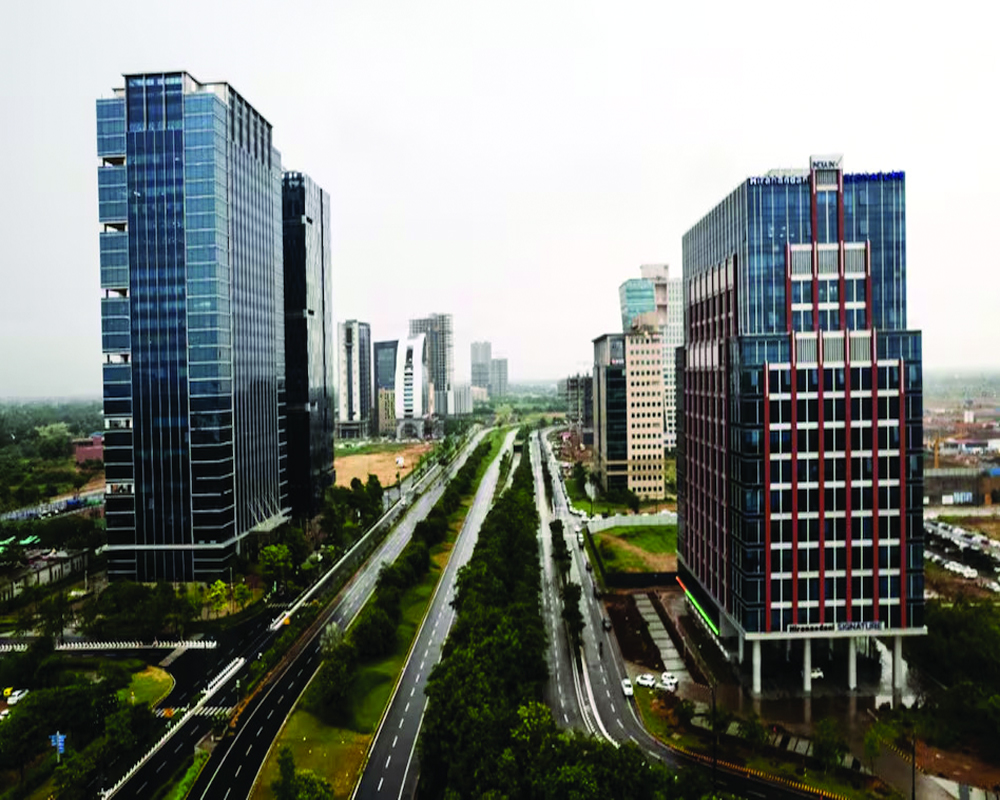
What we parade as growth is, in truth, liquidation. Like a company selling its last assets to dress up quarterly profits, we are liquidating the only deep asset we possess: the planet. Forests, aquifers, soil, and biodiversity: all depleted, none accounted for. Balance sheets never record what is lost; they only record the illusion of gain
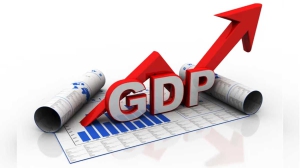
Each time GDP numbers are announced, the country is asked to cheer. News anchors beam, markets rise, and the political class proclaims that the nation is advancing. Growth has been turned into a secular god: the symbol of collective hope, the proof that tomorrow will be better than today.
Yet beyond the statistics lies a harsher truth. The air has grown poisonous, rivers undrinkable, and inequality unbearable. The pyramid of wealth has not only risen but sharpened, its peak gleaming while its base sinks deeper into deprivation. Since liberalisation, India’s GDP has expanded, but so has inequality, to the point that the country is now more unequal than in the early decades after Independence. Growth has become something of a pyramid scheme: dazzling for a few, hollow for the many.
The idol of GDP
GDP alone cannot be a measure of development. It is an aggregate of 150 crore lives, and as an aggregate, it disguises more than it discloses. At subsistence levels, income growth does improve welfare: food, medicine, and education matter. But beyond a modest threshold, the curve flattens. A tenth car or third villa adds little to well-being. What it does add is an enormous ecological burden that the poor, not the rich, are forced to bear.
The disparity is global. The top 1 per cent emit nearly a quarter of all greenhouse gases. The top 10 per cent contribute more than half. The bottom 50 per cent, billions of people, contribute barely 6-7 per cent. Yet it is this half that suffers the most: from failed monsoons, withering crops, and heatwaves that kill in the fields. When we clap for GDP gains, we are often applauding the consumption of the few and the suffering of the many.
Borrowed images of prosperity
Say the word “development,” and an image flashes instantly: the American lifestyle. Endless highways, soaring skyscrapers, overflowing malls, multiplying cars. But this dream is sustained not by imagination but by arithmetic, and the arithmetic is ruthless.
The Earth can allow no more than eight to ten tonnes of material use per person per year. The average American consumes three to four times that. To remain within 1.5°C of warming, annual per-capita carbon emissions must stay below 2.1 tonnes. The United States emits nearly 14.
Now multiply that excess by India’s 1.4 billion. What appears as ambition is actually delusion. To aspire to copy America is to condemn both India and the planet. Yet this mirage continues to shape our aspirations, drilled into us by advertising, policy, and culture alike.
The price of copying
This is why trade quarrels over tariffs, particularly cars, are not mere commercial disputes. Each automobile imported carries more than steel and rubber. It imports a philosophy: that a person is incomplete without purchase, that life acquires meaning through horsepower, that consumption alone can fill the void within. The sale is not just of a machine, but of a mythology.
And so the cycle repeats. Phones are designed to feel obsolete within three years, cars within five. Waste is marketed as progress, obsolescence as innovation. GDP swells; the biosphere shrinks. It is the economics of addiction.
What we parade as growth is, in truth, liquidation. Like a company selling its last assets to dress up quarterly profits, we are liquidating the only deep asset we possess: the planet. Forests, aquifers, soil, and biodiversity: all depleted, none accounted for. Balance sheets never record what is lost; they only record the illusion of gain.
The burden on the many
What does the ordinary citizen receive in return for this miracle of growth? Air so toxic that WHO’s safe standard of 5 micrograms per cubic metre is outstripped twentyfold on a routine day. Rivers that no longer quench but sicken. Heatwaves that strike the marginalised first, floods that drown the poor first. Meanwhile, the true perpetrators, the wealthiest whose consumption drives the emissions, will be the last to suffer, and the least.
Is this development? Or simply exploitation sold as progress?
Climate and GDP: not two variables
Even those who argue for sacrificing the climate to protect growth will soon discover that the trade-off is imaginary. Climate and GDP are not separate columns. Sacrifice the first, and the second collapses. Crops fail, cities flood, infrastructure buckles, and the very basis of economic activity disintegrates. GDP too comes from human bodies living on a stable Earth. When the planet burns, so does the economy.
The crisis beneath the crisis
Why then does the myth endure? Because the problem is not only material but mental. We have confused consumption with meaning. The “good life,” in our imagination, is simply the American consumer’s life. We may reject Western culture as decadent, but we embrace its consumption with zeal. That image has sunk into us not just as a concept but as a philosophy.
Here is where education has failed us too. We train our brightest in management, finance, and technology, but never ask the most fundamental question: what is life for? In the absence of that inquiry, ambition defaults to consumption. “Earn more to burn more” becomes the hidden motto of civilisation. All our knowledge and skill end up fuelling a bonfire of desires.
The climate crisis, then, is ultimately a crisis of education: indeed, a spiritual crisis. We do not know who we are, so we try to become someone else. We do not know what life is for, so we imagine it must be for consumption. And thus we consume not only goods, but the Earth itself.
Towards clarity, not compromise
The question before us is not of a “middle path” between reducing consumption and becoming developed. There is no middle path. There is only clarity.
Clarity about what development actually means: breathable cities, clean water, public transport that works, schools a girl can safely reach, villages with healthcare and dignity. Clarity about ceilings: on inequality, on per-capita emissions, on lifestyles that trespass planetary limits. Clarity that skyscrapers and bullet trains are embellishments at best, not development itself.
And clarity, too, that degrowth is not a curse but a necessity. A modest shrinking of wealthy economies is not a calamity but a reprieve. A declining population in Japan or Europe is not despair but relief. Growth numbers that once reassured now serve as warnings.
The image we must retire
All of this is plain enough. What blocks us is not ignorance but image. We are haunted by a postcard of the “good life,” drilled into us by advertising and aspiration. We have mistaken the picture for destiny.
But forests do not regrow because GDP rises. Ice does not remain solid at fifty degrees because we believe it should. The Earth does not bend to our desires. Reality is not bound by our illusions.
The choice before us is stark but liberating. We can continue worshipping growth, mistaking depletion for prosperity, until both climate and economy collapse together. Or we can redefine development in saner terms: human dignity, equality, liveable environments, and restraint.
Growth as a measure once had its uses. Growth as a compulsion is fatal. The future will not be secured by those who consume the most, but by those who have the clarity to live with less, and the wisdom to see that life’s worth is not measured in things.
It is time to retire the idol of endless growth, before it retires us.
The writer is philosopher and teacher of global wisdom literature and is the founder of the PrashantAdvait Foundation