











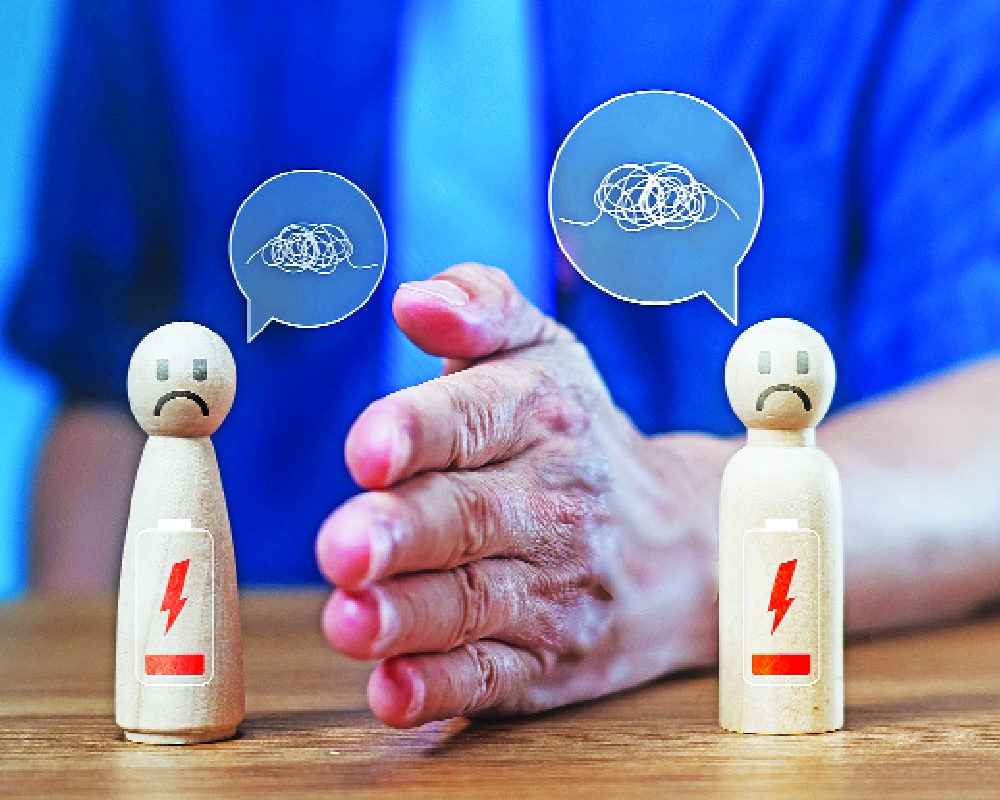
Interpersonal relationships are very delicate in nature. They are often impossible to place in a sequence of predictability. The tricky parts in such dynamics are several, and many of them are unpredictable. It has to do with moods, perceptions, and a whole range of externalities, which mean different things to different people.
This is one reason why, even in the best patterns of love, social settings, or business transactions, slip-ups can and do take place. There is little standard literature which helps navigate all this, and it is widespread in nature. It cannot be so because each pattern is a unique creation in its own right. The only compass for navigating through all this is experience, and each experience is different from the other. This is just as different between people as, indeed, people are different from each other.
The only helpful way behaviourists have suggested is through the use of experience, with all its limitations.Unfortunately, there is no book which serves as a manual for “experience.” Experience is a set of narratives that can be interpreted in any manner one is inclined, and it has to do with the context, the persona, and, indeed, the times. This is where algorithms stop. This is where calculations stop. This is where predictability gets baulked. When all of this stops, as indicated earlier, predictability also stops.
This is where the “art of relationships” takes over. Like all arts, it needs practice, intuition, and what, for a better phrase, can be called the “fifth sense.” Putting it in context will help make the nuances clear, and that is where the art as a craft takes over.
It is like stepping into a network that deals with painting. One can be taught how to hold a brush, how to mix colours, and how to convey distances and more. That is where the teachability of the craft stops, and the “art” takes over.
How to deepen a shadow, how to decide the curve of the wrinkle, and how to build a relationship between the objects being painted on the canvas almost becomes the “intuitive dimension” of communication.
This happens in speech, tone, and, indeed, the timings of a statement. Unfortunately, very little of this is possible to analyse scientifically, and it could be termed as the “intuitive” area.
If this subtlety is only a matter of painting, crafts, and the like, it will be easier to handle. But, as indicated earlier, it gets into interpersonal dynamics, expressions, and even postures. This is what makes everyone a party to the larger communication, and, to
that effect, something which touches everyone’s life.
An approximation to the solution will emerge from the environment, and the environment has to be built on those subtle feelings of mutual respect and honesty of expression.
This requires higher sensitivity on the part of everyone. It requires mutual respect and the ability to sense the unsaid. Ultimately, practice alone gives the answer, and
there is no better solution than to let the craft seep in.
This happens in many subtle and not-so-subtle ways, and watching a good artist at work is a great learning experience. It is about time — reading poetry, reading stories, and, indeed, watching craftsmen at work —that may be the way forward. Observation of art at work is one of the best ways to see the unfolding of nuances and details that cannot be put into words.
The craft of learning has been subject to various prejudices which have not been often enough analysed, detailed, sequenced, or responded to.
This has made the actual growth component of learning open to various suboptimal solutions. The coming of artificial intelligence has not helped the cause, and the nature of learning has not been strengthened adequately at all its levels, from kindergarten to adult learning. One of the biggest inputs to learning comes from observation — by watching a greatly skilled person in action. This is so because each form of learning cannot be broken down into steps, and there is an overall transference of style; the unstated craft is closely tied to it.
All in all, additional emphasis needs to be placed on the art of observation and the art of knowing what one can internalise from observation and what one can adapt.
The important thing to notice is that learning requirements change through the 50 to 60 active years of one’s body and one’s mind. The first tenure of 15 years of pre-adulthood is both passive and dependent. Thus, the identity of the person is not clear. Usually, after 75 to 80 years of age, bodily stamina tends to recede, and one knows how one is fading out.
Normally speaking, the learning requirements of this age are intense, and one has to adjust to changes in the faculties of the individual and in energy levels. Unfortunately, this aspect of so-called geriatrics is still awaiting sufficient, focused attention. The long and short of it is that, whereas this phase of one’s life also needs learning, the how(s) and whereof(s) are relatively vague. Here, too, observation would be an important instrument.
An attempt has been made in the above text to look at the craft of living and ways of preparing for it. The journey can be challenging, but it is pleasurable and absolutely worth the effort.
The writer is an internationally acclaimed management consultant



