As missiles fly and headlines fade, it is time we look beyond the spectacle and decode the deeper purpose behind these evocative titles — stories etched not just in military annals, but in the very soul of a sovereign India
In the grand narrative of India’s post-independence journey, the names given to military and security operations are far more than functional labels — they are powerful emblems of national spirit, strategic vision, and unwavering determination. Each title echoes with purpose, carrying within it the soul of the mission and the will of the nation. From the fragile dawn of independence to the intricate security landscapes of today, these operational names have served as rallying cries, steeped in symbolism, shaped by historical context, and crafted to inspire conviction.
They not only reflect the tactical objectives of the Indian armed forces, paramilitary units, and police but also embody the collective aspirations and resilience of a nation determined to protect its sovereignty. Behind every such operation lies a story of immense sacrifice - of brave hearts in uniform and the silent endurance of their families, who uphold the spirit of service to keep India secure and moving forward.
It is time we move beyond making reels and taking videos of flying missiles and engage with the deeper motivations behind these evocative names. It is time we understand their role in shaping public memory and appreciate the sacrifice of thousands of young men in uniform — over the last 76 years — marked by both monumental challenges and hard-won victories.
These codenames of operations often serve as more than just operational identifiers. They are powerful linguistic tools — symbols of intent, strategy, and resolve of the Indian Armed Forces, Paramilitary Units, and State Police Forces who, from time to time, have launched several strategic operations to safeguard the country’s sovereignty, unity, and integrity. These operations were not only pivotal in countering external aggression and internal insurgencies, but they also shaped public consciousness and national discourse.
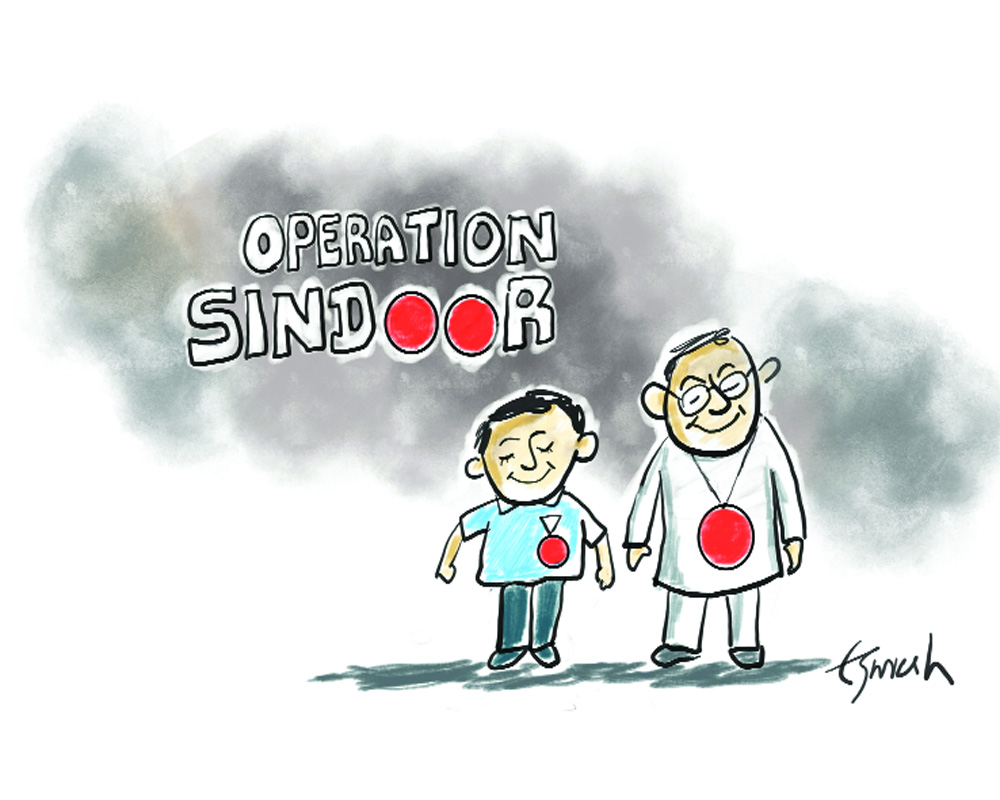
From ‘Operation Blue Star’ (anti-terrorist actions) in 1984, which sent shockwaves across the country, to ‘Operation Meghdoot’, which established India’s presence on the world’s highest battlefield and strategic adaptability in high-altitude ongoing warfare in Siachen, and the very recent ‘Operation Sindoor’, launched in response to a brutal terrorist attack — each codename chosen by the Indian military establishment has carried layered meaning.
Some evoke elements of nature, others draw from Indian mythology, and many others reflect poetic or symbolic references tied to cultural identity, emotion, and national resolve. ‘Operation Sindoor, for example, carries a deep emotional and symbolic resonance. Media reports pointed out that SINDOOR essentially stands for ‘Strategic Initiative for Neutralising Destructive Opponents with Overwhelming Retaliation’.
‘Sindoor’ is the vermillion powder worn by married Hindu women, symbolising their marital status. Reports suggested the name was chosen by Prime Minister Narendra Modi as a tribute to women widowed by a preceding terror attack at Pahalgam on April 22, 2025, thus linking the operation to delivering justice for them. It signifies the reason for the retaliatory action.
Naming a military operation is an act of strategic communication. It influences morale, affects public perception, and sometimes even conveys subtle political messaging. As a military historian and author Dr Shiv Kunal Verma writes in his book “1962: The War That Wasn’tâ€, “Every operation is a story in itself, and the name is its headline — short, striking, and deliberately chosen†— ranging from conventional wars to counter-insurgency missions and international peacekeeping.
Early actions like ‘Operation Polo’ (1948), for Hyderabad’s integration, were used as a seemingly innocuous name, possibly to downplay its scale. It was during the First Indo-Pak War of 1947-48, when Pakistan launched ‘Operation Gulmarg’ by infiltrating tribal forces into Kashmir, in response, India executed ‘Operation Rescue’ to airlift troops and save Srinagar. This set the stage for a long history of Indian military preparedness and swift responses to aggression. Over time, operations like ‘Operation Vijay’ in 1961 for the liberation of Goa and the 1971 Indo-Pak War [‘Operation Cactus Lily’ (symbolising resilience and strategic reach)] not only expanded India’s territory but also underlined India’s support for democratic movements, such as in Bangladesh’s liberation.
Subsequent operations highlighted India’s strategic adaptability and overseas interventions, such as ‘Operation Cactus’ in the Maldives in 1988 and ‘Operation Pawan’ (wind) by the Indian Peace Keeping Force (IPKF) in Sri Lanka in 1987. The ‘Kargil War’ of 1999 saw a reuse of the name ‘Operation Vijay’, affirming victory against infiltrators, supported by the IAF’s ‘Operation Safed Sagar’ (‘White Sea’ — a metaphor for snowy peaks where operations occurred). These counter-insurgency and internal security missions derived their names indicating their purpose. In recent decades, the military’s focus shifted to counter-insurgency and surgical precision, evident in operations like ‘All Out’ in Kashmir and ‘Operation Bandar’ in 2019 after the Pulwama attack. These reflect a doctrine of swift and decisive strikes.
The naming of operations often reflects deep cultural resonance and psychological messaging. Many names are derived from Sanskrit or Indian mythology, like ‘Parakram’ (valour), ‘Meghdoot’ (cloud messenger), or ‘Bandar’ (a Monkey symbol akin to Lord Hanuman). Others carry symbolic weight, such as ‘Cactus’ (resilience), ‘Rakshak’ (‘protector’, initiated in J&K in 1990), or ‘Sankalp’ (determination/commitment — Indian Navy’s initiative at Gulf region aimed at ensuring the security of the regional maritime domain and curbing anti-piracy activities) — reinforcing the moral justification and purpose behind the military action. Names also serve operational needs — either to deceive, inspire, or signal strategic intent — underscoring how India’s military engagements are not only about tactics on the ground but also narratives that echo national identity, resolve, and sovereignty,
like “Operation Trident†(December 4, 1971) by the Indian Navy on Karachi Harbour. ‘Trident’ also refers to the mythical weapon of Lord Shiva, symbolising power, precision, and destruction.
Similarly, “Operation Python†(December 8, 1971), symbolising a snake known for quietly stalking and suffocating its prey — used as a codename — reinforced the precision and strike of the Indian Naval forces.
Further, humanitarian and evacuation operations frequently employ names reflecting care and assistance. ‘Operation Maitri’ (Friendship) during the 2015 Nepal earthquake, ‘Operation Ganga’ (evoking the sacred river) for evacuating citizens from Ukraine in 2022, ‘Operation Dost’ (Friend) for aid to Turkey and Syria in 2023; or ‘Operation Kaveri’ (named after the river Kaveri, symbolising life and continuity) 2023, for evacuating Indians from Sudan during the crisis, communicate their compassionate objectives.
In a world where language shapes narratives and perceptions, the codenames assigned to military operations are not random. In the Indian context, they carry deep semantic weight. They are, in essence, history written in real-time — designed to inspire confidence, symbolise national identity, and preserve operational integrity.
(The writer is a Programme Executive Gandhi Smriti Sansthan. Views are personal)