











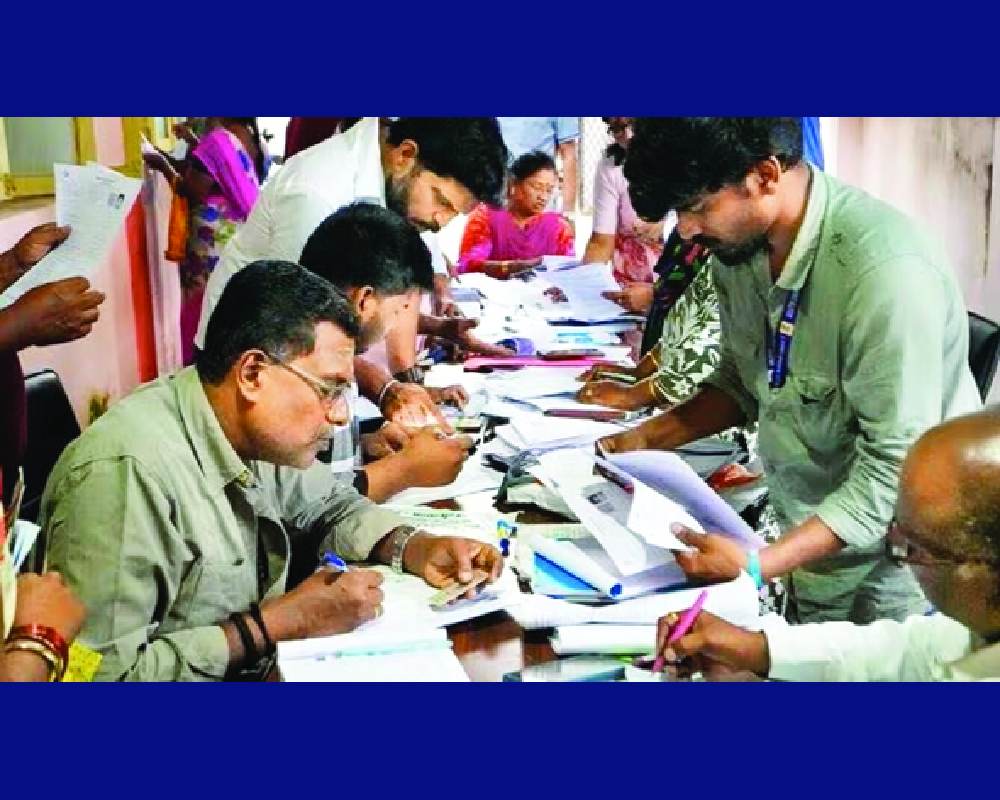
In a curious actuary pattern kind of defying the art of statistics — ever since the Special Intensive Revision (SIR) of electoral rolls commenced on November 4 in Bengal — the data thus far collected shows a trivial around 4.6 per cent rise in the number of voters in Kolkata, whereas the number for the districts stands at a whopping 69 per cent. The figure relates to the past 23 years.
The figural pattern is curious because while Kolkata, being a metropolitan hub, is expected to receive more job-seeking population. The figure is upsetting also because the districts of Bengal have in the past two decades or so witnessed a steady flight of youth that have mostly settled in other States — mostly in Kerala, Tamil Nadu, Gujarat, Maharashtra, Punjab and Delhi — as migrant workers; which means the growth pattern in the regions should not have been so high or for that matter the difference between Kolkata and regions should not have been so stark experts said.
The number of voters in Kolkata North and Kolkata South Lok Sabha constituencies has gone up from 23,00,871 in 2002 to 24,07,145 in 2025, which is about 4.6 per cent. On the other hand, voter count across the State has shot up to a whopping 7.6 crore in 2025 from 4.5 crore in 2002.
According to the ECI officials, the number of voters has increased in South 24 Parganas by a massive 83.3 per cent, whereas by a whopping 72.1 per cent in North 24 Parganas. While Howrah has seen a rise of 57 per cent, neighbouring Hooghly has witnessed an increase of 50 per cent in the strength of voters.
The two districts jointly account for 9 Lok Sabha constituencies and 65 Assembly seats --- almost 99 per cent of which is held by the Trinamool Congress. Curiously, the Diamond Harbour parliamentary seat, which TMC general secretary Abhishek Banerjee won in 2024 by a massive margin of 7.5 lakh votes, is too situated in the South 24 Parganas.
While the Election Commission officials tried to explain the differential pattern in terms of a steady shift of population from Kolkata to new peripheral townships at Rajarhat, New Town, or other areas, a senior retired IAS officer and former Chief Electoral Officer of Bengal, Jawahar Sircar, calls the pattern of rise in the number of voters somewhat extraordinary. According to another statistician from the Indian Statistical Institute in Kolkata, “though things may not be projected in such a simplified manner, the number of increases is not matching somewhere.” He refers to the decreasing population growth rate in Bengal with a projected rate of 0.5 per cent for 2022-23, which was below the national average.
“Going by the decadal growth rate was 13.93 per cent in 2001-2011, down from 17.84per cent in the previous decade.” The number of voters should have been less than 7 crore and not 7.5 crore, which we are told today,” wondering where these voters have come from.
“I will not suggest that all these are Bangaldeshi infiltrators or Rohingyas as some parties would project it… they may be the dead voters which we are told about anywhere near 50 lakh and even shifted voters,” he says reminding, “it may not be that all the infiltrators are Bangladeshi Muslims because considering the persecution of the minorities in that country many or may be sizeable section of these infiltrators could be Hindu migrants… which we will now have to find out.”



