











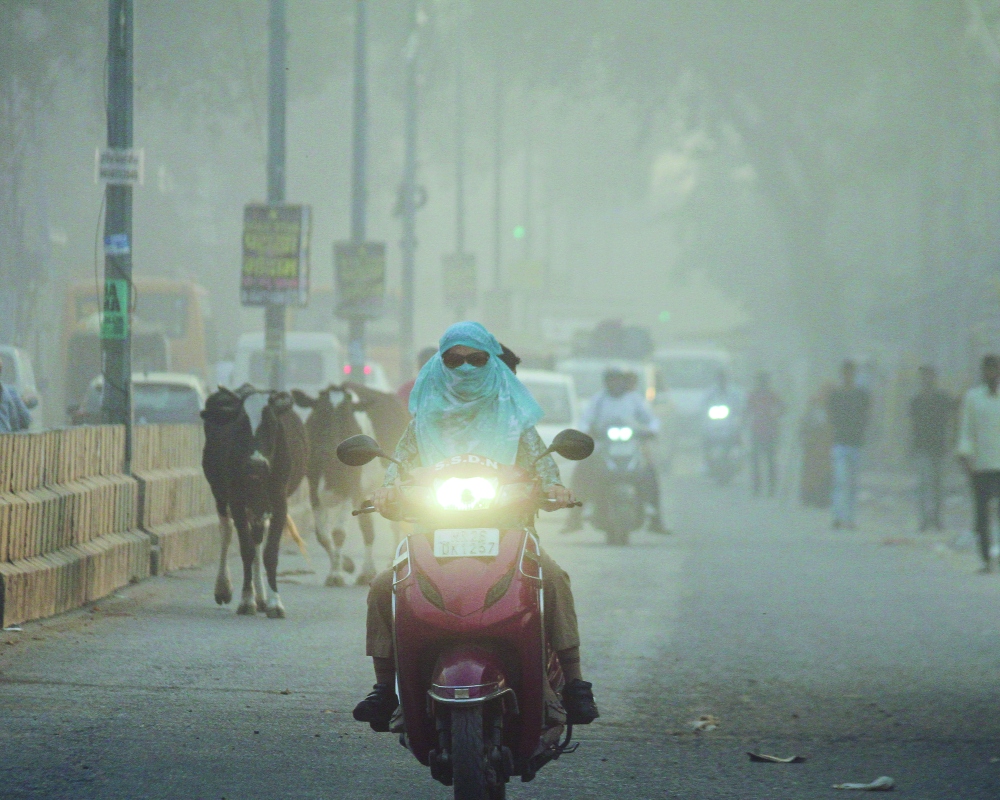
Delhi was ranked the sixth most polluted city in the country in October, behind neighbouring Ghaziabad and Noida, according to the latest PM2.5 air quality assessment by the Centre for Research on Energy and Clean Air (CREA).
Haryana’s Dharuhera was ranked as the most polluted city in October, with a monthly average PM2.5 concentration of 123 µg/m³. Besides, four cities each from Uttar Pradesh and Haryana dominated the top 10 most polluted cities list, all located within the national Capital region, which include Rohtak, Ghaziabad, Noida, Ballabgarh, Bhiwadi, Greater Noida, Hapur and Gurgaon.
Despite stubble burning contributing less than 6 per cent of Delhi’s PM2.5 levels in October, the sharp rise highlights the impact of year-round emission sources and the need for long-term mitigation plans beyond short seasonal measures like the Graded Response Action Plan, the study noted.
The study, based on continuous ambient air quality monitoring data, highlighted a worrying degradation in air quality across the country, with the Indo-Gangetic Plain, particularly the National Capital Region (NCR), experiencing the sharpest declines.
The report provided a comprehensive analysis of India’s air quality based on continuous ambient air quality monitoring station data.
Shillong, Meghalaya, was India’s cleanest city in October with an average PM2.5 concentration of 10 µg/m³. The top 10 cleanest cities included four from Karnataka, three from Tamil Nadu, and one each from Meghalaya, Sikkim and Chhattisgarh.
In October 2025, 212 out of 249 cities with more than 80 per cent of the days with continuous ambient air quality monitoring stations data available, recorded PM 2.5 concentrations below India's National Ambient Air Quality Standards (NAAQS) of 60 µg/m³. Six cities complied with the World Health Organisation's (WHO) daily safe guideline concentration of 15 µg/m³.
In October, cities with ‘Good’ air quality (0-30 µg/m³) dropped from 179 in September to 68, while those in the ‘Satisfactory’ range (31-60 µg/m³) increased from 52 to 144.
Cities in the ‘Moderate’ range (61-90 µg/m³) rose from 4 to 27, while nine cities fell into the ‘Poor’ (91-120 µg/m³) category and one city reached the ‘Very Poor’ (121-250 µg/m³).



