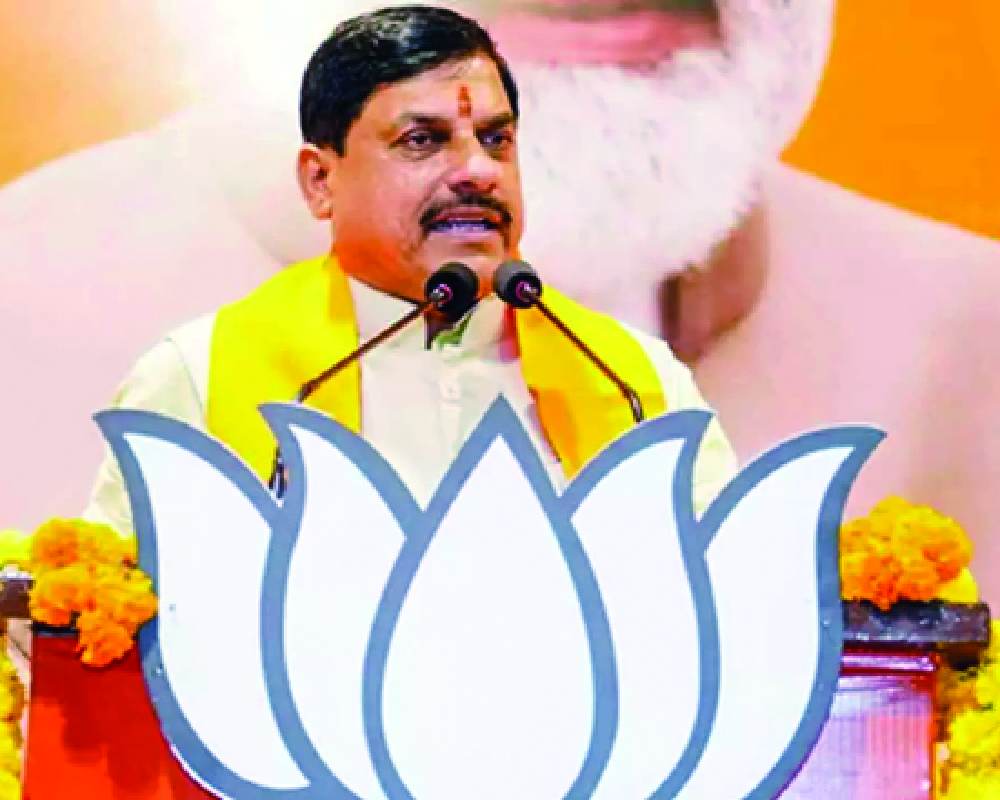
The trends from Bihar’s vote count have thrown the spotlight on the NDA’s calibrated, data-led campaign architecture—and at the centre of this strategy is Madhya Pradesh Chief Minister Mohan Yadav.
His targeted outreach across Bihar’s competitive constituencies is emerging as one of the most consequential factors in the alliance’s strong early performance. NDA-backed candidates are leading in 21 of the 25 seats where Yadav campaigned, a statistic that party strategists view as evidence of his growing electoral traction beyond Madhya Pradesh.
Yadav’s campaign in Bihar was designed as a tactical intervention rather than a symbolic visit. The brief was clear: energise voter groups that had remained politically dormant, create visible momentum in constituencies with narrow margins, and tighten booth-level mobilisation using his reputation for organisational discipline. His rallies were built around sharp, governance-focused messaging—centred on economic stability, welfare delivery and alignment with national priorities—which resonated strongly with voters looking for predictable, execution-driven politics.
According to party insiders, what strengthened Yadav’s impact was his communication style. While Bihar politics often leans towards emotive rhetoric, Yadav brought a data-backed, administrative approach, emphasising measurable outcomes and performance indicators. This contrast, strategists say, allowed the NDA to broaden its appeal among undecided voters who were fatigued by political theatrics and wanted a more grounded narrative.
The NDA’s Bihar playbook this cycle reflects a corporate-style deployment model that prioritises operational efficiency. High-performing leaders are assigned to low-traction geographies to unlock incremental vote share, energise cadres, and stabilise campaign messaging. Yadav’s assignment suggests the alliance’s confidence in his growing brand equity—an asset the party is now deploying strategically across state borders.
If the current leads consolidate into actual wins, it would offer empirical validation for the NDA’s cross-state leadership mobility strategy. It would also strengthen the case for expanding the roles of regional chief ministers in national campaigns—particularly those with a reputation for administrative precision and on-ground delivery.
For the opposition, Yadav’s successful intervention exposes a strategic weakness: the absence of a comparable leadership pipeline capable of driving momentum in unfamiliar terrain. Bihar’s early trends indicate that voters responded to consistency and credibility—two areas where the NDA’s messaging, aided by Yadav’s presence, held a clear advantage.
The broader political takeaway is straightforward. Bihar’s electorate rewarded a campaign anchored in discipline, governance outcomes and structural clarity. As the NDA prepares for upcoming electoral cycles, the momentum generated in Bihar will likely reinforce the alliance’s reliance on cross-state campaigners like Mohan Yadav. For the opposition, the runway for course correction is getting shorter.