










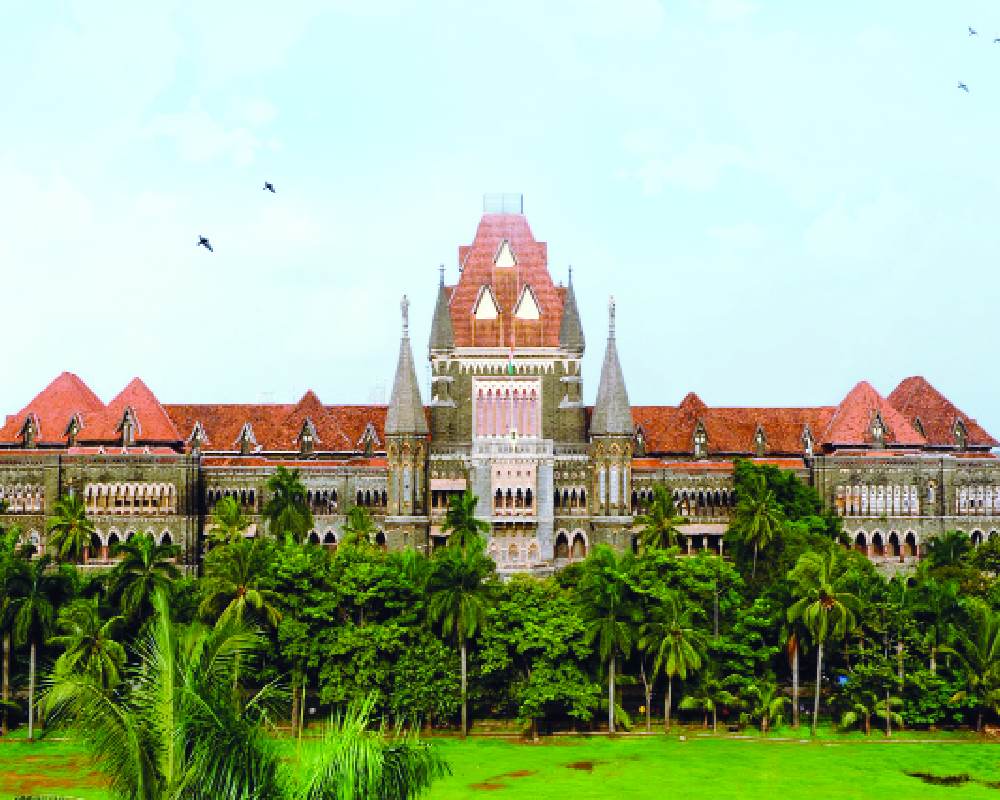
The Bombay High Court (HC) on Tuesday dismissed a petition filed by a Mumbai activist challenging a decision of the Maharashtra Electricity Regulatory Commission (MERC) to discontinue audio/video recordings of the proceedings, after holding that such recordings of the proceedings cannot be used as ‘evidence’ in any court of law.
While rejecting a public interest litigation (PIL) filed by Mumbai resident Kamlakar Ratnakar Shenoy, an HC division bench of Chief Justice Shree Chandrashekhar and Justice Ashvin Akhand noted that the PIL lacked ‘public interest’ and was instead ‘motivated by personal grievances.’
In its ruling, the HC bench noted the Supreme Court had already observed that public trial in open courts was essential for healthy and objective administration of justice and that it is necessary to instil public confidence in the administration of justice and therefore the judicial tribunals, courts etc must hear cases in the open and admit the public to the courtroom.
“These observations by the top court seem to have been misconstrued by the petitioner, who takes the position that the impugned resolution shall not be in public interest... A litigant is not permitted to use the true record of the court proceedings and use the same as evidence. There is, in fact, a prohibition not to record the court proceedings, much less to use them as evidence in a court of law,” Chief Justice Chandrashekhar noted in his dictated order.
The petitioner, who appeared in person, submitted that he had appeared before the MERC in a matter wherein, according to him, the MERC did not hear him properly and further submitted that “there are a lot of wrongdoings in the MERC, and there are serious lacunae in the way hearing is conducted by the commission and it is not transparent.” The petitioner told the high court that by a resolution dated 4/9/2018, MERC “has discontinued the practice of the recording of the proceedings in audio/video form, which is directly opposite to the direction issued by the Supreme Court in Swapnil Tripathi versus Supreme Court of India”.
Opposing the petition, Advocate Ratnakar Singh — who appeared for the MERC — told the high court the MERC had this arrangement of audio/video recording of the proceedings for its internal purposes and there is no provision in the Electricity Act 2003 to have mandatory recording of the proceedings.
“However, there is a regulation in place for the conduct of day-to-day business of the Commission with live streaming of the hearing available to the public at large and conduct of hearing before the Commission is totally transparent,” Singh said.
After giving a hearing to both sides, Chief Justice Chandrashekhar and Justice Ankhad held that the PIL was not in genuine public interest but rather stemmed from a private dispute, and the petitioner was hankering for ‘cheap publicity’ under the guise of a PIL.
“The petitioner is asking for audio/video recordings to use as evidence. No court proceedings can be permitted to be used as evidence and the same can never be provided to any person or litigant. The petitioner by the present petition is seeking to gain cheap publicity. Such practice of filing frivolous petitions should be deprecated,” the court noted.



