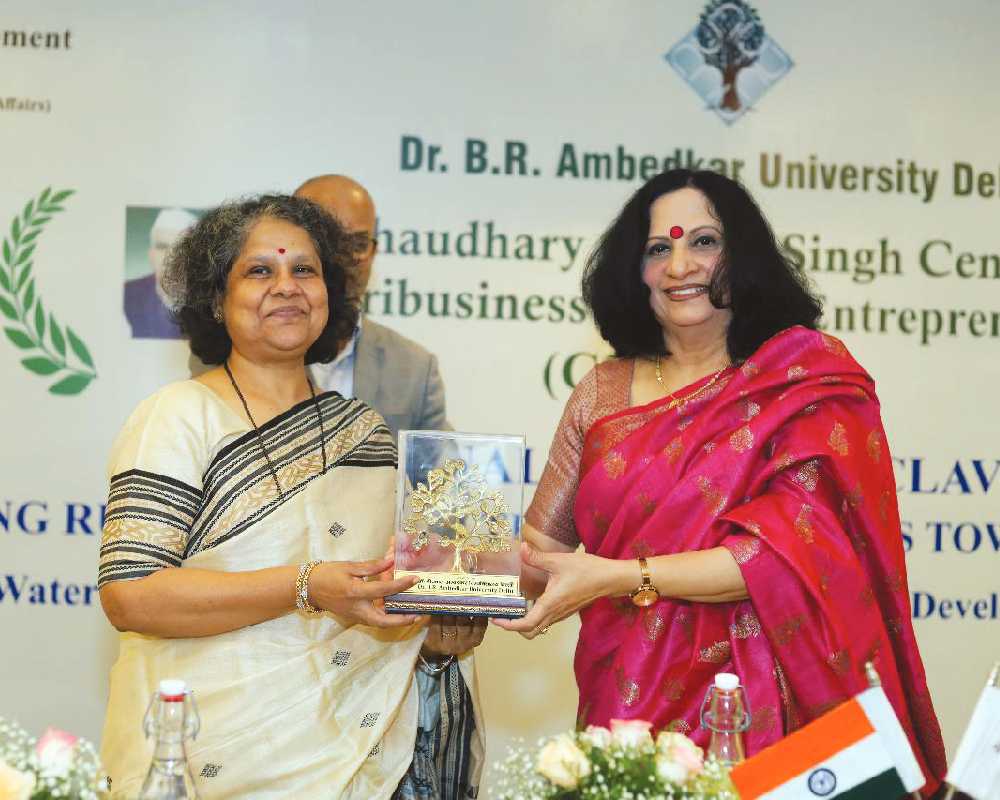
India’s rural development took the spotlight in Delhi on Thursday. The National Rural Conclave 2025, organised by Dr B.R. Ambedkar University Delhi, opened with a call to place villages at the centre of the country’s growth vision for Viksit Bharat 2047. The two-day event, titled “The Rising Rural: Mapping the Trajectories towards Viksit Bharat”, began at the India Habitat Centre. It is being hosted by the university’s new Chaudhary Charan Singh Centre for Agribusiness and Rural Entrepreneurship.
The conclave brought together policymakers, academics and development experts to discuss the future of rural livelihoods, agrarian change and entrepreneurship. The message from the opening day was clear: India’s growth story must begin from its villages. The inaugural session was attended by Professor Anu Singh Lather, Vice-Chancellor of Ambedkar University; Dr Abha Rani Singh, Chairperson of the National Minorities Development and Finance Corporation; Dr Archana Verma, IAS, of the National Water Mission; Dr Santosh K. Singh,
Director of the Centre and Col. (Retd) Omkar Singh. In his keynote address, Harsh Lohit, Founder and Chairperson of the Charan Singh Archives, spoke about Chaudhary Charan Singh’s lasting influence on India’s rural thought. He said Singh’s focus on equity and empowerment continues to guide social and economic policy today. Experts from the World Bank Group, Water for People India Trust, Welthungerhilfe India, GIZ India, and the United Nations Environment Programme took part in the technical sessions.
Discussions focused on the need to link water, land and agriculture in an integrated framework. Speakers warned that India must move away from fragmented policy-making. They said a holistic approach to rural growth is essential to ensure sustainability. “Rural development cannot work in silos. It must connect ecology, economy and equity,” said one participant. Dr Santosh K. Singh said the conclave aims to build a bridge between research, policy and practice. “Rural transformation is not about charity. It is about justice and opportunity,” he said.
The sessions also underlined that policies must be local and community-driven. Experts said that one-size-fits-all models often fail to address the diversity of India’s villages. They called for hyperlocal planning and community participation to make development more effective. The first day ended with a call to reimagine India’s villages as the foundation of national progress. The recurring theme, echoed by several speakers, was that “India’s soul resides in its villages.” The conclave will continue on Friday with sessions on agribusiness, rural entrepreneurship and climate resilience.