










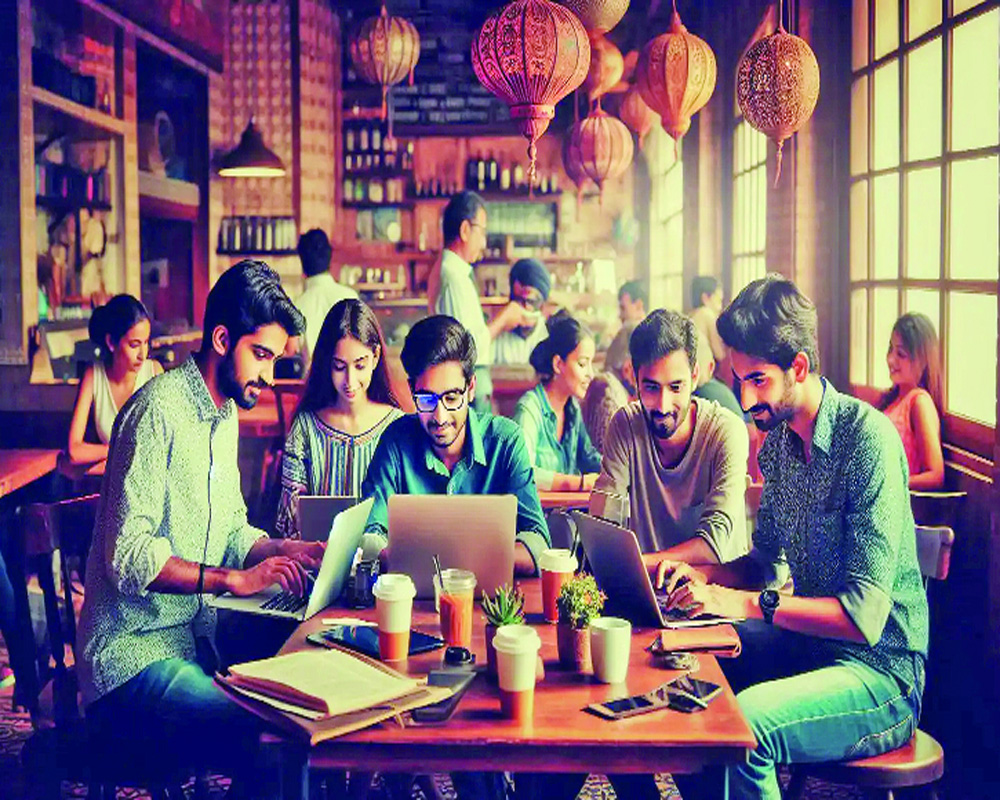
The internet user base in India is set to surpass 900 million by 2025, driven by the growing use of Indic languages for digital content. The ‘Internet in India Report 2024,’ jointly prepared by the Internet and Mobile Association of India (IAMAI) and KANTAR, reveals that the number of active internet users in India reached 886 million in 2024, marking a robust 8% year-on-year growth.
The report underscores the increasing role of Indic languages in shaping internet consumption patterns. It shows that rural India is leading the way when it comes to internet consumption. Not only that, but news consumption is also highest among the rural Indian population.
The report further highlights the increasing importance of Indic languages in shaping internet consumption patterns. Nearly all internet users (98%) accessed content in Indic languages, with Tamil, Telugu, and Malayalam emerging as the most popular due to their extensive availability. Over half (57%) of urban internet users prefer consuming content in regional languages, underscoring the growing demand for local-language content across platforms.
The report highlights that the digital gender gap in India is steadily narrowing, with 47% of all internet users in the country being women-so far the highest. Female internet users now form a significant portion of shared device users in rural India: 58%. This marks substantial progress in making digital access more inclusive and equitable over the years.
While internet penetration continues to grow, the pace has moderated, especially in urban areas, compared to the exponential growth seen in previous years. Rural India, however, continues to witness double the growth rate of urban regions, reflecting the untapped potential in these areas. Urban India leads in the adoption of non-traditional devices such as smart TVs and smart speakers, which have grown by 54% between 2023 and 2024. Concurrently, mobile devices remain the primary means of accessing the internet across both urban and rural demographics. Rural India dominates online engagement for top activities, including OTT video and music streaming, online communication, and social media usage, outpacing urban users in these categories. Conversely, activities like e-commerce, digital payments, and online education are still more prevalent among urban populations.
According to the report, rural India, with 488 million users, leads this growth and now accounts for 55% of the total internet population. The report states that Indians spend an average of 90 minutes online daily.
Urban users were found to typically engage more frequently with digital content, averaging 94 minutes, while rural Indians spend only 89 minutes. Users spend an average of 90 minutes daily accessing the internet, with both urban and rural users spending almost the same time online, at 94% and 95%, respectively.
In terms of the gender gap, male internet users accounted for 53%, while female users stood at 47%. The report highlighted high internet penetration in southern states such as Kerala (72%), Goa (71%), and Maharashtra (70%) compared to northern states, including Bihar (43%), Uttar Pradesh (46%), and Jharkhand (50%).
Interestingly, the report revealed an increase in the number of users accessing the internet using someone else’s mobile device. One in five users accessed the internet using a shared device, with rural shared device users witnessing a 24% growth since 2024. The ‘Internet in India’ report, which covers over 90,000 households across all states and Union Territories of India (excluding Lakshadweep), is an annual report and the most comprehensive survey of internet usage in the country.
When it came to online communication, there were 335 million users, including 40 million more users in rural areas. Social media usage in rural areas was found to be 347 million, with 39 million more rural users engaged in social media. The report also noted a narrowing gender gap in internet usage, with 47% female and 53% male internet users. This signals a growing demand for local-language content across platforms. Mobile devices remain the primary means of internet access, regardless of whether users are in rural or urban areas. Around 41% of the Indian population reported not accessing the internet, with the highest reported reason being a lack of awareness of the benefits of internet usage (25%).
Biswapriya Bhattacharya, Director of B2B and Technology, Kantar Insights - South Asia, commented, “AI has emerged as a significant game changer over the past year. Nine out of ten internet users have interacted with apps featuring embedded AI capabilities.â€



