











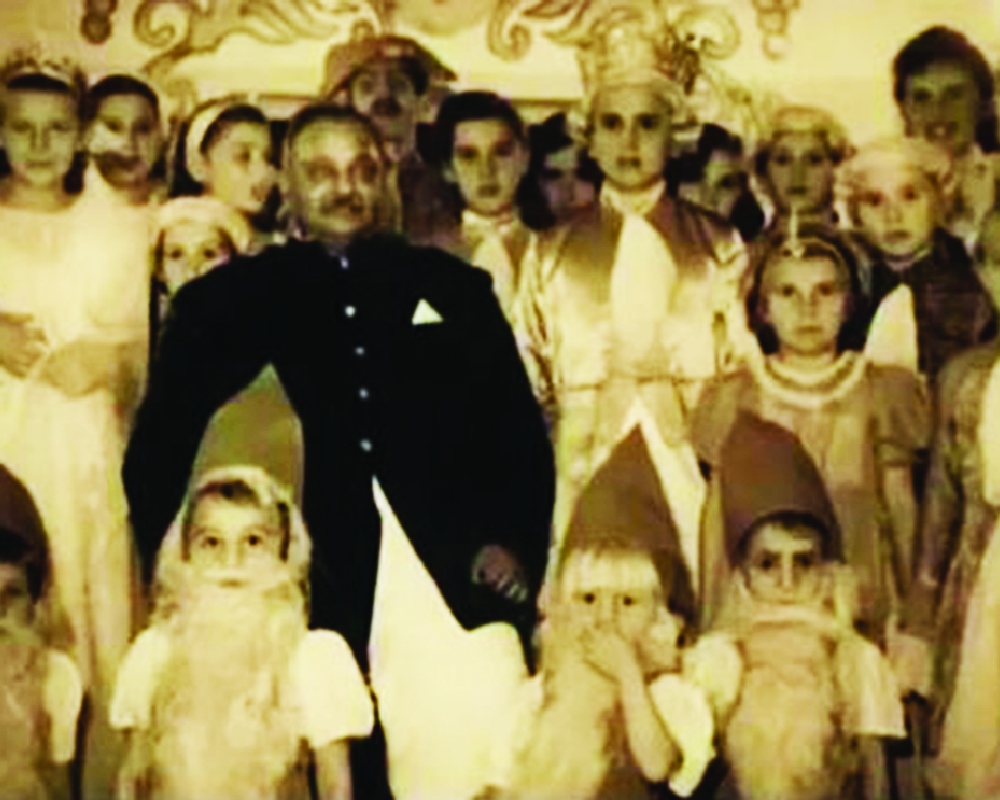
A statue of Maharaja Digvijaysinhji Ranjitsinhji, the Jam Saheb of Nawanagar, was unveiled at Moshav Nevatim in southern Israel to honour his extraordinary humanitarian act of rescuing hundreds of Polish children — including Jewish orphans — during World War II. The Indian ruler, affectionately remembered as the Good Maharaja provided refuge to around 1,000 Polish children in 1942, saving them from the horrors of war and giving them a home in Balachadi village, near Jamnagar in Gujarat.
Organised by the Indian Jewish Heritage Centre (IJHC) and the Cochini Jewish Heritage Centre (CJHC), the event celebrated the Maharaja’s compassion and the deep historical ties between India, Israel, and Poland.
India’s Ambassador to Israel JP Singh, who attended the ceremony, described the Maharaja’s compassion as “a beacon of hope reminding us that humanity rises above all boundaries.” He lauded the tireless efforts of IJHC and CJHC in preserving and celebrating India’s shared Jewish heritage.
Polish Ambassador to Israel Maciej Hunia called the event “a very emotional moment.” He recalled that after the war, when the Polish Prime Minister asked the Maharaja how his country could repay him for saving the children, the ruler had humbly replied that he only wished for “a street in a free Poland” to bear his name. “Today, not only is there a square in Warsaw named after him, but also a monument and even a tram in western Poland dedicated to the Good Maharaja,” Hunia said. The Maharaja was posthumously awarded the Commanders Cross by the Polish Government for his remarkable humanitarian work. In March this year, Poland officially commemorated him as the Good Maharaja.
The event was attended by dignitaries, including Michal Weiler Tal from Israel’s Ministry of Foreign Affairs, Dr Kenneth X. Robbins, Swami Shri Hariprasad, Rafi Bhonkar and Dr Nehemia Shahaf. Two exhibitions were showcased alongside the ceremony — Indian Jewish Heritage by photographer Nehemia Shahaf and A Beacon of Light in Dark Times, curated by Tikza Lavi.
The statue was donated by Jerry Klinger and sculpted by Sam Philips, an executive member of the IJHC.
As the ceremony concluded, the tribute at Nevatim stood as a powerful reminder of Maharaja Digvijaysinhji’s legacy — a story of courage, compassion and moral strength that transcended borders and time. His act of kindness during the darkest days of war continues to shine as an enduring symbol of friendship between India, Israel and Poland.



