











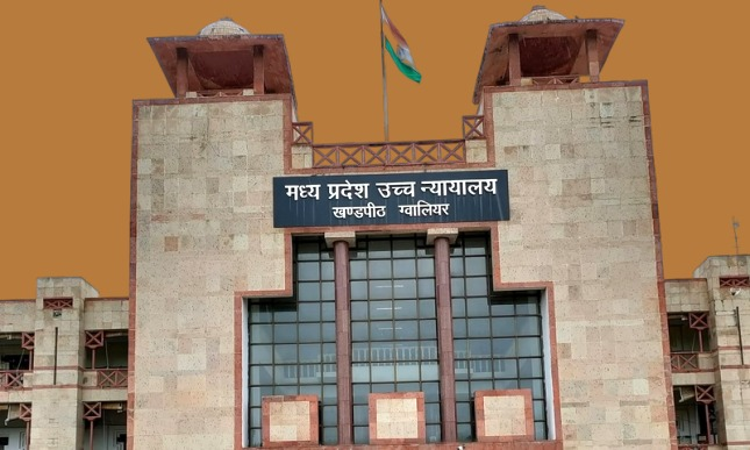
In a significant ruling reinforcing the pension right of Government employees’ dependents, the Gwalior bench of the Madhya Pradesh High Court has held that the married son of a deceased State employee is fully entitled to receive family pension, and that marital status cannot be used as a ground to discontinue the benefit. The decision is expected to have broader implications for similar pension disputes across the State.
The case relates to Gangaram Kevat, a line helper in the State’s energy department, who died while in service. After his death, his son Neeraj Kevat applied for a family pension — a statutory benefit intended to ensure financial support to surviving dependents of Government employees. The department initially approved his pension but imposed an unusual condition: the payments would stop once Neeraj got married. When Neeraj later entered into marriage, the department invoked this condition and immediately halted the pension, leaving the family without the income they had relied upon.
Challenging the decision, Neeraj approached the High Court, arguing that the stoppage of pension was not only arbitrary but also contrary to the Madhya Pradesh Civil Services (Pension) Rules, 1976. According to the rules, an unmarried son, widowed daughter or unmarried daughter is generally eligible for family pension, but the key determining factor is age — the benefit is available until the dependent turns 25. Nowhere in the rules is marriage recognised as a disqualifying factor for a male dependent who is still below the age threshold.
After examining the matter, the single-judge bench observed that the department’s interpretation was not supported by law. The court held unequivocally that marriage cannot extinguish a dependent son’s right to a family pension, especially when the statutory rules explicitly allow him to receive the benefit until the age of 25. The judge described the department’s decision as “erroneous, unjustified and contrary to the governing pension regulations,” and ordered that the family pension be restored immediately along with continuity of payments.
The case highlights a recurring issue in pension administration, where misinterpretation of eligibility clauses often leads to delays or denial of benefits to families already struggling with the loss of the primary breadwinner. Experts note that family pension rules were designed to provide a safety net for vulnerable dependents and must be implemented with sensitivity and fidelity to the law.
The High Court’s judgment reinforces this principle, making it clear that bureaucratic conditions not supported by statute cannot override the fundamental purpose of the pension scheme.
Pension advocates believe the ruling will offer relief to many families whose benefits have been stopped due to similar administrative assumptions. Legal observers also point out that the judgment helps reaffirm a consistent position taken by courts across India — that family pension is a welfare entitlement, not a discretionary benefit, and therefore cannot be withdrawn on technicalities not grounded in law.



