The Delhi Metro Rail Corporation (DMRC) has started special anti-pollution drives across its construction zones as the city struggles with rising dust levels and worsening air quality. The focus is on cutting dust at construction sites, clearing roadside garbage, and restoring damaged stretches along busy corridors. DMRC officials said the drives have been intensified after pollution numbers rose sharply in the past week.
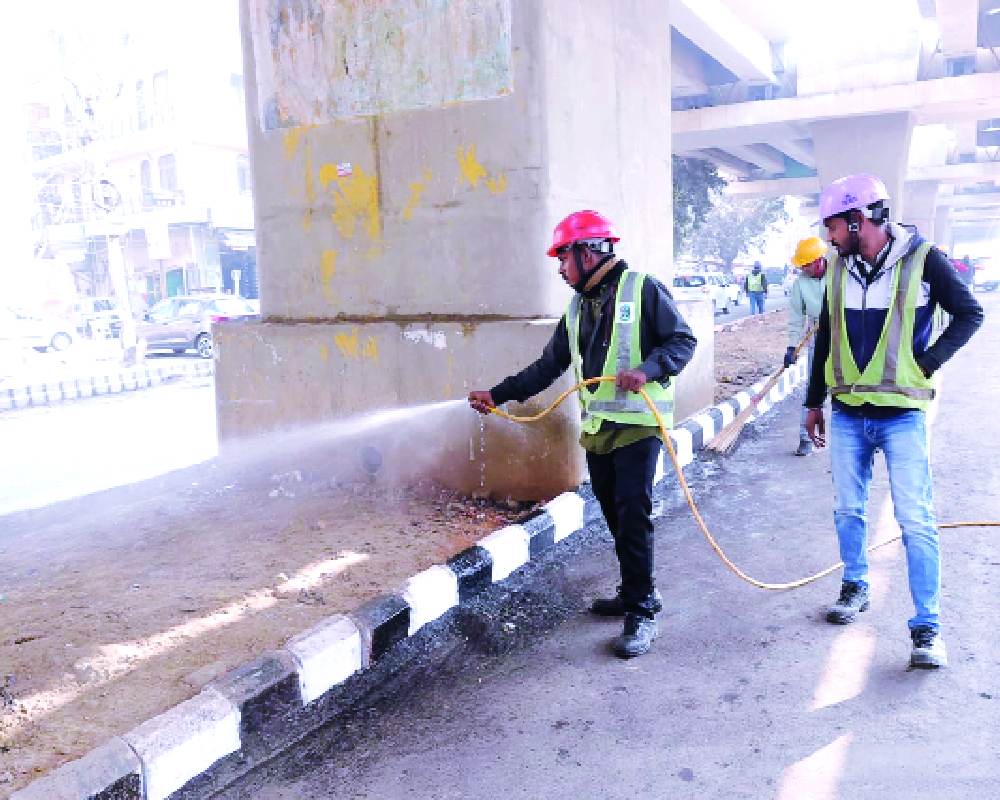
The latest exercise was carried out on Friday between Azadpur and Ashok Vihar. Teams worked on footpath repair, median beautification, and road patchwork. Metro engineers inspected the under-construction sections to check if material was covered and if wheel wash systems were running. These systems prevent soil and cement from sticking to trucks and spilling on public roads.
DMRC said the special drives are being added to its routine environment checks. The Environment Department is making daily rounds to confirm that norms set by Delhi government agencies are followed at all sites.
The push comes after Chief Minister Rekha Gupta directed all departments to ensure strict compliance with pollution control rules. Metro officials said they are updating the Chief Minister’s Office about fieldwork and corrective steps.
DMRC currently manages nineteen kilometres of city roads on a temporary basis. These stretches were handed over for the smooth movement of construction vehicles and for building barricades. Across Delhi, more than a hundred anti-smog guns have been placed at work sites, stations, and offices. The drive between Azadpur and Ashok Vihar included sweeping and clearing garbage from footpaths and medians. Several stretches had broken tiles and open edges that collected dust. Workers replaced slabs and cleaned drainage gaps to stop soil from spilling on the road. The median fencing was repainted, and plants were pruned to improve visibility and safety.
Engineers also checked the storage yards where construction material is kept. Covering of sand and debris is one of the most basic requirements under pollution control rules. The teams checked if the sheets were tied properly and if water was being sprinkled at regular intervals.
The corporation has been under pressure to show daily action as satellite images and roadside monitors point to a steady rise in particulate matter.
Residents living near construction points have raised concerns about debris spilling into walkways and damaged footpaths, making the dust problem worse.