










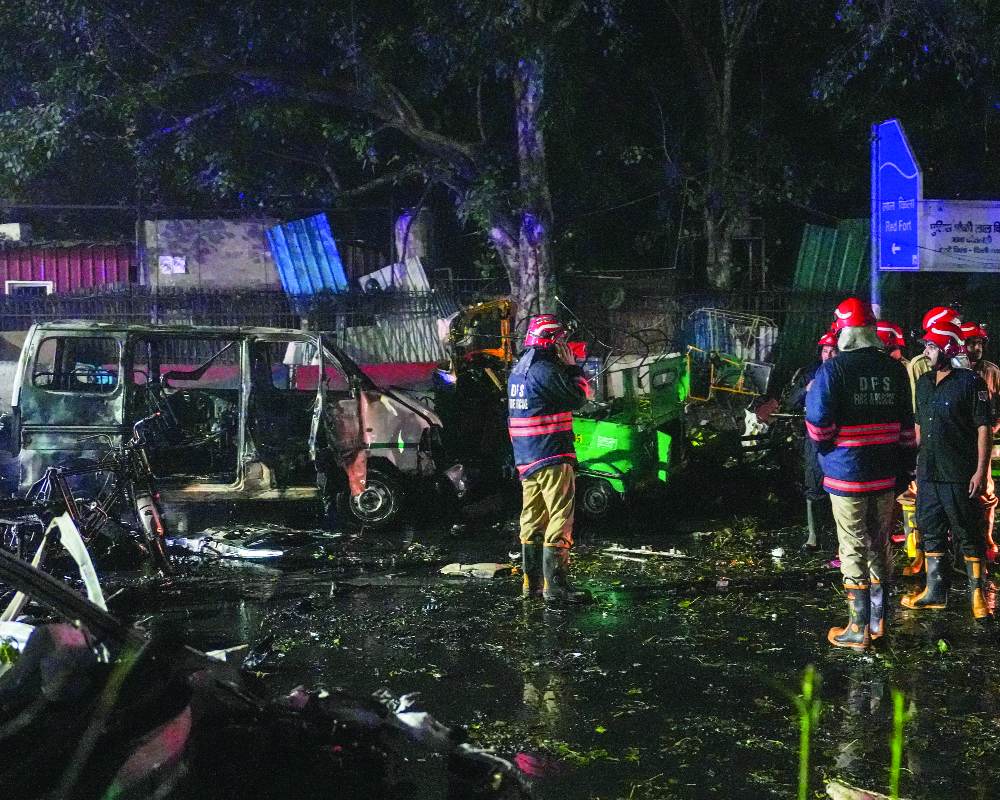
It was 6.55 pm, the usual evening rush near Red Fort Metro Station. Cars crawled in traffic. Vendors called out to tourists. Then, a thunderous blast split the air. Within seconds, a Hyundai i20 burst into flames, lighting up the sky in a sheet of orange fire.
Screams followed. People ran in every direction. The air turned thick with smoke and the smell of burning metal. The blast ripped through the stillness of a Monday evening and left the area near Gate number 1 of Lal Qila Metro in chaos.
Eight people died on the spot. Several others lay injured, some crying for help, some too stunned to move. The explosion set nearby vehicles ablaze — e-rickshaws, cars, and motorcycles all caught fire one after another. Flames leapt as high, melting the paint off nearby walls.
Eyewitnesses said it all happened in seconds. “The car was barely moving because of traffic,” said Amit, who was a few feet away. “Then there was a deafening sound like the earth cracked. The car exploded. The fire spread to the vehicles around it. People were burning, shouting. Blood everywhere.” One man, his shirt soaked red, was helping police lift bodies. “He was picking up body parts with his bare hands,” he said. “His face was blank, but he kept helping. It was unbearable to watch.”
When the smoke cleared a little, the street looked like a war zone. Burnt vehicles stood in blackened rows. The footpath was scattered with shoes, broken glass, and twisted metal. The glass panels of the metro exit area were blown out, shards lying across the pavement like glittering knives. Firefighters kept spraying water while police tried to hold back the crowd. Journalists, camera crews, and bystanders pushed against the barricades, but officers said nothing. Their focus was only on the bodies. There were senior officers everywhere, but nobody spoke. They were picking up pieces, covering them with sheets. More than 50 ambulances lined the road. Each time one left, another arrived. Paramedics rushed the injured to Lok Nayak Jai Prakash Narayan Hospital.
Gulshaad, a medical worker at the site, said, “Four or five cars caught fire instantly. When we reached it, the road was full of smoke and blood. Inner organs were lying on the street. We collected what we could.” He said I received an emergency call that came at 7:06 pm. “By then, the police and fire brigade were already here,” he added. “The scene was horrific.”
Nearby vendors, still trembling hours later, said they saw bodies torn apart. Raja and Allauddin, who sell clothes at the footpath market, watched helplessly as the fire grew. “It was a huge flame, taller than the buses,” said Raja. “People were running, shouting. The heat was unbearable.” Allauddin showed videos on his phone, scenes of chaos, charred cars, and scattered bodies. “A man’s body was half torn on the bonnet,” he said. “Police were loading body parts into a car before ambulances came.”
The faint smell of petrol lingered long after the fire was out. Burnt rubber, broken helmets, and bloodstained cloths lay along the roadside. Metro services at Lal Qila station were halted. Police sealed off the area and diverted vehicles.
Forensic teams worked silently, collecting debris and melted fragments of the deceased’s body parts. Officers said they were probing all possibilities, including the use of an improvised explosive device. The death toll could rise, as several victims remain in critical condition.
The Red Fort walls stood dimly in the distance, silent witnesses to the carnage just outside. The once-busy road was now littered with ash, twisted metal, and the memories of a peaceful evening turned into terror. The echoes of that blast, residents said, will not fade soon.



