











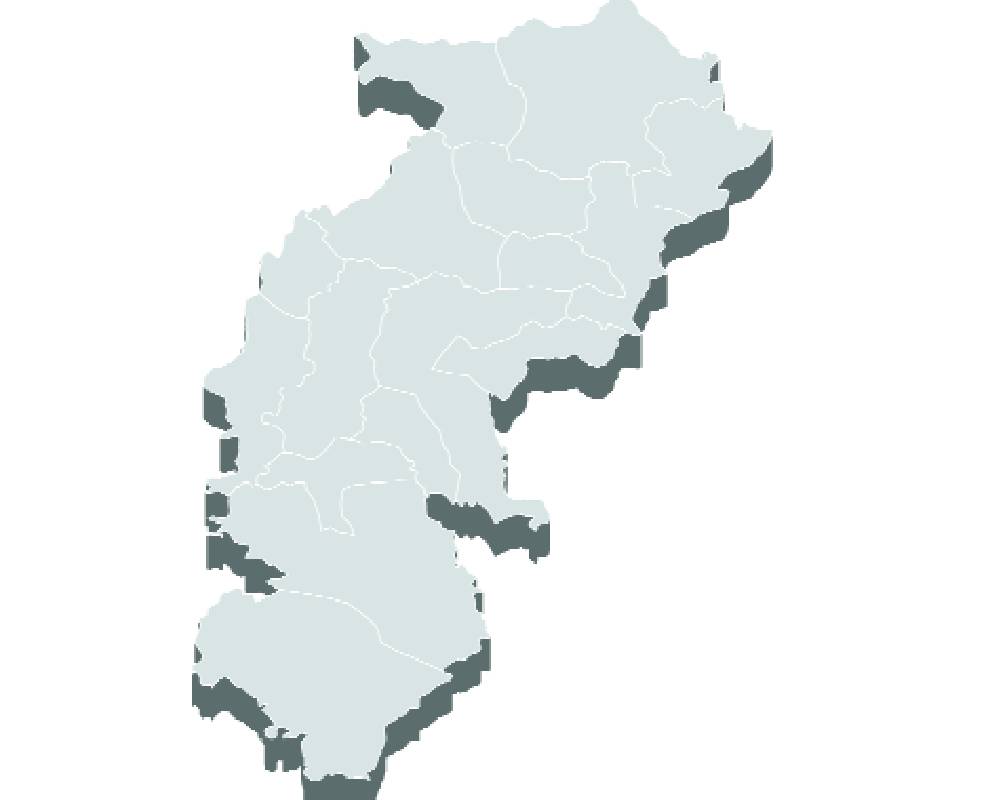
Chhattisgarh recently celebrated its 25th foundation day. Like a 25-year-old youth, the state too is advancing toward a strong identity and economic self-reliance. Born out of Madhya Pradesh, it is striving to embrace modernisation while preserving its rich cultural heritage — a journey filled with both opportunities and challenges.
Economic Progress, Opportunities, and Challenges
The economic growth of Chhattisgarh has been remarkable. In the fiscal year 2022-23, the state’s Gross State Domestic Product (GSDP) grew by 8 per cent, higher than the national average. The government allocated 39 per cent of its total budget toward social welfare. The unemployment rate places Chhattisgarh fifth in the country, yet behind this positive statistic lies the issue of underemployment and skill mismatch. The imbalance between youth potential and industrial demand remains a concern.
To bridge this gap, the state launched robotics and artificial-intelligence courses from 2024-25, preparing its youth for global competitiveness.
However, in rural and tribal regions, the weak infrastructure of primary and secondary education continues to be a major challenge.
Agriculture remains the backbone of the state’s economy, providing employment to 77 per cent of the population. Fertile soil, diverse climate, and abundant water resources make it suitable for high-income crops. For increasing agricultural income, the development of micro-irrigation, organic farming, warehousing, and agro-processing industries is essential.
Chhattisgarh’s mineral wealth is both a boon and a challenge. While mining and industry fuel the economy, they often lead to environmental degradation, displacement, and the resurgence of Naxalism.
The Fight Against Naxalism
Union Home Minister Amit Shah has set a target to make Chhattisgarh Naxal-free by March 2026, symbolising the government’s unwavering commitment. The end of Naxalism will open new doors for industry, services, and investment.
Operations such as Octopus, Double Bull, and Chakrabandha have achieved remarkable success. Security forces have established permanent camps in remote forest regions.
In 2025 alone, 270 Naxals were neutralized, 680 arrested, and 1,225 surrendered. Major missions like Operation Black Forest and mass surrenders in Bijapur, Chhattisgarh, and Maharashtra reflect the growing confidence among insurgents to return to the mainstream.
Security agencies now employ cutting-edge technologies for precise monitoring and analysis of Naxal activities — including location tracking, mobile data analysis, call-log examination, social-media analytics, and AI-based data systems.
Collaboration with forensic and technical institutions has strengthened the intelligence framework.
Drone surveillance and satellite imaging have brought unprecedented improvements in operational accuracy.
With the continued cooperation between the Centre and the State, India is steadily moving toward becoming completely Naxal-free by March 2026 - a testament to decisive governance and unwavering resolve.
Now, Bastar needs a strong alternative development model so that it never regresses to its earlier conditions.
Gone are the days when exchanging salt for chironji and tendu leaves was a matter of pride. The people of Bastar deserve dignified livelihoods and better living conditions. Industrialisation of Bastar must go hand in hand with the preservation of its natural and cultural identity. The government is now taking decisive steps to free Bastar from the grip of Naxalism.
A Morning from 2006 - An Administrative Memory
In 2006, discussions were held with Tata Steel to set up a 5.5-million-ton steel plant. The then Chief Minister Dr Raman Singh had a clear vision — to free Bastar from Naxalism through development and industrialisation. I recall that in June 2006, when I was the Collector of Rajnandgaon, Dr Raman Singh told me over the phone:
“I am sending you there with a big responsibility.” After becoming District Magistrate of Bastar, I worked with the district administration and police to translate his vision into reality. Since the region falls under Schedule V (tribal area), land acquisition required approval from Gram Sabhas under the PESA Act. Within a week of assuming charge, 6 out of 10 Gram Sabhas granted consent, and within the next week, the remaining 4 followed.
Subsequently, the land acquisition process began, and in record time - within two months - compensation exceeding ?55 crore was distributed to landowners for the acquired barren land.
To ensure better health, education, and employment opportunities for Bastar’s residents, an MoU with Tata Group was also signed. It included provisions for a super-specialty hospital, premium schools, an engineering college, and employment opportunities for local youth.
However, due to bureaucratic hurdles at higher administrative levels, the project could not progress. Tragically, that acquired barren land later became a victim of political opportunism, and its return to its multiple landowners was publicized as an achievement - but in my view, it was a severe setback to Bastar’s growth and prosperity.
I consider it a major lost opportunity - this project could have transformed Bastar’s destiny and naturally eradicated Naxalism.Today, the vision of a Naxal-free India is yielding tangible results.
This is truly a sunrise moment for Bastar. What is now needed is a robust developmental roadmap so that this time, the “take-off” becomes a real flight.
If Chhattisgarh utilizes this opportunity wisely, it can emerge as a leading pillar of a developed India by 2047.Then one could truly say - “Chhattisgarhiya, sable badhiya!” (The people of Chhattisgarh - the best of all!)



