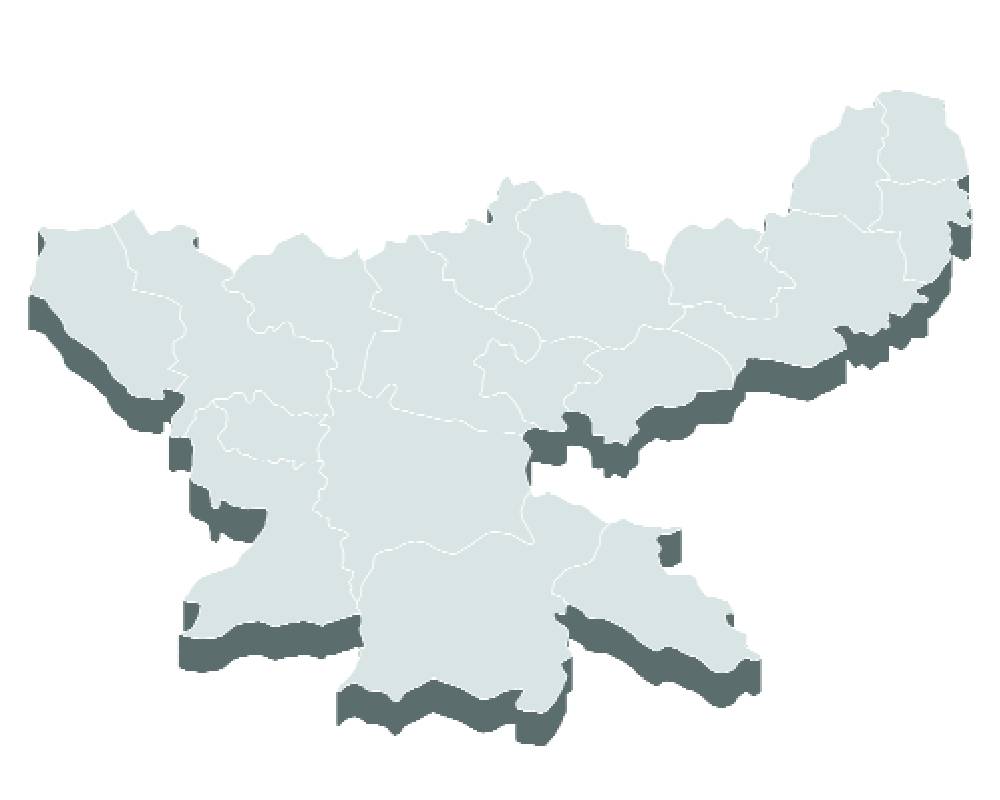
Jharkhand, one of India’s youngest states, completes 25 years of its formation in 2025, a journey marked by courage, hard work, and transformation. From its birth to today, the state’s progress reflects the determination of its people to build a distinct identity and a better future, despite many challenges.
Historical Background and Formation
The dream of a separate Jharkhand existed long before the state was officially created on November 15, 2000. With its rich tribal culture, abundant minerals, and unique traditions, the region always had a strong sense of identity. The demand for a separate state grew stronger in the 1970s under the leadership of the Jharkhand Mukti Morcha (JMM), which voiced the aspirations of tribal and local communities for political rights and fair economic development. This dream finally came true with the Bihar Reorganisation Bill, 2000, which separated 18 southern districts of Bihar to form Jharkhand - India’s 28th state. It was both the fulfilment of a long struggle and the beginning of a new chapter in self-governance and planned development.
The Naxal Challenge: Courage, Sacrifice, and Determination
From its inception, Jharkhand faced one of India’s toughest internal security challenges — Left-Wing Extremism (LWE), or Naxalism. Extremist groups tried to exploit the region’s difficult terrain and social inequalities, leading to years of violence and loss.
Official records show that since 2000, 551 police personnel have lost their lives in anti-Naxal operations, and around 823 civilians have been killed in extremist attacks. Landmines, ambushes, and assaults on police camps created fear, while schools, health centres, and local governance suffered in affected areas.
Yet, in the face of this adversity, the Jharkhand Police and local people demonstrated extraordinary courage and commitment. Security forces worked in dangerous conditions with limited resources but stood firm to uphold law and order. As former Chief of State Police, I had the privilege of witnessing this journey closely. I saw police vehicles being blown apart and senior officers, including District SPs, targeted in ambushes. But I also witnessed the unmatched bravery of officers and jawans who continued to serve with dedication, often at great personal risk.
The police understood that the fight against Naxalism could not be won by force alone. Alongside strong security measures, they focused on communication and trust-building. Cultural campaigns like the street play “Phir Ek Nayee Subah Hogee” and the film “Pratyavartan” highlighted the futility of violence and motivated misguided youth to return to normal life. These creative efforts were widely appreciated for their positive impact on society.
Through intelligence-based operations, cooperation with central agencies, and effective rehabilitation programmes, extremist networks were gradually weakened. Once-dangerous areas such as Jhumra Pahar, Prasanth Hills, Saranda, and Burha Pahar were freed and brought back into the fold of governance and development.
Today, Naxal influence has shrunk to only a few isolated pockets, thanks to years of coordinated security efforts and growing public confidence in democratic and developmental processes. The story of Jharkhand’s fight against extremism is not just about law and order — it is a story of human courage, sacrifice, and the strength of democratic resolve.
Political Evolution and Governance
Jharkhand’s political journey has seen frequent changes in leadership and coalition governments, reflecting its social diversity and evolving democracy. While this sometimes caused policy disruptions and administrative instability, it also allowed representation for different regions and communities.
In recent years, greater political stability has led to more consistent governance, better financial management, and improved coordination among government departments. These changes have strengthened institutions and helped the state focus more effectively on development.
Economic and Infrastructure Growth
Jharkhand holds over 37 per cent of India’s mineral wealth, making it a key contributor to the country’s industrial economy. Turning this mineral strength into broad-based prosperity has been challenging due to environmental and regulatory hurdles.
Even so, recent years have seen steady progress. Better roads, railways, airports, and power projects have improved connectivity and encouraged investment. The government’s focus on renewable energy, agro-industries, and new manufacturing sectors has helped diversify the economy beyond mining. Transparent policies, public-private partnerships, and an emphasis on value addition are driving balanced and sustainable growth.
Jharkhand is now moving from being merely a supplier of raw materials to a state focused on industrial modernization and equitable development.
Social and Rural Development
Jharkhand remains deeply rooted in its villages and forests. The state’s approach to development emphasizes education, healthcare, women’s empowerment, and rural livelihoods.
Through Self-Help Groups (SHGs) and community-based missions, many tribal and rural families have been connected to livelihood programmes and small-scale entrepreneurship. Skill development and digital services are helping bridge gaps in employment and governance. Improved roads, electricity, and health outreach have brought visible change even in remote areas, reflecting the government’s effort to make progress inclusive and people-centred.
Future Prospects and Aspirations
As Jharkhand enters its next 25 years, it stands ready for faster growth built on peace, stability, and sustainable development. The restoration of law and order in former conflict areas has created a strong foundation for new industries and investments.
The state’s future goals include industrial diversification, clean energy, eco-tourism, and human resource development. With a young population and growing stability, Jharkhand aims to combine its natural wealth with innovation and entrepreneurship to become a model of inclusive growth.
The key challenge will be to maintain a balance between economic growth, social justice, and environmental protection - ensuring that progress benefits all without harming nature.
Conclusion
The story of Jharkhand at 25 is one of resilience, renewal, and hope. From years of struggle and underdevelopment, a confident and forward-looking state has emerged. The bravery of its security forces, the dedication of its officials, and the hard work of its citizens have together shaped Jharkhand’s success.
They have turned adversity into opportunity and aspiration into achievement. As Jharkhand steps into its next 25 years, it carries forward a proud legacy - of sacrifice, perseverance, and promise - with faith that peace, development, and dignity for all will continue to guide its path.