











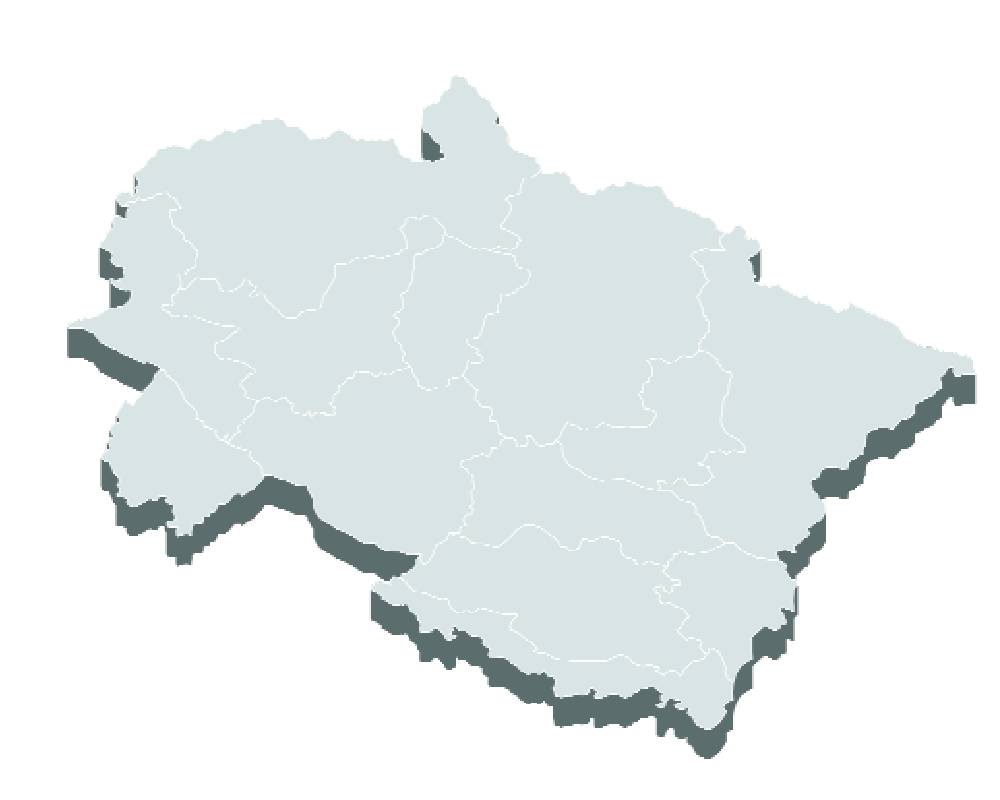
As Uttarakhand marks its 25th year of statehood, it is apt to reflect on its journey; the achievements, the evolving landscape, and the work still ahead. From infrastructure to tourism, from power to industrialisation, the hills have witnessed lot of transformation. Yet the fragile Himalayan ecology and the aspirations of its people demand that this progress be both sustainable and inclusive.
Infrastructure & Connectivity
When Uttarakhand was created in 2000, its infrastructure base in many remote and mountainous areas was modest. Over the past quarter-century the state has made very tangible strides.
The road network has expanded significantly. According to recent data, the total road length in the state has increased from under 20,000 km to over 45,000 km. Similarly, the rail network is coming up to Karnprayag. Aerial connectivity has also improved. Now, we can’t call Uttarakhand a remotely connected state.
These improvements have unlocked many opportunities; for access to markets, for tourism, for medical and educational reach. Yet challenges like landslides, terrain constraints and remote hamlets still remain.
Road Network in the Hills
Beyond the aggregate numbers, what stands out is how connectivity has improved: Villages that were isolated for much of the year are now linked via motorable roads, enabling access to education, health and livelihoods. The focus on all-weather roads in areas like the Char Dham circuit and border zones like Lipilekh road means the state is better prepared for both development and security.
Roads, bridges, tunnels, and four-lane highways speak of the fast-growing infrastructure of Uttarakhand. This would not have been possible in a large state like Uttar Pradesh.
Still, given the mountainous terrain, maintenance costs and environmental risks (like landslides and weather damage) persist. The state has to continuously invest in resilient infrastructure.
Heli-Services & Air Connectivity
One significant leap has been the expansion of heli-services, which are crucial in the hills. The state government has started heli services from many of its planned heliports, 12 out of 18 already operational.
These services not only aid pilgrimage tourism and adventure travel, but also act as lifelines during natural calamities and emergencies.
However, the expansion also carries safety and environmental implications: high altitude operations, weather vulnerability, and the risk of overuse in environmentally sensitive zones. This calls for strict standards, rigorous monitoring and sustainable planning.
Power Generation & Energy Access
Access to reliable power is a foundation of modern development, and Uttarakhand has advanced considerably in this domain.
The distribution utility figures show strong growth: number of consumers, contracted load and lines all increasing substantially. For example, the state distribution company’s input energy rose from 3,038 MU to 17,200 MU.
In the generation sphere, the state is pushing both hydro and solar. Under its Solar Energy Policy 2023 it has targeted 2,500 MW of solar capacity.
Meanwhile, hydropower projects aim to increase capacity significantly by 2031.
But the challenge remains: ensuring that remote villages, especially in the high hills, have reliable access, and that power infrastructure growth doesn’t come at the cost of ecosystems or local livelihoods.
Industrialisation & Economy
From a largely under-industrialised region, Uttarakhand has evolved markedly in its economic base. The number of MSMEs in the state has grown to approx. 80,000 new businesses over the last 25 years, with investment of over Rs 17,000 crore.
The manufacturing sector now contributes about one-third of the state’s GDP.
The state’s promotion of horticulture, forests, medicinal & aromatic plants, and associated processing industries shows potential for eco-friendly industrialisation.
But caution is required i.e., heavy, large-scale industry especially in fragile hill zones, must be carefully regulated. The state’s strength should lie in small, green, local industries that preserve ecology and generate local jobs.
Policing: Humane, Tech-Savvy, Efficient
Another positive narrative has been the transformation in law enforcement and public safety. The state police has come up to SMART police vision of Hon’ble Prime Minister.
The state police is increasingly using technology: digital systems, drone surveillance, cyber-units, special task forces etc.Public-friendly measures, community policing initiatives and improved responsiveness are helping make the force more citizen-friendly.
Health & Education in the Hills: The Work Ahead
While much has improved, the hills of Uttarakhand still face gaps in health and education.
Schools, colleges and medical facilities have expanded, but many high-altitude and remote villages remain underserved.
Challenges include: attracting and retaining qualified teachers and doctors, providing year-round access (roads and power disruptions hamper this), and tailoring education & health services to the specific needs of hill communities.
This is a key priority: without strong human?capacity infrastructure, the other gains risk being undercut by migration, brain?drain and out-flow of youth.
The Industrialisation Choice: Eco-Friendly Only
Given Uttarakhand’s unique Himalayan environment, there is a strong imperative to choose the right kind of industry.
Large heavy-industry projects like steel plants, major chemical plants, massive factory complexes carry high risks of environmental degradation, biodiversity loss, landslide triggers and unsustainable migration.
The state’s future lies better in eco-friendly industries: small manufacturing, value-added forest products, medicinal plant processing, rural crafts, agro-processing, green tourism services, and clean energy components.
Policy must emphasise: low?impact footprint, local employment, minimal environmental harm, respect for ecology & culture, and alignment with carrying?capacity of the mountain ecosystem.
Tourism: Rapid Growth with a Caveat
Tourism has been perhaps the most visible growth story in Uttarakhand but also the most delicate.
The numbers are staggering: over 23 crore (230 million) tourist visits in the past three years.
The state’s “homestay scheme” has been highly successful: more than 6,000 registered homestay operators are benefitting in rural and hill zones.
Tourism has diversified beyond the marquee hill stations to remote destinations, adventure circuits, and lesser?known valleys. This spreads economic benefit more widely.
But caution is needed: “blind tourism” meaning unplanned, over-intensive tourist flows, infrastructure strain, ecological stress, social displacement must be avoided. The hills have finite carrying capacity. References warn about environmental risk from unregulated growth.
The homestay model, responsible tourism, smaller?scale circuits, local participation must be the template going forward.
Concluding Reflections & The Road Forward
As Uttarakhand completes 25 years as a state, the narrative is one of proud transformation i.e., better roads, better connectivity, increased tourism, growing industries, improved power access, more responsive governance. But the story is not complete, and indeed, given the fragile terrain and unique challenges of the Himalayas, the next phase must be conscious, sustainable and inclusive.
Key imperatives for the next 25 years include:
- Ensuring health and education systems reach every village, especially remote hill clusters.
- Prioritising eco-friendly industries, rather than heavy industrialisation that may damage the ecosystem.
- Managing tourism in a way that respects local culture, ecology and infrastructure limits, maintaining balance between growth and carrying capacity.
- Strengthening infrastructure and power access, but doing so while mitigating environmental risk (landslides, glaciers, habitat disruption).
- Enhancing local employment, entrepreneurship in hill zones, so that people don’t feel compelled to migrate to plains.
- Keeping governance responsive, policing citizen-centric, and public services high-tech yet rooted in local realities. Uttarakhand has shown what is possible. The hills have come into sharper connectivity with the world. But the mountains are a gift. They demand custodianship. If the next 25 years lean into sustainable development with Himalayan wisdom, Uttarakhand will shine as a model of how mountain states can grow with dignity, ecology and equity.



