










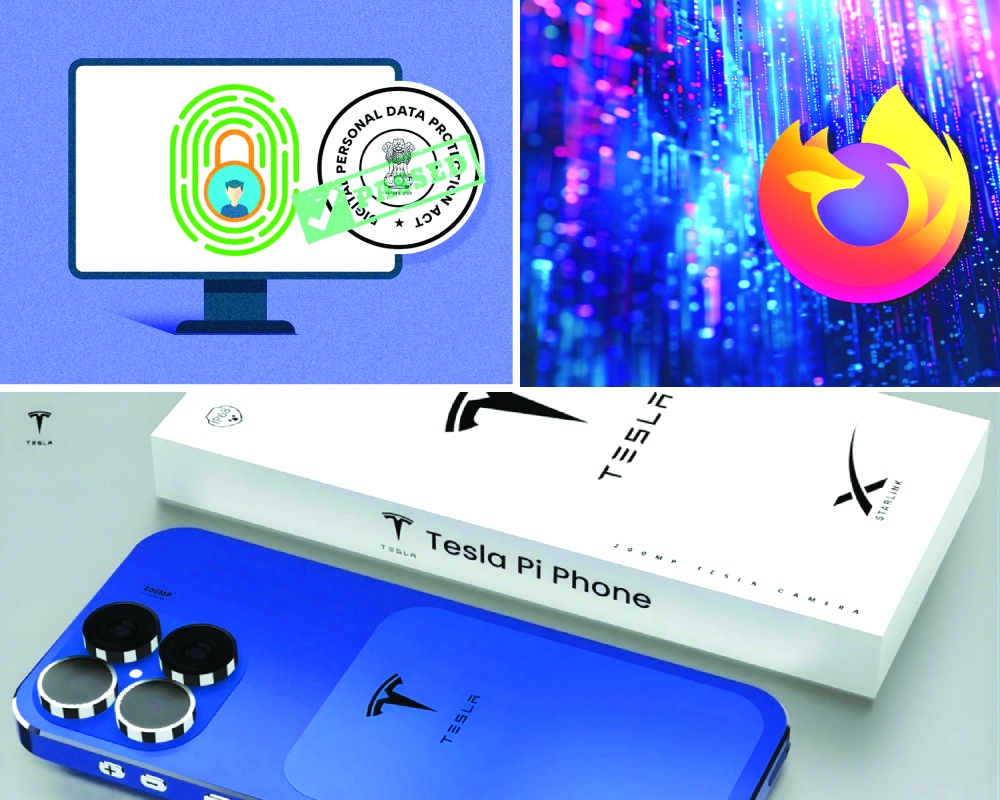
Digital Personal Data Rules notified
The Digital Personal Data Protection Rules (DPDP), 2025 were notified last week, kicking off the formation of the Data Protection Board of India (DPBI) and the legal framework for safeguarding the data of Indian people online.
The DPDP Act itself was passed in Parliament in August 2023, and a draft of the Rules that were notified on Friday (November 14, 2025) were released for consultation in January.
The DPDP Rules, 2025, say that the Centre will specify the kind of personal data which can be processed by “significant data fiduciaries” subject to the restriction that such personal data and traffic data related to its flow is not transferred outside the territory of India.
A committee, to be formed by the Government, will determine it. This is effectively a data localisation requirement, which the industry has previously resisted. Big tech companies are expected to push back on this provision.
Tesla Pi Phone 2025
The Tesla Pi Phone 2025 is one of the most anticipated tech innovations in recent history. Designed by Tesla Inc., this futuristic smartphone aims to redefine the smartphone experience with Starlink satellite internet, Neuralink compatibility and solar charging technology — all packed in a sleek, premium Tesla design.
The Tesla Pi Phone reflects Tesla’s design philosophy — minimalistic, durable and futuristic. It’s built using aerospace-grade titanium with matte metallic finishes, available in Graphite Black, Deep Blue, and Crimson Red. The phone features a 6.9-inch OLED display with a 144Hz refresh rate and 4K resolution, offering unmatched visual clarity.
The Adaptive Tesla Glass on both sides provides durability and scratch resistance, while the body design changes hue under sunlight — a true Tesla touch. Pi Phone is expected to run on Tesla’s custom Neural Processor Unit (NPU) co-developed with AMD and Neuralink, optimized for AI-driven performance. It comes with 16GB RAM and up to 2TB storage, offering incredible speed and efficiency.
The phone’s Tesla OS (based on a secure Android fork) ensures privacy, fluid multitasking and seamless integration with other Tesla products. Tesla’s partnership with Neuralink brings mind-controlled functionality to the Pi Phone. Future updates may allow users to control apps, calls and texts through neural signals.
The built-in AI assistant, powered by TeslaGPT, adapts to user behavior, manages smart home devices and even integrates with Tesla cars for voice-free command execution.
Mozilla upgrades Firebox
As the AI browser wars heat up, Mozilla has announced it is upgrading Firebox with a built-in assistant that will let users chat with AI as they navigate the web.
The new ‘AI Window’ is an intelligent and user-controlled space where users can get help from an AI assistant as they browse on their own terms, the non-profit organisation said in a blog post on Thursday, November 13. AI Window in Firefox will not be enabled by default and users will have to opt-in to try it.
They can also disable it whenever they want, Mozilla said, adding that the AI-powered upgrade is being developed as open-source.
The feature is rolling out in testing to users on a waitlist. “You can continue using Firefox as you always have for the most customizable experience, or switch from classic to Private Window for the most private browsing experience.
And now, with AI Window, you have the option to opt in to our most intelligent and personalised experience yet — providing you with new ways to interact with the web,” Mozilla said. Mozilla’s announcement comes at a time when tech companies are racing to build generative AI-powered browsers amid a fundamental shift in user behaviour when looking up information online.
Many AI-first browsers such as Dia replace the search bar with a chatbot, while others such as Perplexity’s Comet or OpenAI’s ChatGPT Atlas are browsers that are built entirely around AI agents.
(All inputs from PTI)



