Flight operations at Delhi’s Indira Gandhi International Airport (IGIA) are now normal, the airport authority said on Saturday, following 36 hours of disruptions caused by a technical glitch in the Air Traffic Control (ATC) flight planning system.
The malfunction led to widespread delays across more than 900 flights, while several others were cancelled, affecting hundreds of passengers. However, the incident has reignited concerns over India’s aviation safety infrastructure - issues that were highlighted over two months ago by a Parliamentary Standing Committee on Transport, Tourism and Culture.
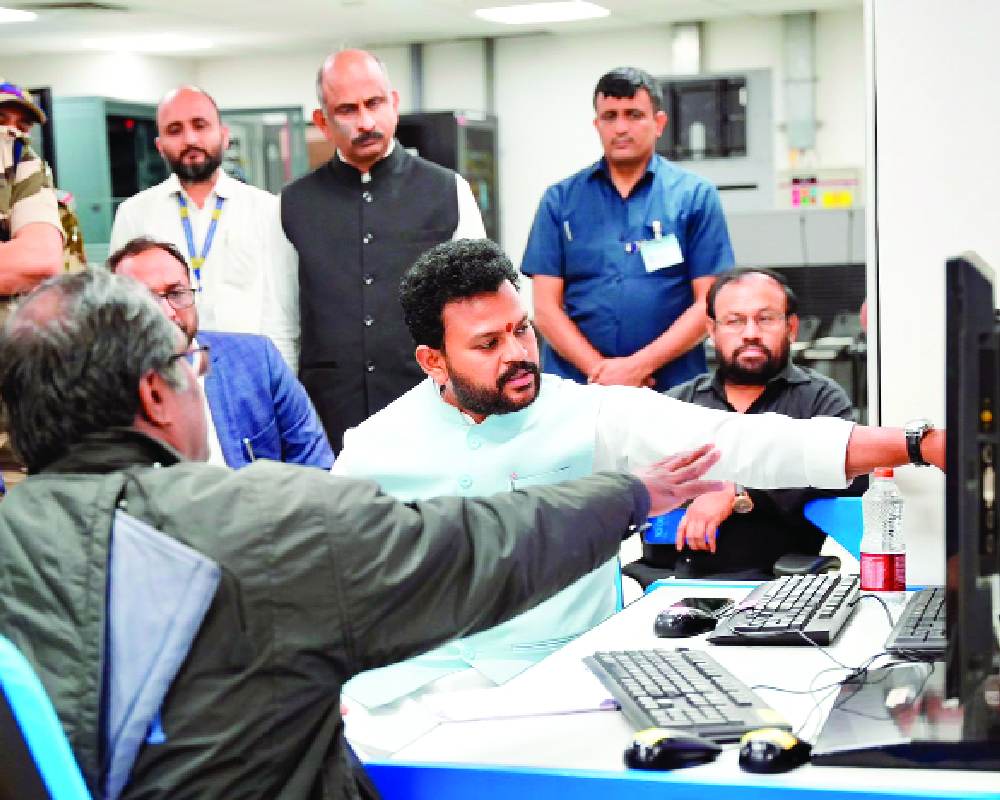
Following the technical snag, Union Civil Aviation Minister Rammohan Naidu has directed that a detailed root-cause analysis be undertaken to prevent recurrence of such glitches in the future. He along with senior officials, had visited the airport to take stock of the situation. He also instructed officials to plan for more system advancements, including additional or fallback servers to strengthen ATC operations.
Meanwhile, on Saturday, 129 flights were delayed, as per a flight tracking website, Flightradar 24. Among these 129 flights, 53 were arrivals, while 76 were departures.
The average delay for arrivals was reported as five to 10 minutes, and for departures, it was around 19 to 25 minutes. Delhi International Airport Ltd (DIAL) on Saturday morning said the technical issue that affected the AMSS is gradually improving. In an advisory issued at 11:55 hours, IGI Airport confirmed that all flight operations were now normal. “All flight operations are normal at Delhi Airport. Passengers are advised to stay in touch with their respective airlines for the latest flight updates,” DIAL said in a post on X. The chaos began around 3 pm on Thursday, when a malfunction in the Automatic Message Switching System (AMSS) disrupted the flow of crucial flight plan data to the Auto Track System (ATS) — a core part of the Air Traffic Control (ATC) network.
The AMSS is responsible for automatically feeding flight plan information to ATC screens, and its failure forced controllers to process flight plans manually. The IGI airport in the national capital, which has four runways, handles more than 1,500 flight movements daily.