











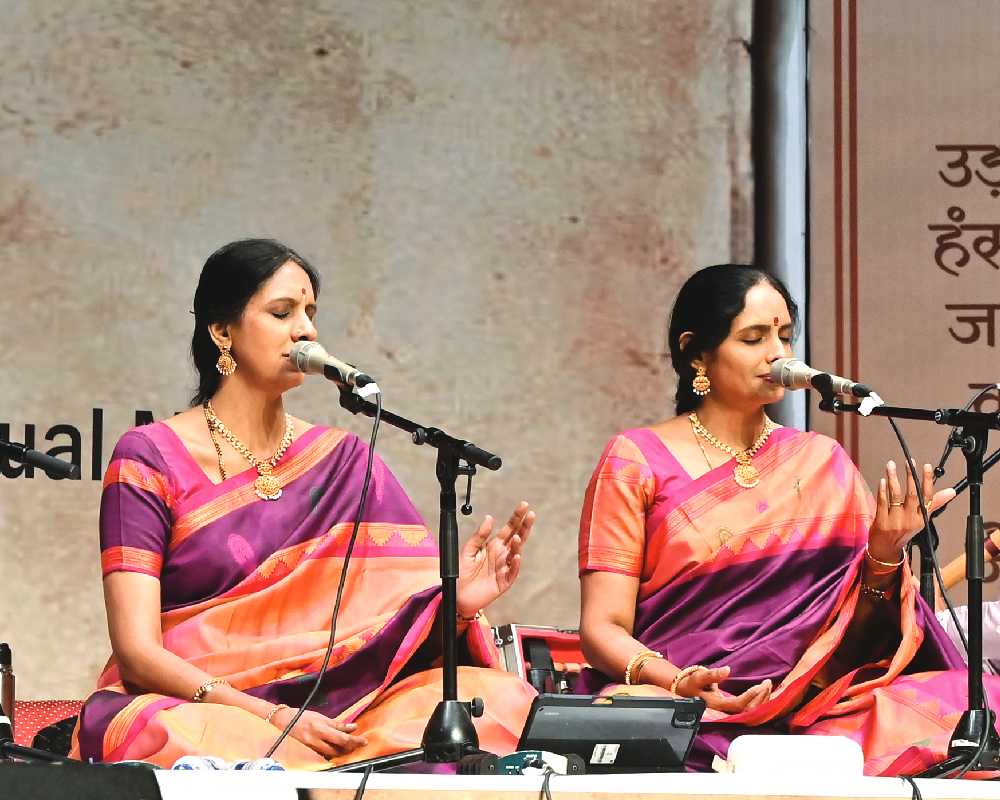
Some performances rise above the familiar format of a concert and become a contemplative experience. Tu ka Mhane Kahe Kabira, presented by Pancham Nishad Creatives at Kamani Auditorium, was an evening where poetry, philosophy, and music converged to explore the essence of Bhakti.
The presentation brought together the spiritual legacies of SantTukaram and SantKabir, representing two schools of devotion — Saguna, which worships the divine in form, and Nirguna, which seeks the formless truth. Though separated by time and region, their verses share a reflection on human faith and inner seeking.
Ranjani and Gayatri presented Tukaram’s Abhangwani with emotional intensity, blending lyrical devotion with vocal precision. Their rendering of Tukaram’s verses carried the intimacy of prayer and the discipline of classical form. In contrast, Bhuvanesh Komkali’s Kabirwani reflected an austere beauty, his restrained style allowing Kabir’s words to shine through with unembellished clarity.
The accompaniment by Mandar Puranik on tabla, Krushna Salunke on pakhawaj, and Anurodh Jain on rhythm created a balanced, textured soundscape.Dhanashree Lele’s narration provided philosophical context, explaining how both saints, though rooted in different traditions, spoke of the same quest for unity with the divine.
Her commentary gave structure to the dialogue between Saguna and Nirguna Bhakti, helping the audience grasp the intellectual and spiritual depth of the compositions. By the end, Tu ka Mhane Kahe Kabira left the audience thoughtful and deeply moved. It succeeded in transforming devotional music into an inquiry into truth and devotion, demonstrating how ancient philosophy can find expression through disciplined artistry and contemporary performance.



