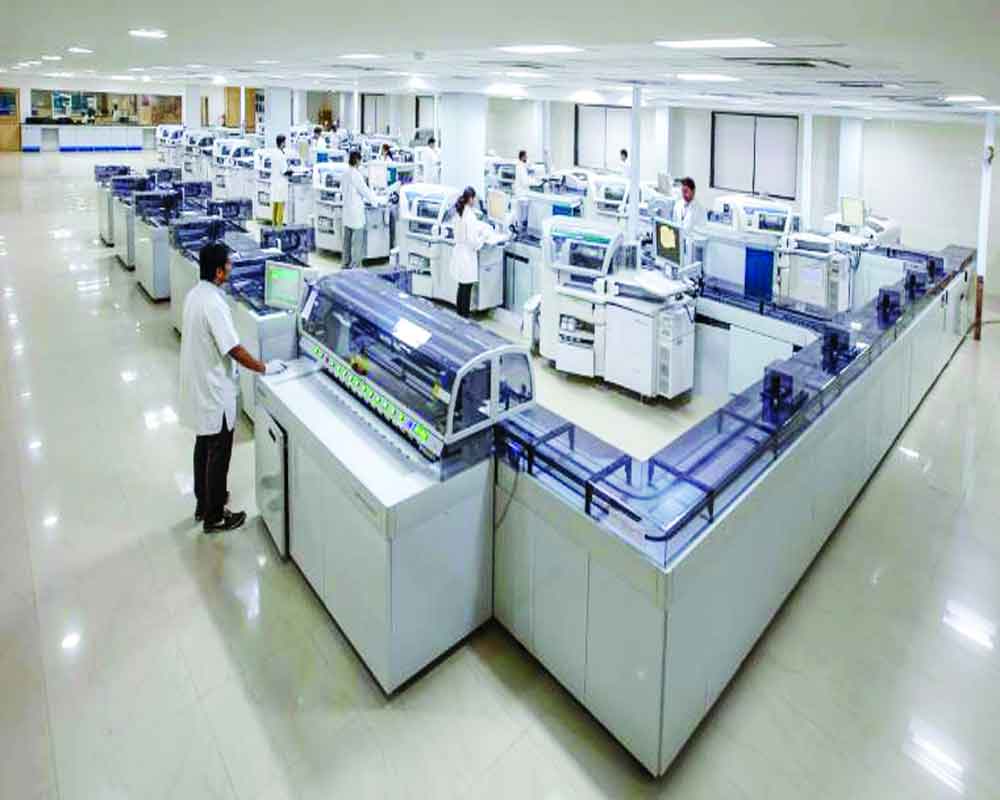
A centralised approach to laboratory diagnostics offers numerous advantages in terms of efficiency, quality and coordination of services
In the present age, medical and clinical examination is greatly supplemented with (or sometimes lamentably even replaced by) laboratory investigations. Nearly all physicians and surgeons routinely rely on a broad range of laboratory tests to diagnose or confirm various medical conditions. Diagnostics are a force multiplier to our clinical judgment and are essential decision-support tools. Laboratory diagnostics provide us with extremely valuable information that assists accurate diagnoses, helps in monitoring the progression of diseases, and aids treatment decisions.
Standardisation of laboratory procedures and maintenance of accurate reference ranges is crucial to ensure consistent and comparable results across different laboratories. Without standardisation, the issued laboratory results will at best, be slightly inaccurate but could lead the treating physician away from diagnosing the problem at hand. It is therefore incumbent on the physician to apriori check if the tests being perused have been done in a standardised laboratory. This is where the centralised laboratories have a major advantage.
Good centralised laboratories routinely implement standardized protocols and participate in external quality assessment programmes to validate the uniform standardisation and accuracy of their testing practices. These laboratories, by virtue of sheer numbers being catered to, are able to reduce the turnaround time or total diagnostic time, the time lag between sample collections to reporting of results. This is vital in accessing samples from remote locations where delays in reporting have amplifying effects on delays in diagnosis and optimum healthcare delivery. Though, the COVID pandemic challenged this hypothesis of the superiority of the centralised laboratories and the decentralised, standalone laboratories did commendable work that was widely appreciated also.
At the end of the day, as practising clinicians, we desperately need accurate results that are uniformly comparable between different laboratories. This accuracy in the interpretation of test results helps in better treating the patients.
As nephrologists, we rely on the blood concentration of creatinine (serum creatinine) to estimate a patient’s kidney function. It is mandated that laboratories doing this test must have its results traceable to IDMS (isotope-dilution mass spectrometry). Until about a decade ago, several laboratories in India were not maintaining this standard. Thankfully, things have improved. This is where the centralised laboratories score, by maintaining high standards of quality assurance and providing accurate and reliable results.
Most of these laboratories have National Board Accreditation for Testing and Calibration Laboratories (NABL) certification. This certification reinforces uniformity and standardisation. However, at present, this accreditation and certification is still voluntary at the present time. It is well known that different laboratory tests require specialised expertise and equipment. For example, pathology, microbiology, hematology, and molecular biology laboratories each need their own set of techniques and instruments to operate. Centralising testing also allows for a wider array of tests to be available simultaneously.
In addition, modern laboratory diagnostics often involve sophisticated equipment and infrastructure, such as automated analysers, mass spectrometers, genetic sequencers, and imaging systems. These instruments are costly to acquire, operate, and maintain, and in addition, need experts with specialised knowledge, training and skills to conduct the tests and interpret the results. Centralised laboratories are often able to pool resources to invest in state-of-the-art equipment, enabling more accurate testing and savings on instruments, reagents, and personnel.
(The writer is a professor and heads CMC Vellore; views are personal)