Electronics and automobiles, which were earlier taxed at a steep 28 per cent under the Goods and Services Tax (GST) regime, now attract 18 per cent under the 2.0 structure. The products include TVs, dishwashers, ACs, motorcycles below 350cc, and smaller passenger cars. Electric vehicles, however, retain the concessional five per cent GST. According to Emkay Global Financial Services, the new GST will be a game-changing reform, and not incremental adjustments.
“We estimate 2-6 per cent/4-8 per cent in FY26E/FY27E EPS (Earnings Per Share) upgrades for our auto universe. Smaller cars and two-wheelers are the standout winners, with an eight per cent effective price cut expected to kick off significant demand. Our channel checks indicate growth rates jumping 15-20 per cent in H2-FY25. We expect 75-80 percent of the GST benefits to be passed on to the consumers, with a small retention by the manufacturers through reduced discounts,” contend the analysts at Emkay Global.
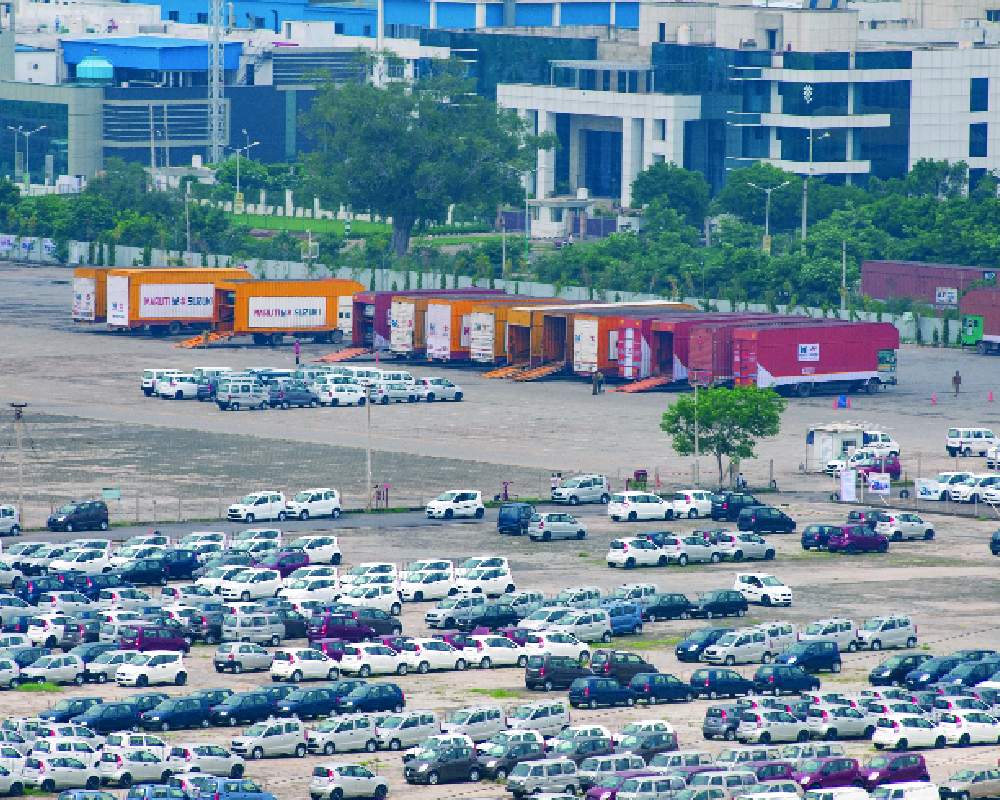
According to Prabhudas Lilladher Capital, two categories of cars will benefit the most. These include the small cars (=1,200 cc Petrol, CNG, LPG, and =1,500cc Diesel and =4m length), whose GST is down to 18 per cent from the earlier 28-31 per cent (inclusive of cess). This is a positive for carmakers such as Maruti Suzuki India, Hyundai Motors India and Tata Motors. Mid-size vehicles (including the large hybrids) will gain as their GST is down to 40 per cent (sin tax slab) from the earlier 43-45 per cent (inclusive of cess). This is a slight positive for Maruti Suzuki and Hyundai Motors.
The stock prices and stock indices reflect the new reality. In the past three months, while the Nifty 50 and Nifty 500 are down by up to one per cent, the Nifty Auto index has skyrocketed by nearly 15 per cent. A similar pattern was observed over the past month, when the overall Nifty indices went up by two per cent or so, but the Nifty Auto was up by nearly 16 per cent. Even in the past week (as on September 9, 2025), the former too gained one per cent each, and Nifty Auto was up by nearly six per cent.
Let us now consider the future of Maruti Suzuki, the largest player in the passenger car segment. According to Elara Capital, the company’s Q1-FY26 revenue rose eight per cent YoY (Year-on-Year), better than the expectations of one per cent. This was led by the higher-than-estimated ASP (Average Selling Price) growth of more than eight per cent QoQ (Quarter-on-Quarter) and seven per cent YoY, on better model mix (higher share of SUVs and CNG vehicles).
“Strong exports would be a catalyst, but for Maruti Suzuki to deliver hereon, domestic demand needs to bounce back. The company is seeing better demand trends in the rural markets, while urban demand is muted,” explain the analysts at Elara Capital. GST 2.0 will help in both areas, as overall demand is expected to perk up, and rural markets may boom due to more money in the households’ pockets due to varying reasons, including GST and income tax cuts.
Maruti Suzuki has entered the electric vehicle (EV) market with the launch of E-Vitara, which is built on a dedicated platform for superior performance. “The company is setting a new paradigm with a comprehensive Eco Solution, home chargers with every vehicle, fast chargers every 5-10 km in the top 100 high-sales cities, 24x7 roadside assistance, and EV-ready workshops in 1,000 cities,” states a recent brokerage report by InCred Research Services. The model has a strong export potential, as it will ship to 100 countries.
According to the brokerage houses, the key downside risks for the company include the new model failing to garner adequate response from the customers, and the ongoing global tariff imbroglio, which will impact rupee volatility, and export volumes. However, there are indications of a renewal of bilateral trade talks between India and the US, which will be accentuated by mellow statements from the US President Donald Trump about economic relations between the two.
“Key downside risks include: The cyclical nature of the commercial vehicle industry; highly-competitive nature of the industry; raw materials’ price inflation, and; a shift in the modal share towards railways due to the dedicated freight corridor,” states a report by BNP Paribas. These factors will prevent Maruti Suzuki, and other carmakers, from passing on the complete benefits of the GST cuts, which will dampen future demand and uptake.
Demand from the first-time buyers remains weak due to the affordability issues in the entry level segment. The fact is that even the new consumers wish to directly graduate to the bigger, mid-sized cars, which are expensive. A price cut of up to 10 per cent is unlikely to goad them. Lower interest rates, easier EMIs, and larger funding options will excite them more. The weak industry demand that persisted during the first quarter of this year, and up to August, is indicative of the ongoing affordability challenges.
“We lower our FY26E-27E estimates by 2-3 per cent, but raise our TP (Target Price) to Rs 14,279 (from `13,691) on September 2027E P/E (price-Earnings Ratio) of 25x, as we roll forward. Given the favorable valuations, we reiterate Accumulate,” feel the analysts at Elara Capital. On September 16, during the mid-day trade, the stock ruled at a higher price of `15,397, a gain of nearly one per cent. Over the past one month, the share price zoomed by more than `1,300, or a gain of more than nine per cent. Over the past six months, the upside was a mouth-watering 33 per cent, or `3,800.
Maruti Suzuki will launch two new SUV models (EV and a regular one with an internal combustion engine) during the forthcoming festive season. EV export dispatches will begin soon, which bodes well for the investors. According to the management, it currently holds a strong second position in the SUV segment, with only a small gap between it and the market leader. With a robust product line-up,
the company seeks to secure the top spot.
“Maruti Suzuki is currently trading below its last 10-year median NTM P/E, and its P/E premium to Sensex is also more than 1SD below the last 10-year median and looks attractive to us. We see improved volume growth in H2-FY26, and model launches as key stock catalysts ahead,” states a report by BNP Paribas.