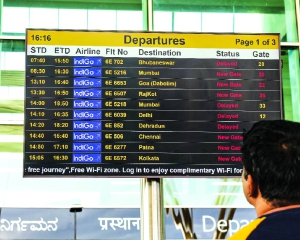
This was the week of meltdown at Indian airports. Chaos ruled as passengers flying IndiGo did not know when their flight would take off, with no one to tell them the truth that the flight they had been waiting for was cancelled. Even those that took off were off the mark by hours. India’s airports have descended into unprecedented chaos as IndiGo — the country’s largest airline — struggles to keep its operations in the air. More than1,000 cancellations across major hubs like Delhi, Bengaluru and Hyderabad have left passengers stranded, frustrated and confused. This chaos is caused suddenly but is the culmination of accumulated structural weaknesses, regulatory tightening and a failure of planning on the part of airlines in question.
IndiGo hit an air pocket when the implementation of new Flight Duty Time Limitations (FDTL) rules — reforms designed to address pilot fatigue, long flagged as a serious safety concern in a rapidly expanding aviation market — kicked off. The DGCA issued revised norms which mandate increased weekly rest, stricter limits on night operations and capped duty hours for pilots engaged in late-night flying. These rules, long demanded by pilot bodies and aligned with global safety standards, were upheld by a recent court order.
But that sent IndiGo operations haywire, which has the lion’s share of the Indian aviation sector.
In more than two decades of its operations, IndiGo has not only survived but also flourished, servicing almost all major sectors. IndiGo survived while others came and left, but that came at the cost of air safety — long and often back-to-back duty hours for pilots, shorter turnaround times at airports by squeezing more flights into a given time, lower taxi times and reaching destinations ahead of schedule to cut costs. In fact, IndiGo went further — selling premium seats, doing away with cooked meals, no in-flight entertainment, leaner ground staff and using a single-type fleet — to slash costs and maximising profits.
While some cost-cutting measures are acceptable, others do compromise air safety — especially maximum utilisation of aircraft and reduced rest time for pilots. It has shied away from hiring more pilots earlier, leading to around 25 daily cancellations even before this week. The DGCA has done the right thing, as air safety is paramount. The big question, then, is: why did IndiGo not see it coming, as the new norms did not arrive overnight; they had been discussed for months. IndiGo underestimated the quantum of crew required under the revised framework, leading to what the airline itself now acknowledges as “misjudgment and planning gaps.”
This is not merely a rostering issue but a failure to build scheduling buffers and enable higher-rest regimes. IndiGo’s lapse has triggered turbulence across Indian skies, causing widespread airport chaos. The way forward demands a realistic schedule reset, clearer communication and close coordination with the regulators, prioritised routes and fewer night operations — without compromising the safety of the passengers.