











Fundamentalist groups in Bangladesh are positioning to enter Parliament through street mobilisation and polarising rhetoric — posing serious threat to the country’s minority rights and secular governance
Militant fundamentalist Islamist parties and organisations are growing and becoming more strident in Bangladesh under the interim Government headed by Chief Advisor Muhammad Yunus. They hold processions, demonstrations and mega rallies.
The Hefazat-e-Islam Bangladesh’s massive gathering in Dhaka on May 3, 2025, is an example. They are gearing up to contest the country’s 13th general elections which seem likely to be held in February. According to a report by Salman Tareque Sakil published in the Dhaka Tribune on June 25, 2025, under the heading “Five religious parties on path to electoral compromise,” the Islami Andolan Bangladesh (IAB), Khilafat Majlish (KM), Bangladesh Khilafat Majlish (BKM), Jamiat Ulama-e-Islam (JUeI) and Nezam-e-Islam (NI), have formed a liaison committee to push unity among themselves in the context of the forthcoming elections. What form electoral cooperation among the five will take — whether the Bangladesh Jamaat-e-Islami (Jamaat) will be a part of it — remains undecided. The JUeI’s secretary general, Maulana Manjurul Islam Afendi, told Sakil on June 24, 2025, “We have taken the initiative to make the five Islamic parties float one candidate and one ballot box. That initiative is ongoing. The entire process has not been officially finalised yet.” He had added, “We have formed a liaison committee. There has been no clear decision on the election process. There are differences of opinion on how we will unite, where we will all go together, whether we will join a large alliance. This is where we are.”
A number of things are not clear. According to the Dhaka Tribune’s report, the Jamaat, which opposed the Liberation War in 1971, has not been included in this probable electoral compromise.
Nor are the five parties ready to say definitively whether it will be part of it. But then the electoral impact of a successful alliance between the five Islamist parties and the Jamaat may not be earth-shaking. Even if one ignores the outcomes of the 2024, 2018 and 2014 elections which were allegedly rigged, the results of four preceding elections are revealing. The Jamaat won 18 of the 300 parliamentary seats and 12.13 per cent of the votes polled in 1991. The corresponding figures for the elections in 1996, 2001 and 2008 are three seats and 8.6 per cent, 17 seats and 4.28 per cent, and two seats and 4.70 per cent. It had an alliance with the Bangladesh Nationalist Party in 2001 and 2008. The figures for the Islami Oikya Jote were: one seat and 0.79 per cent in 1991, one seat and 1.09 per cent in 1996 and one seat and 0.68 per cent in 2001. It did not get a single seat in 2008 and received 0.15 per cent of the votes. Even if the Islamist parties do significantly better in the next elections, they can only hope to get a toehold as a junior partner in a coalition Government to be formed.
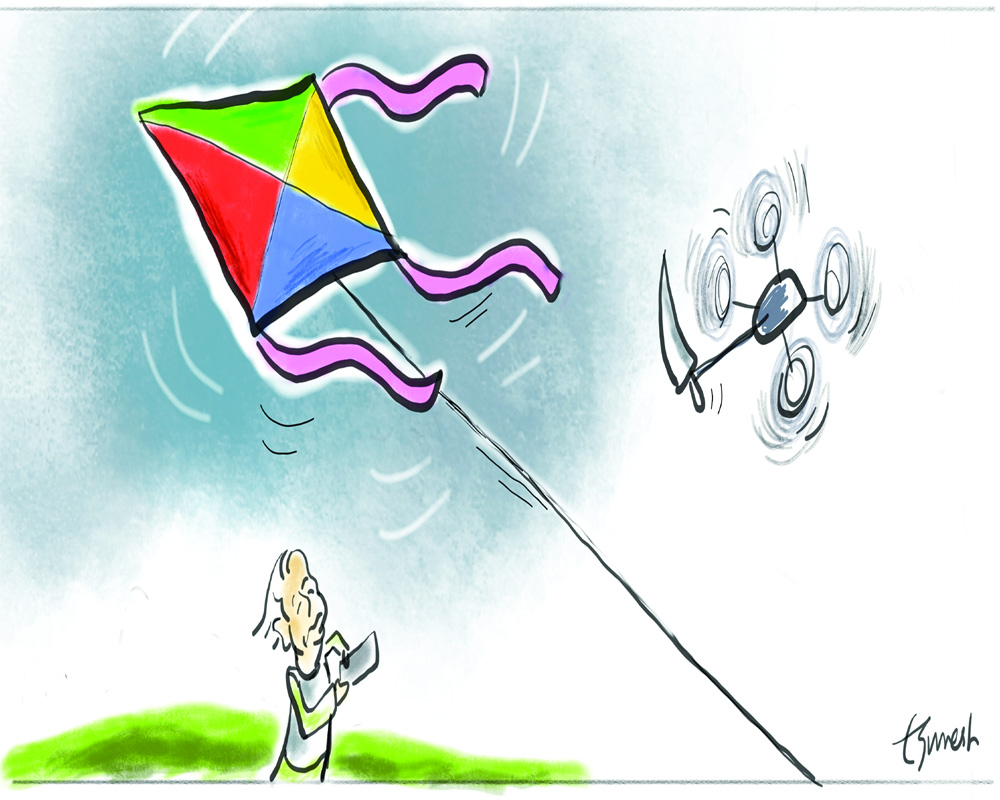
The danger lies in their trying to impose their agenda through intimidation and violence, as the Jamaat had done when it was a part of a coalition Government with the BNP from 2001 to 2006. The question arises: what is the agenda of the Islamist parties? An AFP report published in the Dhaka Tribune of May 3, 2025, under the heading “Influential Islamists promise sharia as they ready for polls,” quotes Muhammad Mamunul Haque, BKM’s ameer, as saying, “We will implement sharia,” and adding, “Everything will be guided by the Koran.” A look at what Islamist parties and organisations are doing in Bangladesh now gives an idea of what will happen under their rule. The AFP report states, “Islamists have demanded an end to a swath of activities, including cultural events deemed “anti-Islamic” — from music to theatre festivals, women’s football matches and kite-flying celebrations.” A report by Mujib Mashal and Saif Hasnat, datelined April 1, 2025, and published in The New York Times, states, “As Bangladesh tries to rebuild its democracy and chart a new future for its 175 million people, a streak of Islamist extremism that had long lurked beneath the country’s secular facade is bubbling to the surface.” It added, “In interviews, representatives of several Islamist parties and organisations — some of which had previously been banned — made clear that they were working to push Bangladesh in a more fundamentalist direction, a shift that has been little noticed outside the country.”
Women’s rights are among the main targets. Islamist fundamentalists have viciously attacked forward-looking recommendations of the Women Affairs Reforms Commission, such as recognising forced sex within marriage as rape under the criminal code and ensuring the labour rights and dignity of sex workers by amending the country’s labour laws. A report bylined Tribune Report and published in the Dhaka Tribune of April 30, 2025, under the heading “Islamic parties reject proposals of the Women Reform Commission” quoted Mamunnul Haque, KM’s secretary-general as saying, “We make a clear appeal: grant women their just rights. Do not push them into prostitution or turn mothers into symbols of disgrace.” Dr Shafiqur Rahaman, Jamaat’s ameer, said, “We reject the commission outright as it stands against the values and laws of Allah and the thoughts and beliefs of the nation.”
There is resistance from a section of the civil society and the media. An editorial in the Dhaka Tribune of February 22, 2025, stated, “Time and again, the interim Government has proven itself utterly incapable when it comes to reining in extremists who now feel emboldened to carry out their intolerant and regressive agendas — not only has the void in comprehensive law enforcement paved the way to a sharp rise in crime, but it now appears the threat of agitating extremists is also an element that must be dealt with.” The same paper had said in another editorial on March 20, 2025, “While the overwhelming majority of Bangladesh still subscribes to communal harmony, the void in law enforcement has certainly resulted in fringe right-wing groups trying to make their presence known.” It added, “The onus, then, lands squarely on the interim Government to call a spade a spade and brand such groups for what they are: Extremists.” Six women, including three leaders of the National Citizen Committee sent, through their lawyer, a legal notice on May 5, 2025, demanding an explanation within seven days from the Hefazat for using abusive language against members of the Women Affairs Reform Commission.
There have been civil society protests on a number of other issues as well. And the interim Government? If it has taken any action against Islamist fundamentalists for their relentless persecution of Hindus and the destruction of their temples, homes and businesses, it is of a special kind whose results are not visible.
The same applies in the case of those disrupting sporting events and cultural performances. Rather, it is doing other things. According to a BSS report published on February 28, 2025, in the Dhaka Tribune under the heading “Khalid: Govt takes diverse initiatives to promote Islamic culture, values,” the Religious Affairs Adviser, Dr AFM Khalid Hossain, said while speaking as a chief guest at an event in Dhaka, that the Government was undertaking various initiatives to promote and develop Islamic culture and values. The Religious Affairs Adviser is a Nayeb-e-Ameer of Hefazat-e-Islam Bangladesh and an advisor to Islami Andolan Bangladesh. Can one expect the
Muhammad Yunus-led Interim Government to act resolutely against fundamentalist Islamist violence?
(The writer is a Consulting Editor at The Pioneer. Views are personal)



