India has surpassed its 2030 target, achieving 50 per cent non-fossil electric power capacity by June 2025, though only ~24 per cent of electricity is from these sources. Aiming for 500 GW non-fossil capacity by 2030 and net zero by 2070, India’s clean energy goals hinge on securing critical minerals for solar, wind turbines, EVs and battery storage. A looming “rare earth crisis” threatens progress.
Ambition meets material reality
TERI projects total capacity could reach ~820 GW by 2030, with >500 GW from non-fossil sources. By 2050, a net-zero-aligned pathway would require 1,472 GW of solar PV, 421 GW of wind and ~864 GW of battery storage. For context, as of June 2025 total installed capacity was ~485 GW, implying annual RE additions of 65 GW+ for decades. TERI’s latest assessment revises India’s technical solar potential to ~10,830 GW, nearly 14Ã times the earlier official estimate by tapping rooftops, floating solar, agri-PV, rail corridors and building-integrated PV. Space and sunlight aren’t binding; minerals and mid-stream capacity are. Delivering this build-out demands vast amounts of polysilicon, silver, tellurium, indium, gallium, copper, as well as battery materials and grid metals.
Critical minerals
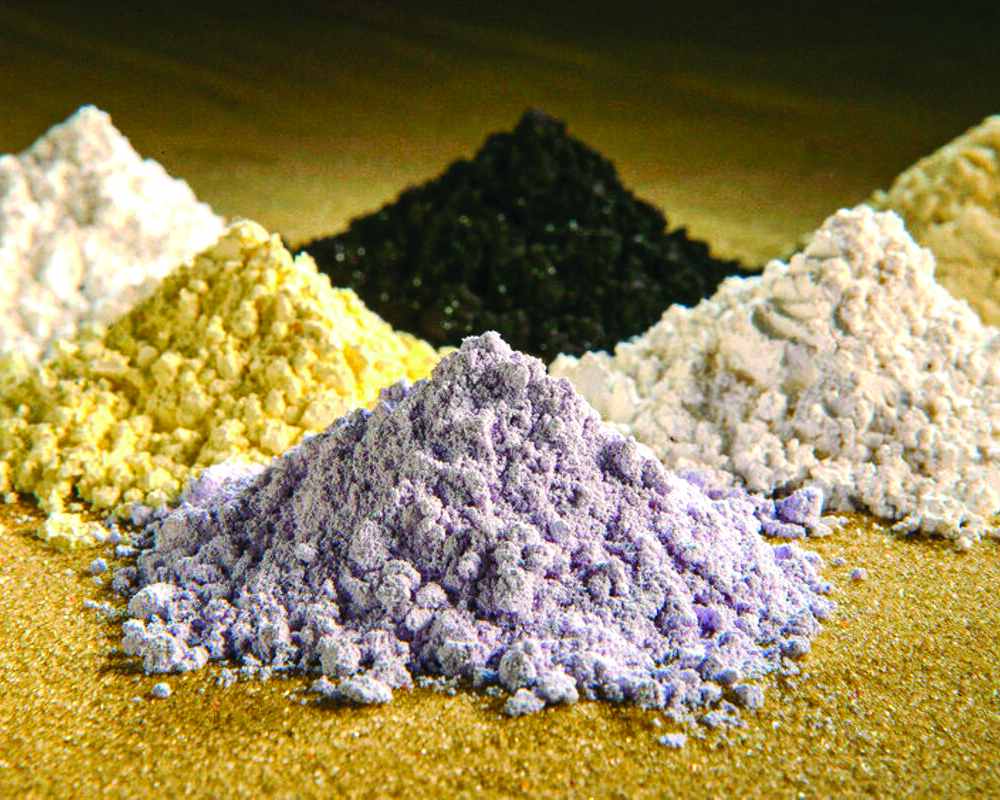
Clean technologies are mineral intensive. Rare earths such as neodymium and dysprosium enable compact, efficient magnets in wind turbines and EV motors. Lithium provides battery energy density; cobalt and nickel enhance stability. Solar PV relies on silicon; gallium is critical for high-efficiency cells and power electronics. Copper, graphite and additional rare earths anchor this supply web. Break any link and the deployment slips, costs rise and targets drift.
A global supply squeeze: deficits, concentration, geopolitics
Worldwide, the race for critical minerals is intensifying amid demand growth, slow supply response and geopolitics. Lithium demand surged ~30 per cent in 2024, far outpacing supply growth. Investment in new mining remains sluggish; copper, vital for grids and electrification, faces a projected 30 per cent supply deficit by 2035. BloombergNEF warns of a 21-million-ton annual shortfall by 2050 without new capacity. New mines take 15+ years to operationalise, so supply can’t ramp on policy timelines. Concentration compounds risk: for lithium, cobalt, graphite and rare earths, more than 85 per cent of global supply can come from just three countries. China dominates the processing of graphite, cobalt, lithium and polysilicon; Indonesia leads in nickel. Over half of energy-related minerals now face export controls; China has tightened exports of gallium, germanium, graphite and certain rare-earth magnet alloys, citing national security, while Indonesia restricts nickel ore. These trends in rising demand, supply lag, and concentrated control create a volatile global landscape where mineral access is becoming a strategic battleground with heavy dependence on a handful of actors, and the looming threat of politicised supply cut-offs.
India’s response: the National Critical Mineral Mission (NCMM)
Recognising these risks, India launched the NCMM in January 2025. With a budget of `34,300 crore (~$4 billion) over seven years (FY 2024-2031), the mission aims to strengthen self-reliance across the entire mineral value chain from exploration and mining to recycling and processing.
Domestic exploration & mining: Targets 1,200 exploration projects by 2031 and production of at least 15 critical minerals, including lithium, graphite, and rare earths. A 5.5-million-ton lithium deposit in Jammu & Kashmir offers potential, but fast-tracking approvals and incentivising private sector mining through auctions will be crucial.
Overseas asset acquisition: Equity stakes/offtake in 50 mines abroad targeting lithium, cobalt, and nickel in Australia, Latin America, and Africa, to diversify import risk. Recycling & circular economy: With ₹1,500 crore (~$170 million) allocated, India aims to recover 400,000 tons of critical minerals from e-waste and achieve 90 per cent EV battery recycling by 2027, a 60à — scale-up.
Strategic stockpiling & processing: National stockpiles for at least five minerals and domestic refining for lithium, rare earths and silicon by 2031 via processing parks and Centres of Excellence. Without mid-stream refining, even domestic ore must be exported, perpetuating vulnerability. India is currently 100 per cent import-dependent for lithium, cobalt and nickel, and heavily dependent for graphite and rare earths. Bridging the gap requires the diversified, proactive playbook NCMM envisions.
Navigating the path forward: priorities for India
As India operationalises its Critical Mineral Mission, certain priorities stand out for investment and policy focus, based on the varying supply risks and timelines of different minerals:
1. Accelerate domestic exploration and mining for minerals with known reserves, such as lithium, graphite, neodymium, and rare earths in monazite sands, balancing speed with environmental safeguards and community consent.
2. Secure long-term overseas supply lines for scarce minerals like cobalt, gallium, and high-grade nickel.
Partnerships with Australia, Argentina, and Kazakhstan are essential steps toward creating a diversified “global mineral basket”, using diplomacy and strategic investments to reduce geopolitical dependency.
3. Scale up recycling and substitution. India must build a robust domestic ecosystem to recover lithium, cobalt, and rare earths from retired EV batteries and electronics; pursue R&D into sodium-ion and rare-earth-free motors to ease pressure on scarcest inputs.
India’s clean energy future hinges on timelines; near term (0-5 years) will rely on imports, stockpiles, and partnerships; medium term (5-15 years) will scale mining and recycling; long term (15+ years) will build resilience through domestic production, overseas offtake, and circular materials, ensuring strategic supply security. Minerals will determine whether India’s clean-energy story remains an engineering challenge or becomes a strategic vulnerability.
NCMM is the right scaffold, but outcomes will depend on execution discipline, private-capital mobilisation, and purposeful international partnerships. As global supply chains tighten and geopolitics sharpen, India must act with urgency to secure resilient mineral sourcing. Mastery over these building blocks will define energy leadership in the 21st century and how securely and swiftly India reaches its climate goals.