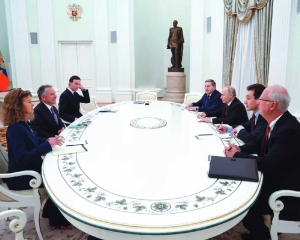
"History does not move in straight lines; it bends, twists, and contradicts itself, often leaving us with ironies sharper than truth itself." This has defined leaders, nations, and institutions across time. People are remembered not only for their ideals but also for the paradoxes they embodied. Facts expose these contradictions with brutal clarity, reminding us that ambition — personal or political — feeds on vested interests far more than on moral consistency. Few arenas illustrate this better than the stage of global recognition, where lofty prizes intersect with politics, and where Donald Trump's Nobel aspirations collide with India's choices.
Consider the Pulitzer Prize, the pinnacle of journalism. Its founder, Joseph Pulitzer, was celebrated for championing investigative reporting. Yet he also pioneered sensationalist "yellow journalism," filling his papers with scandal-driven headlines. A man hailed for elevating journalism simultaneously corroded it. The Nobel Peace Prize carries the same irony. Alfred Nobel, who endowed the award, made his fortune through dynamite and arms. The "merchant of death" became the patron saint of peace.
This contradiction plays out in the lives of leaders as well. Ethiopia's Abiy Ahmed won the Nobel Peace Prize in 2019 for ending hostilities with Eritrea, only to lead his nation into a bloody civil war months later. Aung San Suu Kyi, once revered as Myanmar's icon of democracy, later defended atrocities against the Rohingya. Muhammad Yunus, celebrated globally for microfinance, faced hostility at home. The Nobel's history is littered with such premature judgments. It is within this backdrop that Donald Trump's Nobel Peace Prize ambitions appear. Trump, flamboyant and unpredictable, repeatedly claimed that no one deserved the Nobel more than himself — citing his talks with North Korea or Middle East initiatives. In a surprising twist, Pakistan nominated him. India, however, did not. Narendra Modi's refusal was less about Trump personally and more about principle: India would not barter long-term interests for short-term theatrics.
On the surface, Pakistan seemed to benefit. Trump offered tariff relaxations, while India endured steep hikes and a falling rupee. But beneath the immediate costs lay a deeper calculation. The Nobel's reputation is checkered; figures like Suu Kyi and Abiy show how quickly laurels can turn into embarrassments. Even Gandhi — arguably history's greatest advocate of peace — was never awarded. If Gandhi could be denied, why should India lobby for Trump, a man defined by "America First" unilateralism?
India's decision was one of foresight. Global politics is not about morality but about enduring interests. As the old dictum says: there are no permanent friends or foes, only permanent interests. India today tilts towards BRICS and the Shanghai Cooperation Organisation, not to reject the West entirely but to assert autonomy and balance. By refusing to nominate Trump, India sent a message: it will not play second fiddle in another leader's performance.
Trump's craving for the Nobel is itself contradictory. Here is a leader who mocked the UN, berated NATO, imposed tariffs on allies, and dismissed multilateralism — yet longed for validation from one of the world's most symbolic multilateral institutions. His quest for peace recognition was less consistency than irony.
India bore the short-term costs of Trump's displeasure but preserved long-term credibility. Pakistan, in seeking favour, indulged in symbolic gestures. India, in contrast, prioritised sovereignty and multipolar balance. Had it supported Trump's nomination, it might have joined the long list of premature endorsements that haunt the Nobel's legacy. Instead, it chose restraint.
The Peace Prize itself has become a mirror of paradox. It has overlooked Gandhi, rewarded leaders too soon, and sometimes crowned peacemakers who later unleashed violence. It embodies the contradictions of human history. In this light, India's refusal to indulge Trump was not weakness but clarity — a decision history may judge as wise. From Pulitzer's journalism to Nobel's dynamite, from Jefferson's liberty to Jinnah's secularism, from Gandhi's peace to Bose's nationalism, history teaches us that leaders are defined less by purity than by paradox. Trump's Nobel quest is one more entry in this book of ironies. By saying no, India affirmed a timeless principle: the courage to resist short-term temptation for the sake of long-term wisdom.
Contradictions are not failures; they are the fingerprints of history. They remind us that the loftiest prizes, the greatest ideals, and even the most powerful leaders are bound by irony. Sometimes, the truest strength lies not in seeking recognition, but in refusing it.
The writer is Professor at the Pondicherry Central University