Often, a photo or a chart can describe a pattern, trend, situation or a challenge far more compellingly than 1,000 words of a jargon-laced opinion or commentary. In this article, I will talk about the connection between the future sales of two-wheelers, and the success of the GST 2.0 regime that kicks in today, the first day of Navratri. Will it be a double-Diwali bonanza, as Prime Minister Narendra Modi claimed, or a double-edged price sword?
Much has already been written on the GST (Goods and Services Tax) slabs, which will lower rates and, hopefully, prices across the board. This will put more money in the pockets of the consumers, which Finance Minister Nirmala Sitharaman estimates at a humongous Rs 2 lakh crore. Obviously, it will boost demand and consumption of most goods and services which, despite the immediate hit, will lead to more buoyant Government revenues.
Companies have announced moderate to steep reductions in prices of perishable as well as durable goods. But as the annual domestic sales of two-wheelers over the past few years reveal, prices are not the only determinants to determine the intensity of consumption. In behavioural economics, consumer sentiments play an equally, if not more, important role in deterring or coaxing the consumers to open their wallets, or keep them in their pockets. In the case of two-wheelers, the past experiences proves that they have not. As far as purchases of scooters and motorcycles go, they were not swayed by the GDP growth rates, or strong macroeconomic fundamentals.
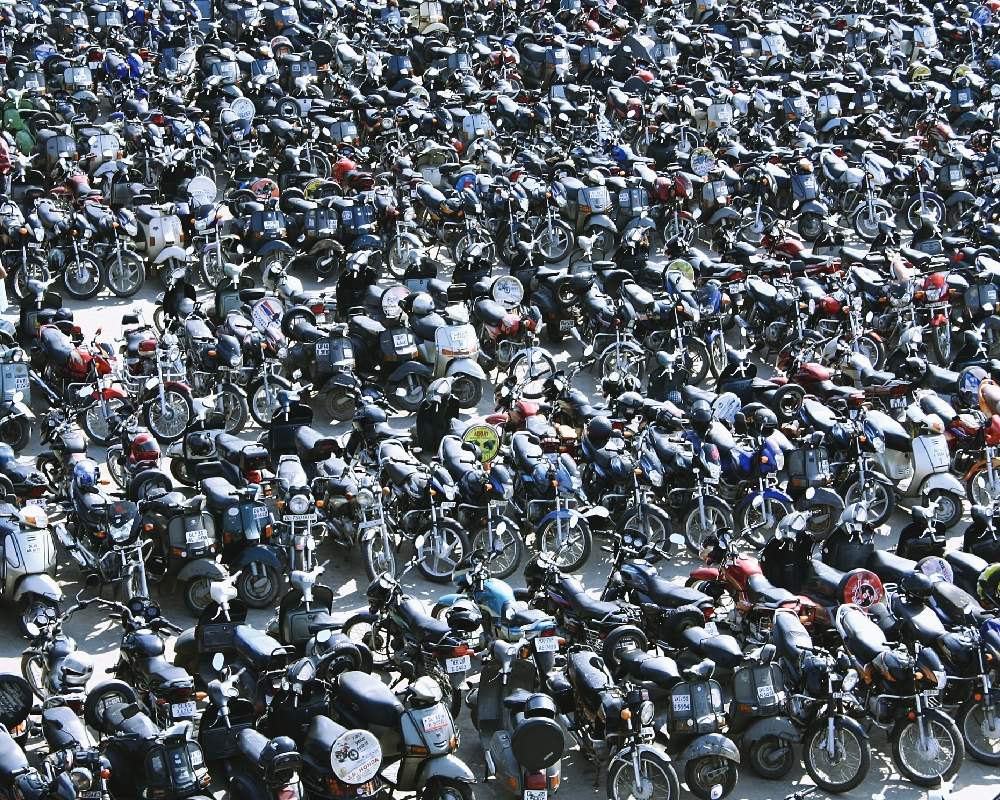
There is a dramatic consumption and consumer sentiment narrative embedded in the two-wheeler sales figures. In 2017-18, the year when the GST regime kicked off in a controversial and chaotic manner, the sales of two-wheelers were a record 21.5 million units. Eight years later, in 2024-25, as India readied itself for a game-changing GST 2.0, the figure failed to breach the 20-million mark.
If you compare this with the purchases of passenger vehicles or cars, the numbers seem more terrifying and mystifying. In 2017-18, the sales of passenger vehicles crossed a record three million units. Thanks to Covid, the numbers declined to 2.7 million units in 2020-21. But the recovery was swift, as GDP growth rebounded in 2021-22. Sales again crossed three million units.
But this rebound was missing in the two-wheeler segment. In 2021-22, the year of the post-pandemic volume take-off (so-called U-curve in some sectors), the sales of two-wheelers touched a nadir of about 13 million units, more than 40 per cent lower than the figure in 2017-18. By 2024-25, while car sales crossed a record 4.3 million units, or 40 per cent higher than in 2021-22, two-wheelers struggled to touch the 20-million mark, which was lower than the numbers in 2017-18. There is even more. Over the years, in the passenger vehicles category, sales of small or budget cars stagnated or declined consistently, but those of the more expensive SUVs zoomed.
What does this mean? As mentioned earlier, economic fundamentals, price points, and demand-supply factors do matter. Yet, they can never tell the full story. Desire, wish or aspiration are as important. Consumers buy products, especially the more expensive assets, because of positive sentiments, and feelings about their future. Their aspirations partially stem from a recognition that they will be able to achieve them, as they do better professionally. Hence, they will earn more, and be in a better position to save, spend and invest.
Only when someone is positive about her economic future does she begin to spend on premium assets, and vehicles. When someone is struggling to make ends meet, and is worried about livelihood prospects, the person curtails the expenses, especially the ones that seem non-essential. So, an expensive bike is out for the moment. A scooter is not sexy enough; no point in buying it.
How does this explain the bounce back in cars? One can talk about three factors. One, several slightly-better-off individuals jump directly to buying a car, skipping the two-wheeler (bike) stage. Two, when it comes to a choice between a smaller car and a bigger one, say, an SUV, people will wait, save more, and directly buy the latter. Finally, during festivals, occasions and marriages, it is infra-dig in most sections to gift a two-wheeler. The demand is generally for a car, even in small towns and villages. Even if it is a small one.
At another level, the Indian society comprises three sets of consumers. The first set includes the upper middle class and rich, which numbers 100 million people (not households), who can afford SUVs, annual vacations abroad, iPhones, and premium goods. Most of the consumption boom that the country witnessed in the post-Covid period was driven by this cohort.
At the bottom of the pyramid are the 800-900 million, who depend on the five kgs of free food that the Government provides them every month. They survive on other freebies and welfare schemes. They do not, and cannot, drive a consumption boom, despite the confidence about the forthcoming uptake in rural markets. It is the third, the one that is sandwiched between these two, constitutes the so-called middle class, and numbers 500 million or so that matters.
The last set is largely made of aspirational Indians. Their parents were possibly the first generation that escaped poverty. They have no hereditary wealth to fall back upon. They work in either the organised sector, or the services industry, and are more confident about their earnings and livelihoods. They are the ones who buy ACs, middle-end smartphones, TVs and two-wheelers (maybe they will possess cars if received as gifts, or buy them to show off).
This middle-class section, across socio-economic categories, geographies, professions, classes and castes, is a worried lot. The poll agency, C Voter, has conducted dozens of nationwide consumer confidence surveys for the past few years. So has the Reserve Bank of India, which conducts a bi-monthly survey of urban Indians, and recently added rural India to it. Surveys by both consistently show three trends over the years. One, two-thirds of the households struggle to balance family budgets. Two, a large majority expects prices of products to rise faster than their incomes. Finally, a larger proportion feels that they were financially better off before.
Clearly, households and families, which think and feel this way, are unlikely to purchase assets that can be postponed by a year or two. Two-wheelers, unlike cars to some extent, belong to this category. Will the excitement surrounding GST 2.0 change this mindset? In fact, future sales of two-wheelers may decide if the tax gamble by the central regime proves to be a grand success or a minor one.