Manipur, one of the Seven Sister States of North-East India, is often called The Jeweled Land. The name derives from the Sanskrit word mani (jewel) and pur (land or city) because of the region’s natural beauty, culture and dance traditions. Its landscape is marked by serene valleys and gentle hills and surrounded by majestic mountain ranges that encompass it. The state shares a long boundary with Myanmar and shares borders with Nagaland, Mizoram and Assam facilitating an active interaction in the eastern Himalayas. Imphal, the capital of Manipur is located in a valley at an elevation of nearly 2,600 feet above sea level, which influences its agreeable weather throughout the year. The Loktak Lake, located in the Bishnupur district, has the distinction of being the largest freshwater lake in the north-east, and is famous for its floating biomass known as phumdis, besides being the world’s only floating national park. This geography of rich water bodies, cool hills and plentiful vegetation, shaped the habitation patterns and agricultural practices of Manipur’s people, defining not only their identity but their cuisine, rituals and relationship with nature.
Human settlement in Manipur began in the fertile Imphal Valley, where early clans and proto-Meitei groups set up small farming communities along the rivers. Over time, these villages grew into organized chiefdoms and eventually formed the base of the Meitei kingdom that took shape in the first century CE. As the valley communities developed, Tibeto-Burman groups migrated into both the Imphal Valley and the surrounding hills. Each brought its own language and rituals, adding to the region’s growing mix of cultures. Kangla Fort, on the banks of the Imphal River, became the seat of the Meitei kings and served for centuries as the center of political authority, ritual life, and administration. It played a key role in holding the various clans together. Meanwhile, hill communities such as the Tangkhul, Mao, Maram, Thadou, Hmar, Paite, Zou, Kuki, and others kept their distinct identities while staying closely connected to the valley. Trade in salt, forest products, woven textiles, bamboo goods, and dried meats helped maintain these ties and supported a long history of interaction and mutual dependence.
The Anglo-Manipur conflict of 1891 marked a turning point, bringing the region under British influence and new administrative systems besides exposure to the world outside its hills and valleys. Yet the cultural depth of the Manipuri people remained resilient despite the changes and its deeply rooted traditions endured. Manipur’s strategic location also provided an ideal gateway for trade and cultural exchanges with Southeast Asia and they enriched each other with their trade, culture and cuisines. This region continues to be an important element in India’s Look East policy that seeks closer and mutually beneficial ties with the rest of East Asia.
Religion in Manipur revolved, like in neighboring states, around animism (forces of nature), ancestor reverence and local cosmologies. Early Meitei spiritual life was centred on Sanamahi worship that was believed to ensure protection, prosperity and the well-being of the family. Leimarel Sidabi, considered the Mother Earth figure, and other deities representing forests, lakes and skies formed a spiritual constellation that guided moral conduct, agricultural cycles and community life. Lai Haraoba, an ancient and popular Meitei festival honours the Umang Lai, the ancestral forest deities of Manipur, through rituals, songs, and dance sequences performed by priestesses. It brings together different clans in worship and serves as one of the oldest unifying traditions of Meitei civilization.
The spread of Vaishnavism in the eighteenth century during the reign of King Pamheiba (Garib Niwaz) introduced another set of transformations in the valley. Hymns, devotional poetry and the Ras Leela dance form gave Manipur’s society the depth of the bhakti tradition that blended seamlessly with earlier beliefs. The emergence of this new devotional identity did not erase the earlier beliefs but created a harmony of philosophies where rituals for ancestors, forest spirits and Vaishnava beliefs coexist even today.
Cuisine in Manipur, one of the most intricate food cultures of the region, is mostly inspired by its geography and reflects its religious and social traditions. Much like the varied tribal cuisines of the north-east, Manipuri cuisine cannot be generalized because it is created on a foundation of ecological diversity, traditional methods of cooking and nuances of subtle flavours. An abundance of local produce provides diverse ingredients that are native to the region’s ecology. Fresh herbs, seasonal greens, fermented ingredients, and fresh water fish form the basis of everyday meals, while techniques such as steaming, slow-cooking, and light seasoning bring out natural flavours rather than being overpowering. Manipuri food reflects a long tradition of using what the land and waters provide and is prepared in ways that preserve both nutrition and taste.
The cuisine of Manipur’s valley regions is characterised by fresh, seasonal ingredients especially herbs, greens, and river fish and prepared with minimal oil to preserve natural flavours. Light fermentation, gentle spicing, and simple cooking methods like boiling and steaming give the food an earthy taste and ensures nutritional value. Ngari, fermented fresh water fish that is sun-dried, forms the base of many local dishes and is known for its strong aroma and deep flavour. It is a key ingredient in popular dishes such as iromba and kangsoi and various chutneys, adding a punch to everyday meals. Iromba is made by combining boiled vegetables with mashed ngari and hara mirch (green chilli) with vegetables such as yongchak, seasonal beans, colocasia stems, and lai, a leafy green, that are stirred together into a delicious dish to be eaten with steamed rice. Iromba varies from one household to another, with some preferring it milder and others enhancing its sharpness with additional chillies. Another celebrated valley dish is singju, a spicy and crunchy salad of shredded vegetables, lotus stems, cabbage and herbs mixed with ngari. The use of roasted til (sesame) and a hint of lemon lends the salad its nutritious and nutty character.
A signature preparation of the Meitei culinary repertoire is chak hao, the famed black rice of Manipur, cooked during festivals and special occasions. It is often transformed into a sweet pudding with doodh (milk) and a touch of gur (jaggery), creating a rich and irresistible dessert. Another preferred dish is kangsoi, a boiled vegetable stew flavoured with adrak (ginger), hara mirch and a few herbs, cooked gently until the vegetables release their natural juices. This dish is an almost daily fare across the valley because of its lightness and nourishment, especially when the seasons are changing since it has properties that enhance immunity. Paaknam, a savoury cake made of besan (gram flour), herbs, vegetables and sometimes fish, and wrapped in banana leaves and steamed, creates a fragrant dish served during festive periods. To top it all, Morok metpa, a fiery chutney made from roasted mirch (chilli), onions and herbs, along with ngari accompanies nearly every meal and reflects the local preference for heat balanced with freshness.
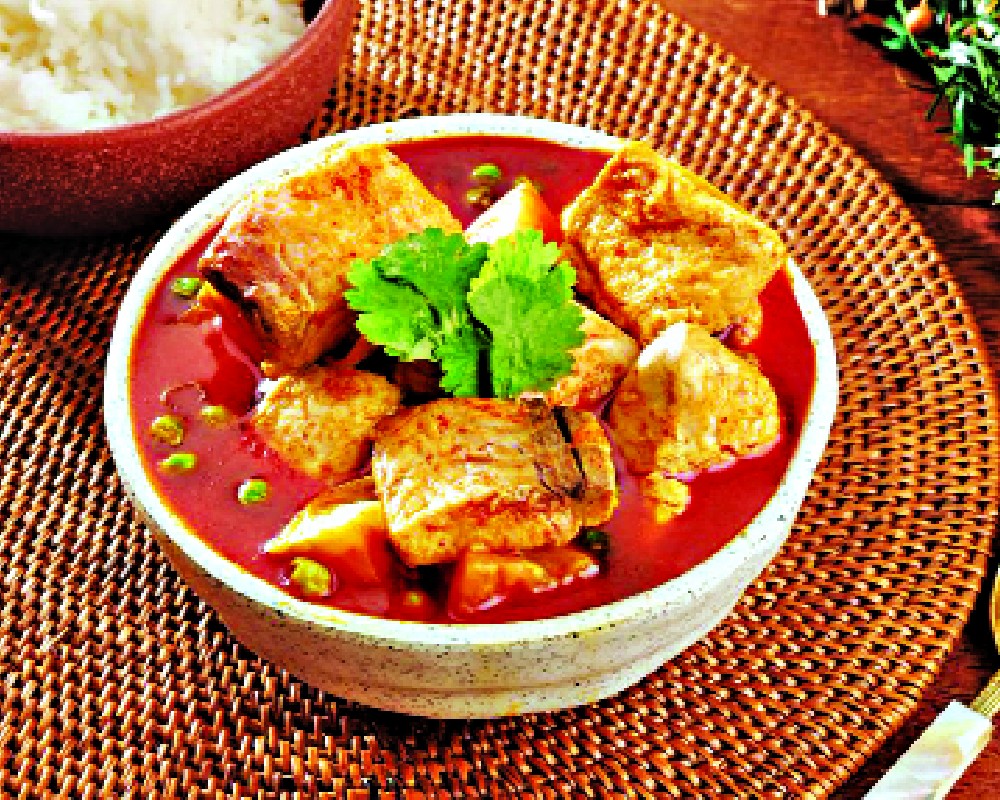
The valley also has a unique relationship with freshwater fish. Loktak Lake provides a wide variety that feature in dishes such as nga thongba, a fish stew prepared with adrak, pyaaz (onion), tomatoes, potatoes and herbs simmered slowly until the fish becomes tender. Nga atoiba, a fresh water fish stew, cooked with ingredients such as colocasia stems (paangkhok), yong-chak, mustard leaves, chilli, turmeric, and sometimes herbs like maroi. Unlike spicier dishes, nga atoiba keeps the seasoning minimal to let the natural flavour of the fish stand out. The harmony between the natural sweetness of vegetables and the depth of ngari forms the heart of daily meals, creating a palette that is distinct, refined and deeply rooted in the land.
In the hill districts to the north, east, west, and south, tribal communities like the Tangkhul, Mao, Paite, Kuki, and Thadou have their own unique cuisines. These cuisines rely on forest produce, smoked meats, and traditional preservation methods. In the northern hills where the Tangkhuls live, the food is richer and often includes smoked or dried meats. Smoking happens carefully at home, allowing the meat to take in the aroma of firewood. This process creates flavors that fit well with the cool monsoon season. One beloved dish is hentak, made from a blend of sun-dried fish powder and a paste of edible Alocasia petioles, shaped into small balls and left to ferment. Hentak has a mildly pungent smell and is rich in protein. It is often used to add flavor to everyday meals, especially in stews, vegetable dishes, and chutneys. In the valley region, it is a household essential, valued for its long shelf life and the deep flavor it brings to home-style Manipuri cooking.
In the western hills, where the Mao Nagas live, the cuisine emphasises ginger, yam, fermented bamboo shoots and leafy vegetables. Smoked pork cooked with bastenga, fermented bamboo shoot, is a common delicacy symbolic of their reliance on preservation methods perfected over generations. The dish combines pork, bamboo shoot, mirch and adrak, simmered long enough to merge flavours yet still preserve the natural textures. Another traditional western hill dish is anishi made from fermented taro leaves cooked with pork. The slow cooking brings out an intensity that pairs well with steamed rice and seasonal vegetables.
In the southern hills inhabited by Kuki and Paite groups, cuisine shifts toward heartier stews, dried meats and dishes cooked with a greater amount of pyaaz and tomatoes. Pork and chicken are central to many dishes, where meat is stewed with bamboo shoots, lai and seasonal herbs collected from nearby forests. One popular preparation is sai bhaji, where pork is simmered with beans, vegetables and adrak until it becomes tender and richly flavoured and is eaten during family gatherings or community feasts. The southern tribes also prepare dried fish broths that combine dried river fish with mirch and herbs to create warming meals suited to the cooler hill climate.
In the eastern districts bordering Myanmar, cross cultural influences emerge more
prominently. Here, communities prepare rice noodles used in broth-based dishes enriched with vegetables, herbs and sometimes fish. The technique of boiling, steaming and using minimal spices reflects a shared culinary heritage shaped by both Manipuri and Southeast Asian practices. Seasonal greens feature in broths that are mild but nourishing, providing comfort during rainy months. Bamboo shoot curries, steamed fish seasoned with adrak and hara mirch, and boiled yam preparations are widespread across the eastern settlements, reinforcing a shared culinary identity that is both local and trans-regional.
As can be seen from the above recipes, fermentation holds deep significance in Manipuri gastronomy across both valley and hills. Ngari in the valley and hentak or bastenga in the hills reflect a deep understanding of natural preservation techniques. Rice also plays an essential role, not only as a staple but a cultural symbol. The valley’s sticky rice, known as chak-hao (black aromatic rice) and other varieties in white, are staple in daily diets. Local beverages made through natural fermentation are also popular during rituals, reflecting the continuity of age-old practices linked to changing seasons.
Manipuri cuisine is being kept alive in contemporary times by the increasing numbers of cafes and restaurants that reinterpret traditional dishes while taking care to preserve their basic flavors. Indeed, this trend is welcome and calls for applause. Chefs are presenting classics like iromba, singju, chak-hao kheer, and ngari-based stews by reinventing them in lighter textures to suit the taste of modern times. Every care is undertaken to get farm-to-table sourcing that appeals to the health-conscious young. Ingredients hitherto confined to home kitchens-like hawaijar, wild herbs, black rice, and seasonal greens-now feature in curated menus and fusion dishes. Community-led food festivals and local entrepreneurs ensure authentic cooking ingredients and methods using family recipes remain central, allowing Manipuri food to evolve without losing its original character.
It is my belief that we have an obligation to protect these culinary traditions and keep them alive for future generations.The flavours of Manipur are not simply recipes but an expression of a people’s tradition shaped by their land, their beliefs and their ancestral wisdom. They are the collective repository of the knowledge of generations who worked with forests, rivers, hills and fields, understanding nature and its importance for nourishment. Preserving this heritage is therefore an act of cultural responsibility that we must assume for ourselves. By valuing these traditions today, we affirm that the cuisine of Manipur will continue to nourish, teach and inspire the generations to come.
(The writer is Secretary, Cuisine India Society); views are personal