From UN halls to public parks across continents, yoga has become more than exercise; it’s a shared language of breath and balance. And in a fractured world, that quiet connection may be India’s most revolutionary contribution yet
In a world constantly jostling for attention, through missiles, money, and media, India has managed to slip something quietly into the global bloodstream: yoga. Not just the stretch-on-a-mat version that floods Instagram, but the real thing, an ancient, rooted philosophy that has slowly become one of the most persuasive tools of soft power diplomacy in the 21st century. It’s not flashy, it doesn’t demand loyalty, but it lingers; and that’s where its magic lies.
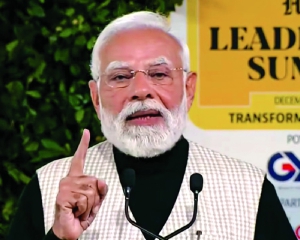
For the past 10 years, yoga’s rise has been deliberate, strategic, and honestly, quite beautiful to watch. The turning point came in 2014 when Prime Minister Narendra Modi proposed the idea of an International Day of Yoga at the United Nations.
177 countries backed it, not because they wanted to do India a favour, but because yoga had already embedded itself in their societies. That was the win, not just the declaration itself, but the global readiness to accept that this was more than India’s past; it was part of humanity’s future.
In 2024, that symbolic circle came full with PM Modi leading the Yoga Day celebrations at the UN Headquarters in New York, in the very halls where he had first proposed it.
Over 180 nationalities came together in a collective breath, a rare moment of unity in a fragmented global order. American singer Mary Millben’s soulful rendition of India’s national anthem at the event added a layer of cultural grace that moved many to tears.
It wasn’t just a diplomatic spectacle; it was a deeply human moment, where art, breath, and belief converged into something much larger than protocol. In that gathering of movement and stillness, India didn’t just host the world, it held it.
Since then, June 21 has transformed from a cultural celebration into something much deeper, a show of presence, not power; of balance, not bluster. And that’s what makes yoga such an exceptional soft power tool.
It doesn’t yell, it invites. It doesn’t push a product; it offers a practice. While other cultural exports often come dressed in capitalism or carry subtle imperial agendas, yoga feels clean, disarming even. Its strength lies in its quietness.
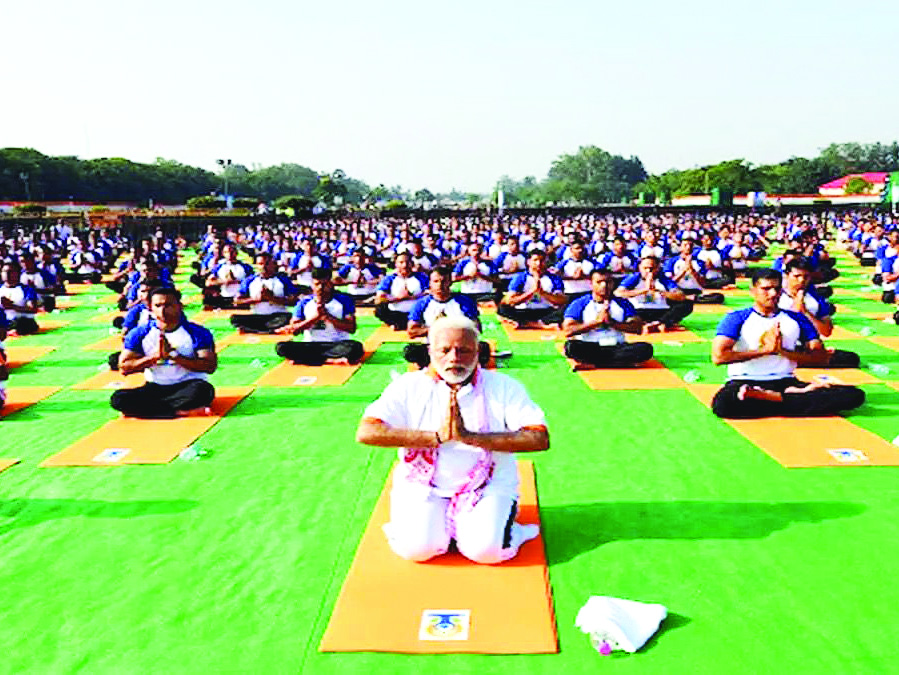
From New York to Nairobi, Tokyo to Toronto, the sight of thousands moving together in breath and stillness is not just aesthetic, it’s symbolic. In a time where nations scream over each other, yoga listens, and people respond.
Back home, the Ministry of Ayush has played a crucial role in deepening this influence. From local wellness programs and school modules to international MOUs and yoga certification frameworks, the past two decades have seen real, measurable investment in making yoga accessible, authentic, and global. This isn’t just branding, it’s cultural stewardship, and it matters. Because when a country not only preserves but exports its deepest values, and does so with humility, it earns something far more valuable than visibility; it earns trust.
This year, the International Day of Yoga 2025 campaign is themed “Yoga for One Earth, One Healthâ€, a line that captures, in five words, everything the world is craving: connection, sustainability, healing.
After years of pandemic panic, mental health breakdowns, and climate anxiety, the idea that the health of our bodies is directly tied to the health of our planet doesn’t feel like a philosophy anymore; it feels like a necessity.
Ayush’s campaigns this year reflect that urgency. Over 30,000 organisations are joining the ‘Yoga Sangam’, turning parks, schoolyards, hospitals, and railway platforms into yoga grounds. These aren’t token events; they’re public declarations that India’s contribution to global peace and wellbeing will not be transactional, it will be transformative.
And then there’s YogAndhra 2025, one of the most ambitious state campaigns we’ve seen in years. Two crore people, a month-long activation, a mass event along the Visakhapatnam coastline; it’s massive, and honestly, deeply moving.
Not because of the numbers, but because of what they represent: ordinary people coming together, voluntarily, in a moment of pause.
That’s the real diplomacy, not the flags, not the official handshakes. Just breath, stillness, surrender; and in that shared silence, India speaks louder than any press release ever could.
What makes all of this even more powerful is the tenor of yoga itself. It’s not ornamental, it’s foundational. Yoga doesn’t demand performance, it demands presence.
And in a hyper-digitised, algorithm-driven world, that’s revolutionary. Yoga has no nation, but it does have an origin; and every time someone anywhere rolls out a mat and begins their practice, they are, whether they know it or not, engaging with India, not politically, but spiritually and philosophically. That’s legacy, and that’s how soft power works.
Health diplomacy is another layer in this story that often gets overlooked. In a time when the world is buckling under non-communicable diseases, burnout, and post-pandemic trauma, India’s offering isn’t just ancient, it’s relevant.
Yoga is preventive and sustainable; it teaches you to listen to your body, manage your mind, and regulate your breath.
That’s public health without a prescription. It’s affordable, scalable, and deeply human. The fact that international bodies like the WHO are now aligning with Ayush to explore integrative health models is no coincidence; it’s recognition.
But to fully understand yoga’s impact, you have to go beyond the policy speak.
Yoga isn’t about flexibility; it’s about balance. It’s not about how you look, it’s about how you feel. It doesn’t sell transformation in 21 days; it teaches you to surrender to slow, patient evolution.
When someone in Buenos Aires Berlin or Bengaluru sits in silence, they’re not just accessing a wellness tool; they’re entering a cultural portal, one that leads, always, back to India.
And that’s what makes yoga such a rare diplomatic asset. It doesn’t just generate influence; it generates affection. It’s not transactional. It’s not about lobbying.
It’s about resonance, and resonance lasts. India, through yoga, is not trying to dominate global narratives. It’s anchoring them, centring them, reminding the world that wellness, at its core, is not a luxury; it’s a right. And that stillness, in a fractured, frantic world, is not weakness; it’s power.
So as India gears up for another powerful edition of IDY, it’s not just about the scale of participation or the number of countries involved. It’s about what yoga continues to signify: that even in a global order shaped by conflict, chaos, and competition, there is space, sacred, silent, strong; for something slower, deeper, and more human. Yoga isn’t just India’s cultural gift; it’s its geopolitical signature. Not loud, but lasting.
And maybe that’s the whole point. In a world obsessed with speed and spectacle, yoga reminds us that the real revolution begins when we learn to just stop, breathe, and listen; to ourselves, and each other.
(The writer is former Civil Servant. Views are personal. Inputs provided by Zoya Ahmad & Vaishnavie Srinivasan)