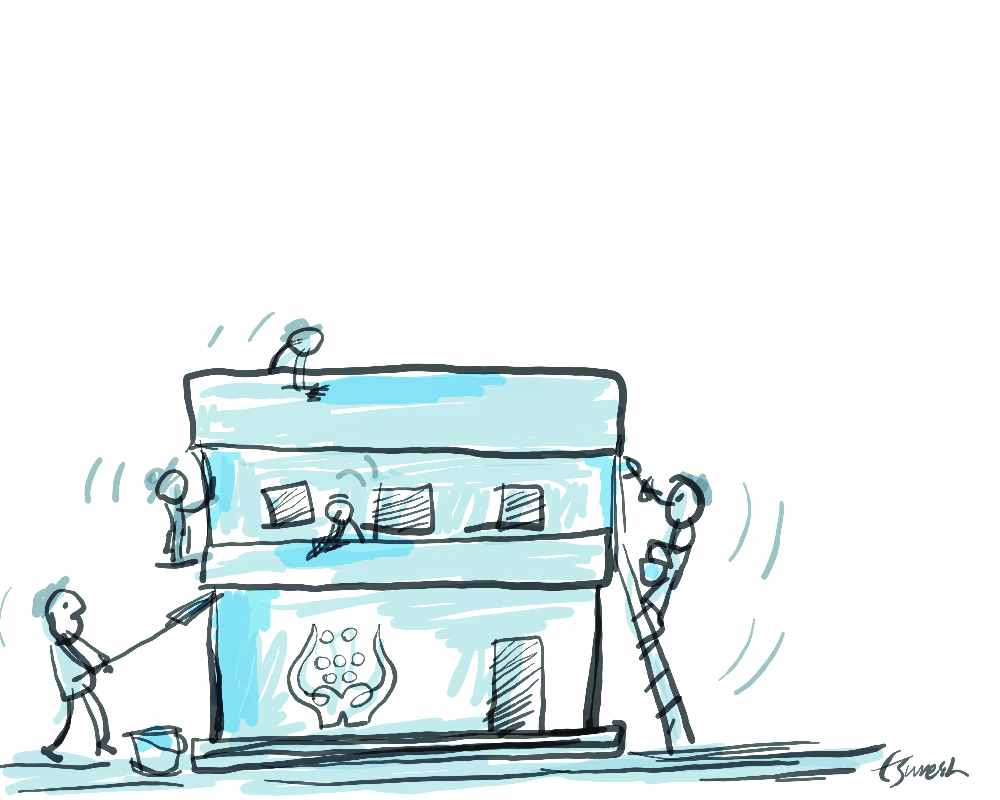
South Asia, home to nearly two billion people, finds itself at a moment of reckoning. Political instability, economic slowdown, and mounting climate challenges are reshaping the region in ways that transcend borders. Recent upheavals underscore this fragility: in Nepal, youth-led protests forced Prime Minister KP Sharma Oli to resign on 9 September, deepening the country’s chronic cycle of political instability.
Bangladesh, too, is navigating leadership change under Nobel laureate Muhammad Yunus, while Sri Lanka continues its painful recovery from the 2022 economic collapse. These episodes are not isolated — they point to a deeper systemic malaise that threatens the collective future of the region. South Asia grapples with staggering youth unemployment, entrenched corruption, climate-induced displacement, and fragile public health systems. Each of these crises spills across borders. Floods in one country displace communities in another. Disease outbreaks move quickly through porous frontiers. Economic shocks in one market reverberate throughout the region. Yet, despite these shared vulnerabilities, the South Asian Association for Regional Cooperation (SAARC) — founded in 1985 to foster cooperation — has been dormant since its last summit in 2014. For India, the region’s largest economy and geopolitical heavyweight, reviving SAARC is not just desirable; it is essential. The Global South is asserting greater influence, with its collective GDP projected to reach 40–60 per cent under purchasing power parity in coming years. South Asia remains one of the fastest-growing regions, yet momentum is slowing. The World Bank’s South Asia Development Update projects growth at 5.8 per cent in 2025, down from 6.0 per cent in 2024. Bangladesh faces slowing growth, Pakistan struggles with debt and inflation, and India is expected to sustain around 6.3 per cent growth in FY 2025–26. While these numbers appear strong, regional vulnerabilities could deepen without stronger frameworks. SAARC was originally envisioned to foster trade, integration, and cooperation. For decades, however, political rivalries — chiefly between India and Pakistan — and weak institutional design have stunted its potential. Yet the logic of SAARC is stronger than ever.
Take climate change: nearly half of South Asia’s population lives in areas designated as climate “hotspots” by the World Bank. Monsoons, glacial melt, and rising seas threaten millions.
Cross-border flood management, joint disaster preparedness, and shared early-warning systems could save countless lives. Health is another urgent frontier. COVID-19 revealed the costs of fragmented responses. A SAARC health coordination body — complete with shared surveillance, rapid response teams, and joint standard operating procedures — could ensure future outbreaks are contained before they escalate into regional crises. The South Asia Free Trade Area (SAFTA) remains underutilised. Enhanced connectivity — through road, rail, digital corridors, and energy grids — could unlock immense economic value, creating jobs and stabilising economies. The political moment may be ripe. Muhammad Yunus has publicly called for SAARC’s revival, emphasising its role in easing border tensions and facilitating cooperation. In India, figures like Farooq Abdullah have urged the government to use SAARC as a peacebuilding platform. While formal negotiations have yet to resume, the signals suggest a regional appetite for reactivation.
India, which accounts for nearly three-quarters of South Asia’s GDP, holds the key. With dominance comes responsibility. Reviving SAARC allows New Delhi to reaffirm its “Neighbourhood First” policy, while demonstrating that its leadership is facilitative, not hegemonic. Strategically, SAARC offers India a means to reduce dependence on external actors and counterbalance China’s Belt and Road Initiative, which has left several South Asian states — including Sri Lanka and the Maldives — mired in debt. Of course, challenges abound. Trust deficits — especially between India and Pakistan — remain deep. Domestic instability in member states undermines continuity.
For SAARC to be more than a talking shop, institutional reforms are essential: a better-resourced secretariat, transparent funding mechanisms, streamlined decision-making, and dispute-resolution systems. A phased approach offers a way forward. India could start with non-controversial areas — climate adaptation, early-warning systems, and health cooperation. Success in these domains could build confidence, paving the way for more ambitious integration, such as mobility agreements, energy-sharing grids, or even a customs union. Sceptics argue that SAARC is obsolete, pointing to more agile subregional groups like BIMSTEC or BBIN. While valuable, these frameworks are partial solutions. Only SAARC includes the full South Asian spectrum — from Afghanistan to the Maldives — making it the only comprehensive regional forum.
In today’s multipolar world, regionalism is less about exclusion and more about resilience. Reviving SAARC allows South Asia to practise “multi-alignment” — engaging flexibly with external powers, shaping global debates on climate, trade, and health, while securing collective sovereignty. For India, the rewards are immense: a more stable neighbourhood, reduced external vulnerability, and elevated global stature as a responsible leader of the Global South. Concrete steps are within reach. Hosting a SAARC Climate Summit in 2026 could mark a bold start, focusing on adaptation strategies, disaster preparedness, and financing resilience. Reviving technical committees on health, water, and disaster management would breathe life into the institution.
India could seed a SAARC Fund for Regional Public Goods, backed by transparent contributions, and lead investment in shared early-warning systems.Inclusivity will be equally critical. Civil society, academia, and women’s organisations must be brought into the SAARC fold to rebuild trust and ensure broader ownership. Delivering tangible results — whether jobs, resilience, or safety — will strengthen public support and undercut nationalist narratives that resist cooperation. South Asia cannot afford paralysis. Its challenges are too interconnected for isolationist responses. Reviving SAARC is not just about prosperity; it is about survival in the face of climate change, health risks, and systemic fragility. For India, the choice is clear. By leading this revival, it can reinforce its neighbourhood, stabilise its strategic environment, and project itself as a statesmanlike power in the evolving multipolar order.