As the Dharma Dhwaj rose high into the sky during the flag-hoisting ceremony marking the completion of the Ram Temple Complex in Ayodhya, Prime Minister Narendra Modi remarked that nearly 190 years ago, Macaulay had sown the seeds of uprooting India from its civilisational roots. The very questions raised about the existence of Shri Ram and the prolonged struggle and delay in the construction of the Ram Temple after Independence were, he said, consequences of the "Macaulay mindset." This mindset was cultivated through the "Minute on Education" introduced and authored in 1835 by Thomas Macaulay in his capacity as a member of the Executive Council of the then Governor-General William Bentinck. It fostered an attitude of apathy towards Bharat's native knowledge systems and languages, shaping generations under a framework that devalued their own cultural, religious and intellectual heritage.
The conviction and self-belief of a nation are rooted in the socio-cultural footprints of its history. Yet, in the decades following Independence, India's education and administrative systems continued to bear deep colonial imprints. The language, curriculum and work culture remained largely unchanged even as white sahibs were replaced by brown sahibs. Macaulay ultimately succeeded in advancing what he had envisioned: the establishment of an intrinsic superiority of the Western model and the English language, while Sanskrit, Arabic and other classical traditions were sidelined. Our ancient knowledge systems-ranging from science and mathematics to philosophy-were dismissed as outdated, irrational or merely religious, weakening the confidence of posterity in their own cultural and intellectual heritage.
The Charter Act of 1813, passed by the British Parliament to renew the East India Company's mandate in Bharat, introduced a significant clause that provided for the allocation of one lakh rupees annually for the revival and improvement of education among its Indian subjects. In the decades that followed, the debate over how this fund should be used intensified. Thomas Macaulay vigorously campaigned for directing this financial support exclusively towards English-medium education and Western literature, arguing against the continuation of funding for classical Sanskrit, Arabic and Persian learning. Macaulay prevailed, and state patronage for Oriental texts and traditional learning centres declined sharply, marking a decisive shift in education policy. Macaulay's education policy was not confined merely to creating "brown sahibs" to serve as a British-oriented workforce. It carried a deeper, concealed objective: to undermine and ultimately displace the existing socio-cultural foundations of Bharatiya society.
A letter written by Thomas Macaulay to his father on 12 October 1836, published in The Life and Letters of Lord Macaulay by his nephew George Otto Trevelyan, clearly reveals how a larger ideological agenda was being embedded into Bharatiya society through British education policy. In this letter, Macaulay candidly states: "Our English schools are flourishing wonderfully. We find it difficult-indeed, in some places impossible provide instruction for all who want it. In the single town of Hoogly, fourteen hundred boys are learning English. The effect of this education on the Hindoos is prodigious. No Hindoo who has received an English education ever remains sincerely attached to his religion. Some continue to profess it as a matter of policy, but many profess themselves pure Deists, and some embrace Christianity. It is my firm belief that, if our plans of education are followed up, there will not be a single idolater among the respectable classes in Bengal thirty years hence. And this will be effected without any effort to proselytise; without the smallest interference with religious liberty; merely by the natural operation of knowledge and reflection. I heartily rejoice in the prospect."
It is rather ironic that while Macaulay dismissed the traditional knowledge systems and culture of this land, the very foundations of national schooling in England and several European countries were inspired by Indian educational practices-particularly the methods of "monitor", "slate", and "group learning." Dr Andrew Bell, a chaplain with the British Army, arrived in Madras in 1787. During his stay, he observed local children learning their alphabet by drawing letters in sand, guided by the brighter students in the class. Struck by the efficiency of this method, he adapted it into what he called the "New Schooling System" and introduced it in England. The model became highly popular and soon spread across Europe. Known as the "Madras Monitorial System," it offered an economical and scalable approach to mass education. Dr Bell later established a college in Scotland, naming it "Madras College," which still exists, in recognition of the system's origin. His student, Mr Lancaster, promoted a similar method, which became widely known as the "Bell and Lancaster Model."
Yet neither Bell nor Lancaster acknowledged the Indian traditional schooling practices that inspired their innovations. Brigadier-General Alexander Walker, who served the British administration in Bharat between 1780 and 1810, offered a remarkable testimony on the indigenous education system in the Malabar region. He observed: "The children are instructed without violence and by a process peculiarly simple. The system was borrowed from the Brahmans and brought from India to Europe. It has been made the foundation of National Schools in every enlightened country. Some gratitude is due to a people from whom we have learnt to diffuse among the lower ranks of society instruction by one of the most unerring and economical methods which has ever been invented." Walker further noted that "no people probably appreciate more justly the importance of instruction than the Hindus." His account stands as a powerful acknowledgement of the effectiveness of traditional modes of education that later inspired key models of mass schooling in Europe, even as they were undermined by the colonial education policy imposed on us.
Dr S. Radhakrishnan, as Chairman of the first University Education Commission constituted after Independence, stated in its 1949 report that higher education should be imparted through the regional languages, and that English as the medium of instruction in higher education should be replaced by an Indian language as early as practicable. The challenge is not English as a language, but its long-standing dominance as the primary marker of intellect and academic success in the seven decades since Independence. Had the recommendations of this Commission been implemented earnestly in the early decades after Independence, the "Macaulay syndrome" that continued to shape our intellectual and cultural outlook might well have faded away by the twenty-first century.
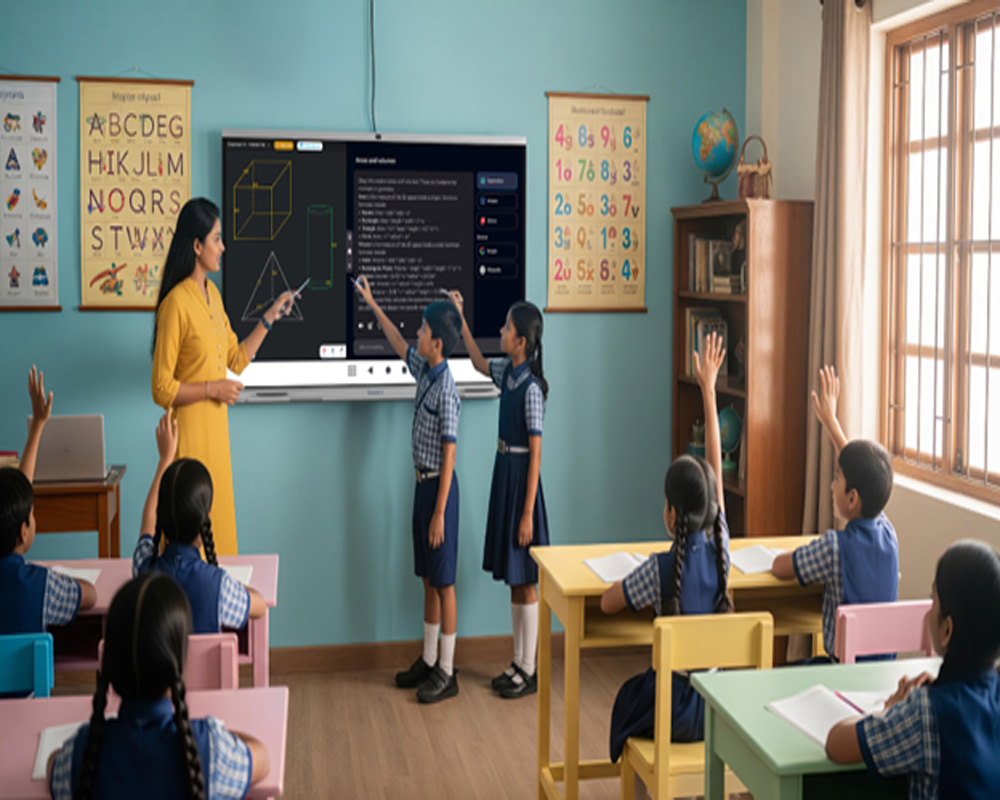
The National Education Policy 2020 has acknowledged and endorsed the traditional Bharatiya Knowledge Systems, integrating them with the contemporary global knowledge ecosystem that has evolved through experimentation, innovation and cross-cultural exchanges. For the first time, Bharatiya languages have been given a level playing field in education, and the vision and ingenuity of an education policy have begun to reverse the long colonial practice of undermining our native knowledge, sciences and skills — a practice that left a lasting dent in the foundation required to strengthen our national consciousness. Rebuilding this confidence demands that we reclaim and restore the intellectual traditions that once nurtured a vibrant, self-assured civilisation. It is time to bid adieu to the Macaulay mindset.
The writer is Director of Non-Collegiate Women’s Education Board, University of Delhi; views are personal