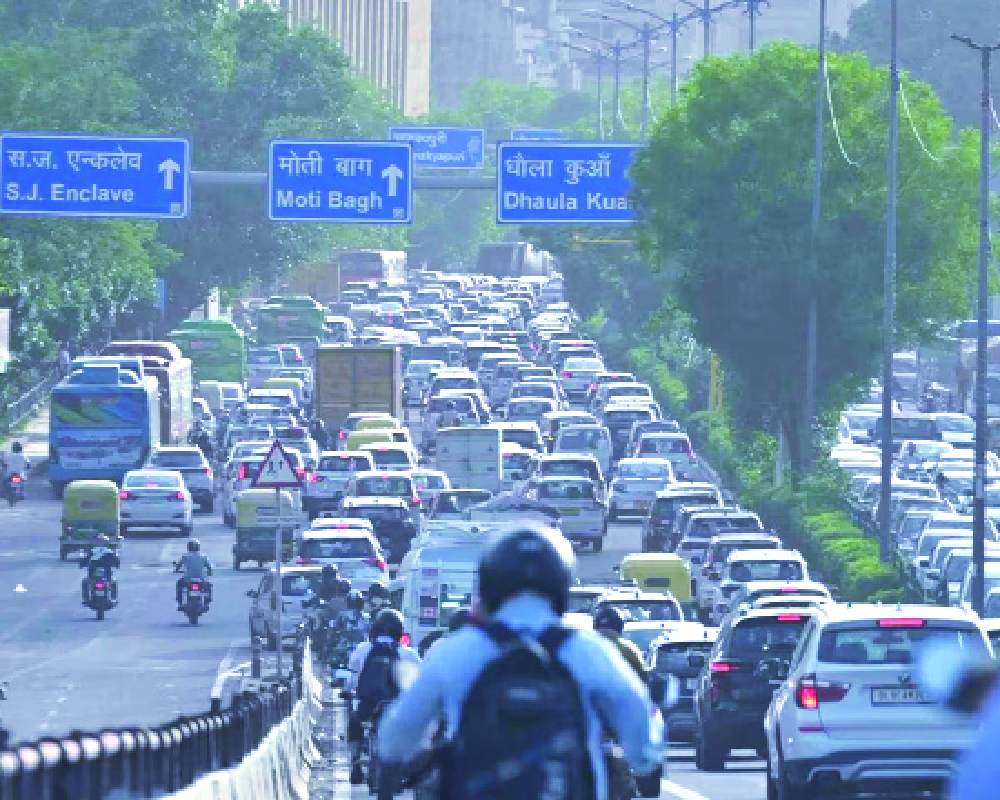
In a move to make roads smarter, faster and safer for commuters and to decongest the national Capital’s arterial routes, the Delhi Government has decided to redevelop the 55-km Mahatma Gandhi Road Corridor (Ring Road), one of the busiest routes connecting key parts of the city.
According to Public Works Department (PWD) minister Parvesh Sahib Singh Verma, the PWD has awarded a landmark infrastructure development and mobility improvement project to AECOM India Pvt Ltd to conduct detailed feasibility studies, traffic analyses and prepare the Detailed Project Report (DPR) for the corridor’s comprehensive transformation. The consultancy’s mandate includes scientifically backed designs, 3D models, cost estimates, and phased implementation strategies.
The 55-kilometre-long project aims to improve connectivity, decongest major intersections and promote sustainable urban transport through elevated corridors built over the existing Ring Road.
The entire corridor has been divided into six developmental phases covering Delhi’s most crucial arterial stretches: Azadpur Flyover (Mandi) — Hanuman Temple (ISBT): 9.5 km, Chandigarh Akhara — Majnu Ka Tilla (Outer Ring Road): 2.5 km, Hanuman Temple (ISBT) – DND Flyover: 11.5 km, DND Flyover — Moti Bagh Metro Station: 10.5 km, Moti Bagh Metro Station — Rajouri Garden: 10 km, and Rajouri Garden — Pacific Mall, Pitampura — Azadpur Flyover: 13.5 km. Together, these segments aim to alleviate congestion, improve traffic management and enhance public mobility across north, south, and central Delhi.
The Ring Road is one of the most iconic roads in Delhi. Originally built as a road encircling the city of New Delhi, the Ring Road travels through some of the oldest and most culturally diverse localities in the city and holds special significance in the lives of Delhiites.
The project is expected to reduce travel time, cut fuel consumption and improve air quality, setting a new benchmark for sustainable urban mobility in India.
Speaking about the project, Verma said, “Mahatma Gandhi Road is not just a transport corridor — it’s Delhi’s backbone. Our mission is to make this corridor smarter, safer and faster.
This project marks a decisive step toward creating a connected and efficient Capital where every citizen benefits from better design and smoother travel.”
“We’re not just building roads; we’re building a smarter Delhi. Every flyover, every junction, and every signal point will be redesigned to serve citizens more efficiently,” he said.
Under AECOM’s supervision, the project will involve a comprehensive analysis of traffic and mobility patterns across major intersections and choke points. It will include environmental and social impact assessments to ensure sustainable development, geotechnical and structural investigations to enhance durability and safety, and innovative engineering solutions such as grade separators, underpasses, pedestrian-friendly zones, and signal optimisation. The plan will also ensure integration with the Delhi Metro and other public transport systems for improved last-mile connectivity.
The consultancy work is structured across a 24-week timeline divided into three progressive stages: reconnaissance and surveys, preliminary design and environmental clearance, and DPR finalisation.
The timeline includes:
Weeks 1–6: Preliminary surveys, topographical mapping and junction/ service road assessments.
Weeks 7–12: Environmental clearances, land acquisition studies, and geotechnical testing.
Weeks 13–18: Conceptual design preparation and traffic modelling.
Weeks 19–24: Submission of the DPR with detailed engineering, financial and implementation frameworks.
Once approved, the DPR will serve as the foundation for on-ground work to begin across the corridor in a phased manner.
The Mahatma Gandhi Road Corridor Improvement Project is expected to become a model for integrated urban mobility across major Indian cities. It aligns with Delhi’s broader goal of adopting smart traffic management systems, sustainable design practices, and multimodal connectivity.
The DPR will also include real-time traffic simulation models to test proposed solutions, the use of green construction materials and technologies, dedicated pedestrian and cycling tracks and improved lighting, signage, and safety infrastructure.
By incorporating these measures, PWD aims to deliver a future-ready, efficient and environmentally responsible transport corridor.
Once completed, the redeveloped Mahatma Gandhi Road Corridor is expected to significantly reduce travel time across all stretches, ease congestion at critical intersections such as ISBT, Moti Bagh, and DND, improve air quality through smoother traffic flow and reduced emissions and boost economic activity by improving connectivity between industrial, commercial and residential zones.