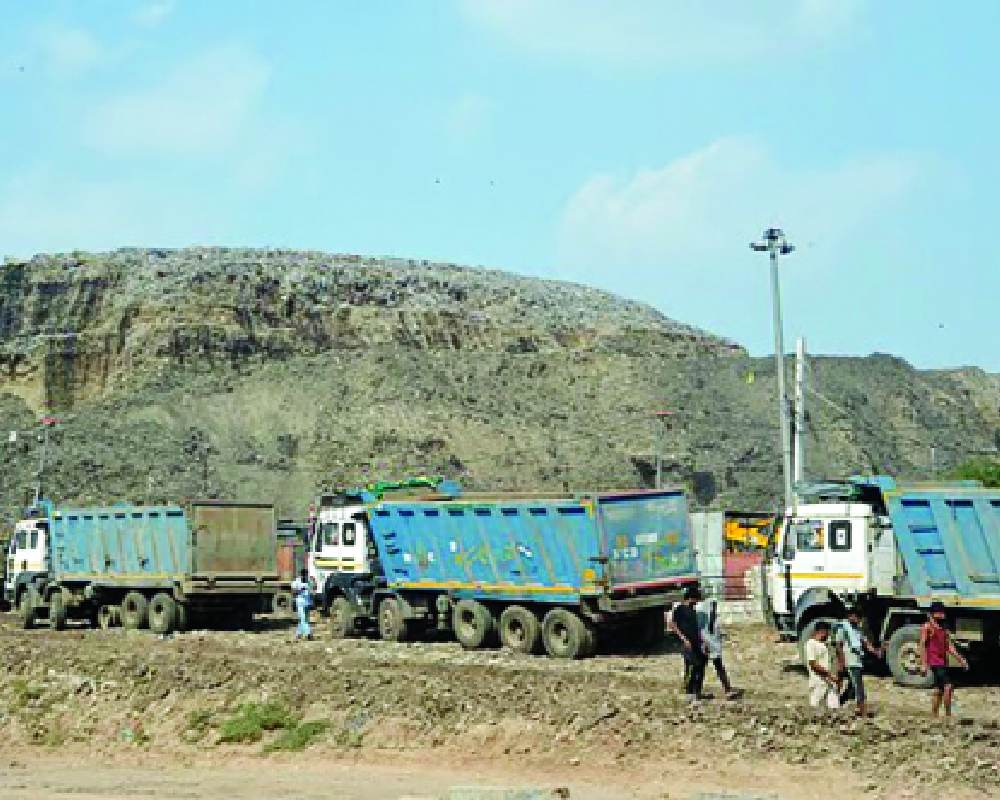
The Municipal Corporation of Delhi (MCD) has urged Resident Welfare Associations (RWAs) across the city to come forward and use inert soil extracted from the Bhalswa landfill site for filling vacant or low-lying areas in their neighbourhoods.
The initiative was announced on Monday by MCD Leader of the House Parvesh Wahi during an inspection visit to the site.
The initiative is aimed at promoting the reuse of waste material while reducing waterlogging and improving sanitation in residential colonies.
The inert soil, a by-product of the ongoing waste processing and bio-mining work at Bhalswa, will be provided free of cost by the MCD to RWAs or institutions willing to transport at least five dumpers or trucks of soil, amounting to more than 200 metric tonnes. For this purpose, RWAs can coordinate with the offices of the Mayor, the Leader of the House, or the Zonal Deputy Commissioner.
During the inspection, Wahi was accompanied by MCD Additional Commissioner Leela Dhar Meghwal, Engineer-in-Chief PC Meena and Civil Lines Zone Deputy Commissioner Anshul Sirohi, along with other senior officials.
Wahi informed that the Bhalswa landfill currently receives about 14 metric tonnes of garbage every day, of which nearly 10 metric tonnes are being scientifically processed and disposed of. “The pace of bio-mining has picked up significantly, and we are steadily reducing the size of the landfill,” he said.
He reaffirmed the MCD’s commitment to eliminating the massive Bhalswa garbage mound, one of Delhi’s three legacy landfill sites, by the end of 2026. “We are determined to flatten the Bhalswa mountain of waste before 2026. It will mark a historic milestone in making Delhi cleaner and more environmentally sustainable,” Wahi said. Officials said that using inert soil for landfilling will serve two purposes.
It will help in the safe disposal of processed waste and assist RWAs in reducing waterlogging in their respective areas. The inert soil can also be used for levelling parks, open plots, and civic spaces where rainwater accumulation remains a recurring issue.
“The MCD will provide full technical support to RWAs and institutions participating in this initiative,” Wahi said, adding that using inert soil for public benefit aligns with the Government’s circular economy goals.
The Leader of the House also appealed to citizens to actively contribute to Delhi’s cleanliness efforts. “Together, we can make Delhi a clean, beautiful, and eco-friendly capital. This project is not just about removing garbage; it’s about transforming waste into something useful for our communities,” he said.
Senior MCD officials present at the inspection noted that the civic body has already begun similar projects at other legacy dumpsites, including Ghazipur and Okhla, to reclaim land and repurpose inert material. Regular monitoring is being done to ensure safe transportation and usage of the soil.
The Bhalswa landfill, which has long been a symbol of Delhi’s waste management challenges, is now being redeveloped as part of a larger citywide cleanliness mission.
With steady progress in waste segregation, bio-mining, and community participation, the MCD hopes the Bhalswa site will soon shift from being a burden to becoming a symbol of Delhi’s urban transformation.