Turning the pages of ‘Dynasties of Devotion’ feels like stepping barefoot into a temple courtyard with history, art and faith rising all around you, writes Abhi Singhal
There are books that inform, and then there are books that transport. Deepa Mandlik's Dynasties of Devotion, translated into English by Aboli Mandlik, belongs firmly in the latter category. Turning its pages feels less like reading and more like stepping barefoot into temple courtyards — stones cool under your feet, chants echoing in the air, stories of gods and kings coming alive around you.
For centuries, temples have stood as more than just religious spaces. They were once vibrant centres of community life — where music, dance, learning, and faith flowed together seamlessly. Mandlik captures this spirit with an eye for detail and a heart for storytelling, offering readers a journey through seven extraordinary temples across India and Cambodia.
The book begins with the audacious Kailasa Temple at Ellora, carved entirely from a single rock face. Here, Mandlik lingers on the imagery of Lakshmi seated gracefully on her lotus, elephants pouring water over her — an eternal vision of fertility and abundance. She then takes us to Tamil Nadu's Brihadeeswara Temple, once home to 400 dancers and 250 musicians. Suddenly, the stone sculptures feel like they almost seem to hum with rhythm and movement.
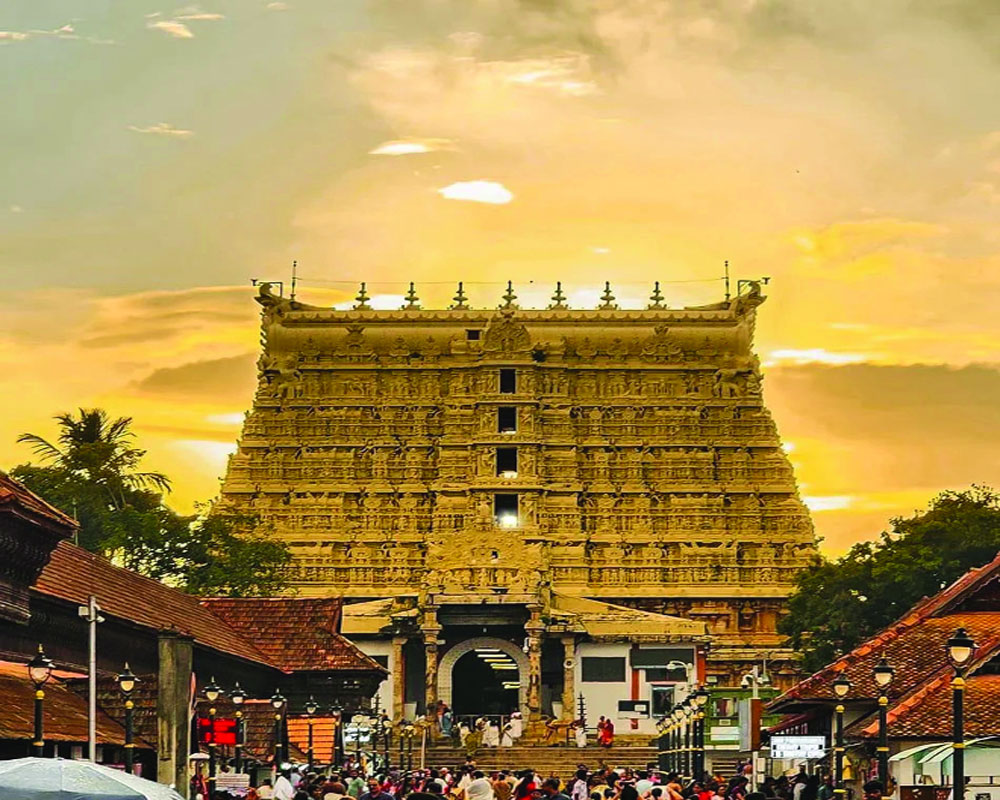
Each chapter feels like entering a new sanctum. At the Airavatesvara Temple, Mandlik marvels at the musical steps that produce the seven notes when tapped lightly — a detail that delights as much as it astonishes. The Chennakeshava Temple in Karnataka dazzles with its intricate carvings, while the Kerala's beautiful Sree Padmanabhaswamy Temple reveals mysteries and rituals still wrapped in secrecy. And when the narrative crosses borders to Angkor Wat and Bayon in Cambodia, the book reminds us that devotion, like heritage, often travels far beyond where it was born.
What keeps Dynasties of Devotion from becoming just another architectural study is its emotional core. Mandlik writes with tenderness, and the translation preserves that sense of warmth beautifully. You never feel as though you are being lectured; instead, you feel as if you are listening to a guide who loves these spaces deeply and wants to share their wonder with you. The prose is not overly polished or academic.
Mandlik also brings a filmmaker's eye to her descriptions. The chapters read like scenes: the grandeur of a king's dream at Brihadeeswara, the intimate music of stone steps at Airavatesvara, the sweeping vision of Angkor Wat. One can almost imagine the camera moving across temple corridors, zooming in on carvings, pulling back to capture towering gopurams.
Dynasties of Devotion is about what temples mean to people. They are places where art and spirituality merge, where history is carved in stone, and where devotion continues to find new expressions. Reading it feels like taking a long, unhurried walk through some of the most magnificent structures ever built that feel alive in pages.
History, heritage and secrets
Perhaps the most striking takeaway from the book is its quiet reminder that devotion, like heritage, is inherited not through force but through presence. It is found in rituals observed together, in stories passed down, in the silences shared while standing before a deity.
About the Book
Book: Dynasties Of Devotion : The Secrets of 7 Iconic Hindu Temples
Author: Deepa Mandlik
Publisher: HarperCollins
Price: Rs 399/-