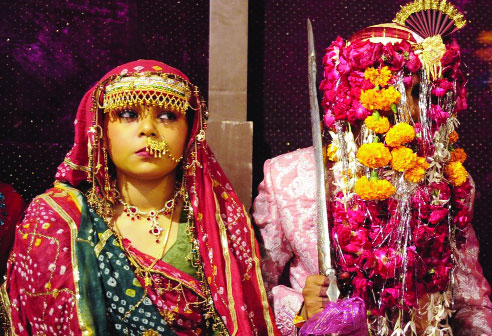
The apex court has not just delivered a verdict; with its judgement criminalising sex with a minor wife it has removed the anomalies between the IPC and laws enacted to protect children
A landmark judgment on child rights was pronounced earlier this month by the Supreme Court of India, which ruled that a man is guilty of committing rape if he engages in sexual intercourse with his wife who is aged between 15 and 18. In this case the Supreme Court was deciding the challenge to the exception carved in the definition of ‘rape’ under the Indian Penal Code (IPC). This exception treated rape of a married girl child by her husband as an exception to the crime of rape. Perplexing as it may sound, that despite having enacted various pro-child legislations such as the Prevention of Child Marriages Act, 2006 or the Protection of Children From Sexual Offences Act, 2012 (hereinafter referred as POCSO), the legislature sought to legitimise the sexual crime against married girl child by inserting Exception (2) to Section 375 of the Indian Penal Code. This was rightly challenged by the not-for-profit-organisation, Independent Thought, by way of a writ before the Supreme Court of India in 2013.
This ruling is a giant step towards bringing about a child sensitive criminal justice system in India. The court has not created a ‘new offence’ by way of this judgement as some critics have falsely alleged. It has merely removed the anomaly which was apparent when the IPC and other pro-children laws were juxtaposed.
In fact, prior to POCSO, the IPC did not recognise multiple ways and forms in which children would be sexually abused at home or outside. All such cases were treated as offences falling under Section 354 of the IPC as outraging the modesty of a woman or under Section 377 of the IPC as unnatural offences.
Then came POCSO — a self-contained code which is comprehensive and seeks to bring about a child sensitive criminal justice system. It recognises that children are most vulnerable segments of society and far more susceptible to violence and abuse in the hands of both ‘known’ and ‘unknown’, regardless of their economic and social circumstances, culture, religion or ethnicity or even their sex. POCSO covers all children below 18 years, irrespective of their sex. Both male and female children could become a victim and law will be set into motion for punishing the perpetrator. It provides the most comprehensive definition of penetrative sexual assault and sexual assault taking into account all kinds of abusive and violent experience children may be subjected to.
Pornography and sexual harassment are also made crime and punishable under the law. For instance, penetrative sexual assault would include use of child’s vagina, urethra or mouth for penetration. Similarly, it would include penetration by penis or by any body part like finger or even by an object. The offense is said to have been committed in both cases — when it is done on the child or when child is forced to do such a thing on the perpetrator.
Similarly, sexual assault includes all kinds of inappropriate touching of child’s body, including the body part between the legs, behind and the breast. It also includes making the child touch perpetrators body part with sexual intent.
POCSO identifies that in certain situations and certain relations, with respect to which children become far more vulnerable and if the offence of penetrative sexual assault and sexual assault occurs in such situations and with respect to these relations, it becomes aggravated penetrative sexual assault or aggravated sexual assault inviting much severe punishment. For instance, if the perpetrator is a relative of the child ( by blood or by marriage) or living in the same house the offence of penetrative sexual assault or sexual assault becomes aggravated penetrative sexual assault aggravated sexual assault. Offences by teachers, trainers, coaches, care takers, neighbours who has been trusted with the care of the child also will be in the aggravated category inviting higher punishment. Offence if committed in relation to a child who suffers from any mental or physical disability will also be covered under the category of aggravated crime and punishable with severe punishment. If we see the crime data collected by NCRB for the year 2015, in 94.8% of rape cases of minors - children were raped by someone they knew and not strangers. These acquaintances include neighbors (3,149 cases) who were the biggest abusers (35.8%). Ten per cent of cases saw children being raped by their own direct family members and relatives.
These numbers are just the tip of the ice berg if we consider patriarchal family structure in India. The violence and abuse of the child is seen as a blot/shame on the family and a danger to his/her future marriage prospect if it is brought into public realm. This is responsible for non reporting or under reporting and/or pressurizing the victim for withdrawal of cases in the name of family honour or trying to settle it within the four walls of the family.
law is an effective tool for social reform but in a society which refuses to mend its thinking and calling a spade a spade, the effect of change may not come early or atall.Furthermore, there are serious problems with respect to implementation of the Act. POCSO provides for a very child friendly procedure for reporting of the crime and recording of the statement of the child, investigation and trial of offences by special court. However, in practice such provisions are being adhered to as an exception rather than a norm. The fate of a case is sealed even before it goes to the Court for trial due to half hearted and shoddy investigation. And the remaining gets buried when put to the legal scrutiny at the Appeal stage.
While the law makes it mandatory under Section-19 of the POCSO Act, that anyone having knowledge or apprehension of a case of child sexual abuse has to mandatorily report it, there is little effort put to ensure that after receiving the report the police conducts a though investigation and makes a full roof case. While POCSO says that statement of the child will be recorded at the residence of the child or a place of usual residence or choice. In practice this is rarely followed. The provision of Audio-Video recording of the child's statement is rarely followed which would really be very effective especially involving younger children as they tend to be easily pressurized or blackmailed into silence when the trial launches. This in fact should be done mandatorily. The families reporting case of a violence against child have to live through immense anxiety and fear for their safety, security and the most for the emotional and psychological well being of the child.
What needs to be really appreciated in the process of recording of the children's statement during the investigation or dealing with it during the trial that children do not have adequate language to describe their experience. The, problem which is further accentuated due to lack of sex education. The statement of the child that someone did "ganda kaam" could mean anything from touching or fingering to a violent penetrative assault. The language that the children have is hardly enough to describe their "lived" experiences causing a deep chasm in the case. This is for child who can speak but there are innumerable cases of children being victim of sexual abuse who are below the age of 5 which inhibits their capacity to speak. Therefore, right questions needs to be put before the child to help her/him describe the experience . Therefore, right questions needs to be put before the child to help her/him describe the experience and such questions cannot be called leading question as was held in Hazari Paswan v. State (NCT of Delhi), (2016) 234 DlT 110 wherein the court also observed that "The Presiding Officer is expected to remain sensitive particularly when a child of tender age is under examination. While conducting trial, Court is not required to sit as a silent spectator but to take active part within the boundaries of law, to bring on record the relevant facts for the purpose of eliciting truth".
Children are extremely vulnerable witnesses. They need a voice to speak and a support person to stand by them. Those who are in the care and custody of their parents will be dependent upon them to be able to freely depose. However, if the ability of such parent is inhibited because of social or economic reasons the child will never be able to speak freely before the court. The children who are in foster care or suffer any form of disability would find it even more difficulty.
Without proper witness protection during investigation and trial there are a likelihood of child witnesses and/or their care providers turning hostile under pressure or fear. In many cases it has been seen that the bail is granted to the accused on general principal of law that the accused is innocent till guilty without considering the fact that for offences of penetrative sexual assault, Aggravated penetrative sexual assault , sexual assault & aggravated sexual assault, POCSO presumes mens rea. The accused is guilty till proven innocent.
The key to successful implementation of POCSO lies in having infrastructure of trained body of investigators, Public Prosecutors and Special Courts which requires investment by state governments and the commitment. The question remains is the government ready and committed to protect our children so that their adulthood is not spent in forgetting their childhood but being a positive force in nation building.
(The writers are associated with TRS law Offices)