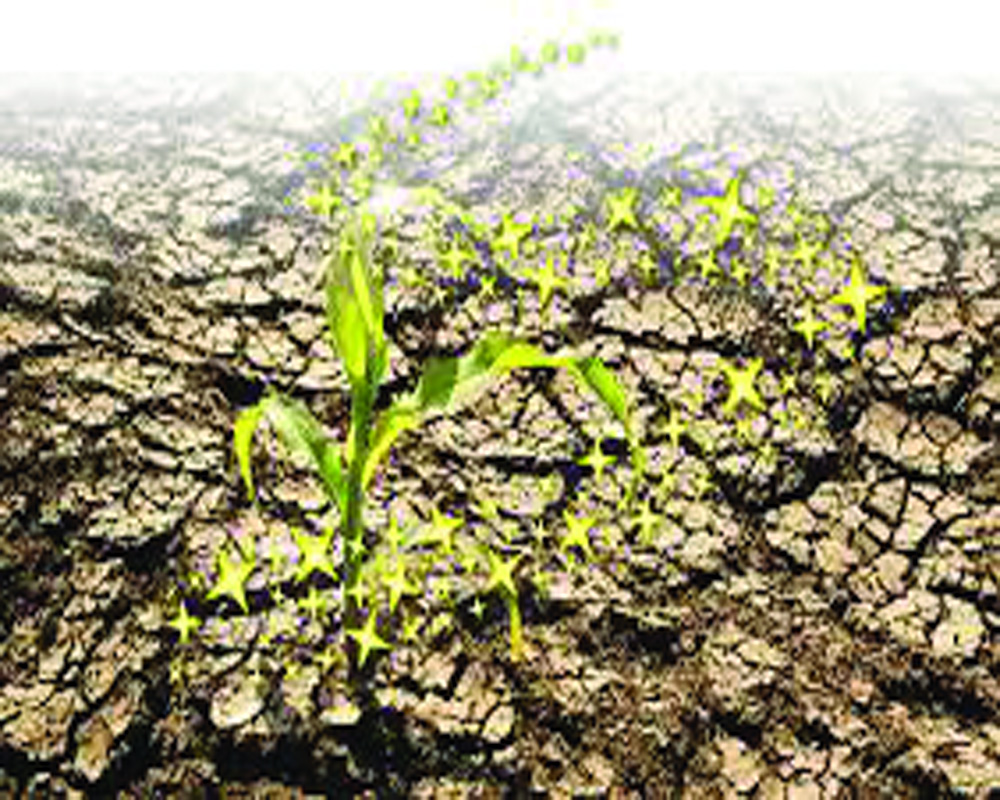
Climate-Smart Agriculture emerges as a transformative solution, combining sustainable practices with strategies to mitigate emissions and secure food systems
The demand for food is steadily increasing due to dietary changes and the growing global population. Currently, approximately 690 million people-or 8.9 per cent of the world's population-suffer from hunger. By 2050, the world will need to produce nearly 70 per cent more food to sustain an estimated 9 billion people, which makes food security an increasingly critical challenge. Climate change further exacerbates this problem, intensifying the environmental impacts of food production. Agriculture, while essential, is also a major contributor to the climate crisis, generating between 19 per cent and 29 per cent of global greenhouse gas emissions.
Economic losses from natural disasters are also rising globally, and the agriculture sector is particularly vulnerable. According to the United Nations Office for Disaster Risk Reduction (UNISDR), disaster-affected nations experienced direct economic losses of $2,908 billion between 1998 and 2017, with climate-related calamities accounting for 77 per cent of these losses. In recent years, the impacts of climate change on agriculture have become more pronounced. For example, India is projected to experience up to a 9 per cent reduction in key crop yields nationwide between 2010 and 2039 due to climate change. Regional impacts could be even more severe, with potential losses of up to 35 per cent for rice, 20 per cent for wheat, 50 per cent for sorghum, 13 per cent for barley, and 60 per cent for maize.
Climate change adversely affects food production and supply chains while accelerating the degradation of already fragile ecosystems. To counter these challenges, it is imperative to adopt Climate Smart Agriculture (CSA) practices, which aim to mitigate the adverse effects of climate change on agriculture while sustainably enhancing productivity and income. CSA integrates sustainable agricultural practices and rural development goals, contributing to broader objectives like better environmental management and hunger reduction, as outlined in the Millennium Development Goals (MDGs).
Climate-Smart Agriculture Practices in India:
India is actively adopting Climate-Smart Agriculture (CSA) practices to combat climate change's impact on agriculture. These include conservation agriculture techniques like zero-tillage to boost yields and reduce emissions, agroforestry to enhance biodiversity and resilience, and precision farming technologies such as GPS and GIS to optimise resources. Water management strategies like drip irrigation improve efficiency, while efficient livestock management boosts revenue and product quality. Solar power is increasingly used for irrigation, reducing reliance on fossil fuels. Practices such as crop diversification, rotation with legumes, and the cultivation of climate-resilient varieties enhance sustainability, while integrated pest management and crop residue management minimise chemical use and pollution, ensuring long-term agricultural and environmental health.
Challenges to Climate-Smart Agriculture in India:
Despite its numerous benefits, the adoption of CSA practices in India faces several challenges. Climate Variability: Rising temperatures, erratic rainfall, and diminishing water resources threaten to lower crop productivity by 10-40 per cent by the end of the century. Rising sea levels, cyclones, and storm surges endanger agricultural lands, especially in regions like the Sundarbans, Kerala, and Tamil Nadu. High Costs: Implementing CSA methods often involves significant financial investment, which can deter farmers. Policy and Regulatory Barriers: Inadequate policies and restrictive regulations hinder widespread CSA adoption.
The adoption of climate-smart agriculture is no longer optional but an urgent necessity.
(The writer is Assistant Professor Agronomy, College of Agriculture & Environmental Technology, Surajmal University, Kichha, Uttarakhand; views are personal)