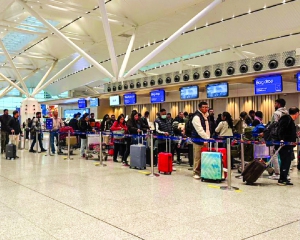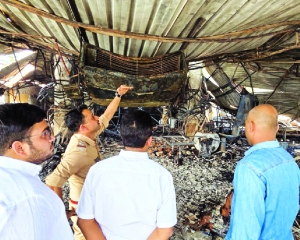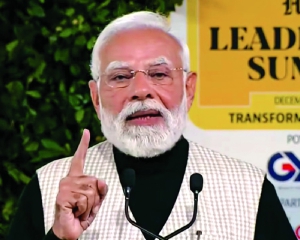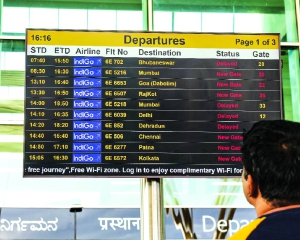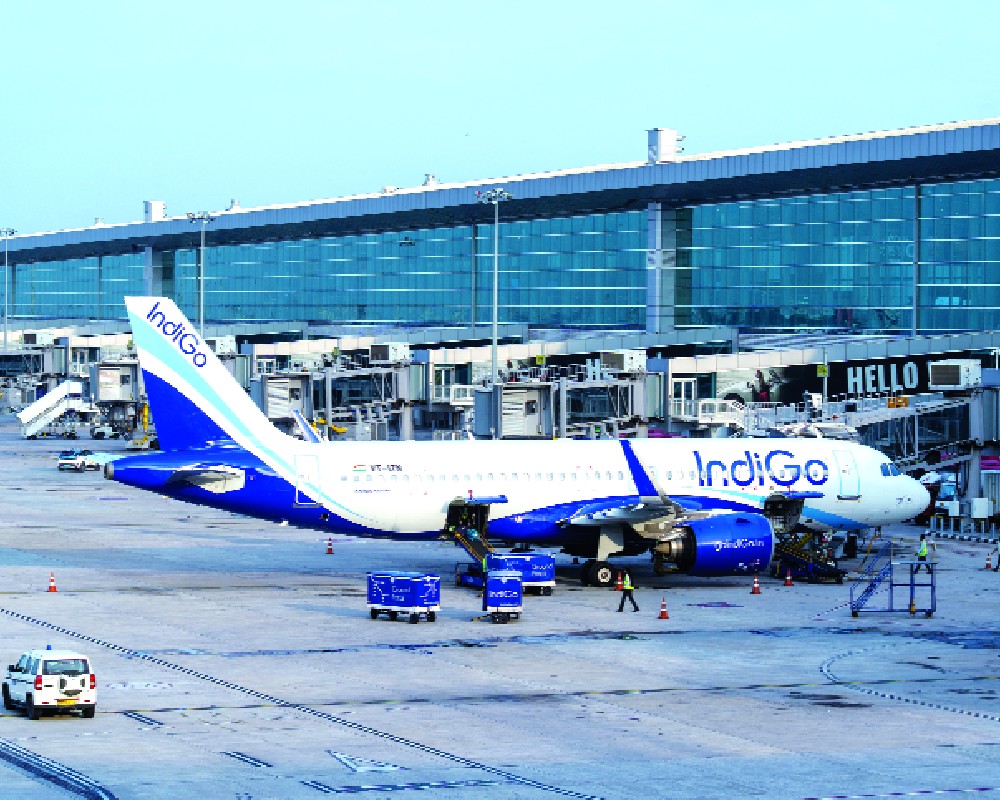
Even as IndiGo Airline grounds flights, passengers go crazy, regulators take refuge behind inquiries, pilots blame managers, and the country’s civil aviation sector goes for a six, the central minister, K Rammohan Naidu claims that this is the best “time to start an airline in India.” He adds that the country needs “five big airlines,” and the ministry encourages competition, and wants “more airlines to join the industry” with the Government’s support. He predicts that the demand is likely to grow at a rapid pace in the future. While the desires are noble, the in-air realities are turbulent.
Of course, there is a difference between a need, desire, or wish, and what the market dynamics can accommodate. In the past three decades, each time, the Indian skies became competitive, airlines either nosedived, and crashed, or found it difficult to take off, and were forced into a competitor’s lap. Despite the growing demand, competition curtailed ticket prices, and profitability which, in turn, ended up killing competition. Thus, closures, mergers, and acquisitions became the regular norms in the aviation sector. Higher the number of airlines, the more the pressures that grounded them.
Not just this but each time an airline attained a dominant position vis-à-vis domestic market share, the cost structures ate into its financials, which bankrupted it, or forced it on the auction block. Look at Jet Airways, which ruled the skies, and was sold under the insolvency laws. Sahara and Deccan aimed big, and flew into competitor’s hangars. The state-owned Indian Airlines, and Air India were prisoners of their monopolistic successes, until they were merged, and then sold to the Tata Group. Today, the largest airline, IndiGo, faces a similar situation, and critics blame its seemingly-successful business model as the reason for its problems.
Globally, airlines grapple with volumes, costs, market shares, apart from the impact of policies and regulations on them. Volumes are obviously critical but they cannot be universal, national, or international. The trick is to acquire passengers on select, highly-profitable, and fast-churning routes. For example, domestically, Delhi-Mumbai, Bangalore-Delhi, and local regional routes are more coveted given the number of passengers who travel to these cities. Internationally, Delhi-London, Delhi-Hong Kong, and India-US journeys are crowded, and desired by the airlines. Getting overall volumes, as national share is irrelevant, and dicey.
However, volumes imply huge one-time investments, and capital costs to buy and acquire aircraft. In most cases, the planes are purchased before the demand increases, which create a lag time before the investments pay off. Despite the lucrative finance-and-lease deals offered by the manufacturers, airlines can find themselves in a tailspin, and get stuck in financial air-pockets. Several airlines are in trouble because either they buy too many planes, and are forced to operate them on low-profit routes, or buy too less, and lose volumes, and market shares on high-profit ones. It is a delicate balance that keeps changing, and needs to be tweaked.
Thus, the levers to control and manage costs fall on manpower since most other expenses are necessary, and continuous. This forces even the dominant and successful airlines, or rather only these ones, to short-circuit salaries and benefits. This implies that they understaff certain areas, overwork others, and underpay most. This creates a vice-like cycle of safety concerns combined with apathy and unhappiness among the employees. Morale is down, even as the senior management claims profitability over a few years. The medium-term impact is quite like what happened to IndiGo.
Policies, regulations, and external non-controllable factors play a part. For instance, the global prices of crude oil and, hence, aviation fuel fluctuates, and eats into profits. In several quarters, IndiGo went from profits to losses, largely because of the prices of aviation fuel. Sudden policy changes impact operational and business models, especially for low-cost airlines. Regulations can create havoc, and force the planes to fly off the radar. The flight-schedule rules imposed by the regulator after the recent crash in Ahmedabad apparently forced Indigo’s delays, and cancellations. The low-cost structure spun out of control, which was blamed on management errors.
According to experts, aviation fuel accounts for 20-30 per cent of the total costs, and the prices can be highly-volatile. Leased engines, and aircraft result in “significant fixed monthly rent payment,” which is around 16 per cent of the revenues. Add the various taxes such as landing fees, gate charges, and navigation fees, which account for another nine per cent of the revenues. Under such a rigid structure, regular so-called fixed expenses can account for almost 60-70 per cent of the costs, not revenues. There is little leeway for the airlines to immediately counter shifting changes.
Profit margins are wafer-thin despite high volumes, or market shares. During competition, there are downward pressures on ticket prices. This happens even when there is minimal competition as the airlines scamper to sell more seats on relatively-low traffic routes. Unexpected events like wars and pandemics, policy and regulation changes, and economic slowdowns can rapidly change things. “This pushes down profit margins to low levels, typically 2-5 per cent globally, which makes it different to absorb financial shocks, or support high capital investments.” It is a typical catch-22 situation. You need to spend more to grab volumes. This creates cost pressures.
Consider the case of Southwest Airlines, which faced a huge crisis during the winter holiday season in the US in 2022. While other airlines recovered from the severe winter effect within days, Southwest went south for days and weeks. It was its unique and, till then, highly successful business and operational model that was unable to react to the new unusual challenges. According to a case study (2024), the IndiGo-like crisis, which led to the cancellations of thousands of flights, “provides an opportunity to dig deeply into the need for scalability, challenges of risk management… and the wide variety of challenges of managing airline supply chains.”
Concludes the same case study, “Airlines are not easy businesses to run. They are capital and labour intensive, they are subject to impact from weather, politics, public health, and other unexpected issues. And they are competitive, seeking not only to provide good price and performance for customers but also an appropriate yield for every seat on the plane, and to keep planes in the air, and generate revenues.” Thus, competition, and five airlines, as the civil aviation minister desires, may be the wrong solution for the wrong pinpointed problems. IndiGo did not crash because of lack of competition. It could not take off because of its straitjacketed business model.