Like Donald Trump’s MAGA, but in an unobtrusive manner, and without the theatrics and circus of the US president, India has its own business-economic weapon, which is also MAGA. In the long run, the Indian weapon of mass market will prove to be more durable and consequential than Trump’s trade-tariff-investment warhead. The US republicans wish to ‘Make America Great Again.’ The Indian Government believes in ‘Microsoft, Amazon, Google, and Apple.’ Ironically, both nations’ futures depend on the tech giants.
But before we go down that road, a trip down the nostalgia lane first. Scrolling down the India-US news on diverse digital platforms, I had a flashback from the past, some three decades ago. I recalled a similar political schizophrenia coupled with business mania, a kind of parallel track in the relations between India and the US. Back then, Robin Raphael, the US assistant state secretary in the Department of State, caused diplomatic tremors and waves in India.
Raphael, a South Asia expert who was subsequently investigated by the FBI on charges of being an ISI mole with leanings towards Pakistan, claimed that a genuine dispute existed between Pakistan and India, and Kashmir was not an inalienable part of India. This caused considerable agitation among the Indian leaders. Yet, while Raphael hectored India, the American soft-drinks icon, Coke, made grand announcements about coming back to India with a bang. Other well-known American brands were also enthusiastic about the vast, untapped, and growing Indian consumer market.
Fast forward a few years, and the US did what even India had never anticipated. The former compelled Russia to stop the supplies of cryogenic engines to India, which could have aided the latter in its space and missile programme. It is a different matter that India managed without Russian help. But around the same time that diplomatic hostilities with the US were on the rise, McDonald’s announced that it would open thousands of fast-food stores across India. Mac-D realised the potential of the Indian market.
A similar kind of schizophrenia-excitement is visible today. After imposing a 50 per cent tariff on Indian exports, hankering about H-1B visa regime, and targeting pharma shipments, Trump recently instructed his aides that there were complaints about India dumping rice in the US. He hinted at new tariffs on rice imports. His tariff war against India seemed unabated. Do remember that after new sanctions were imposed by the European Union, and others against two Russian crude oil exporters, Indian importers stopped, or curtailed purchases from Russia. Or at least publicly announced it.
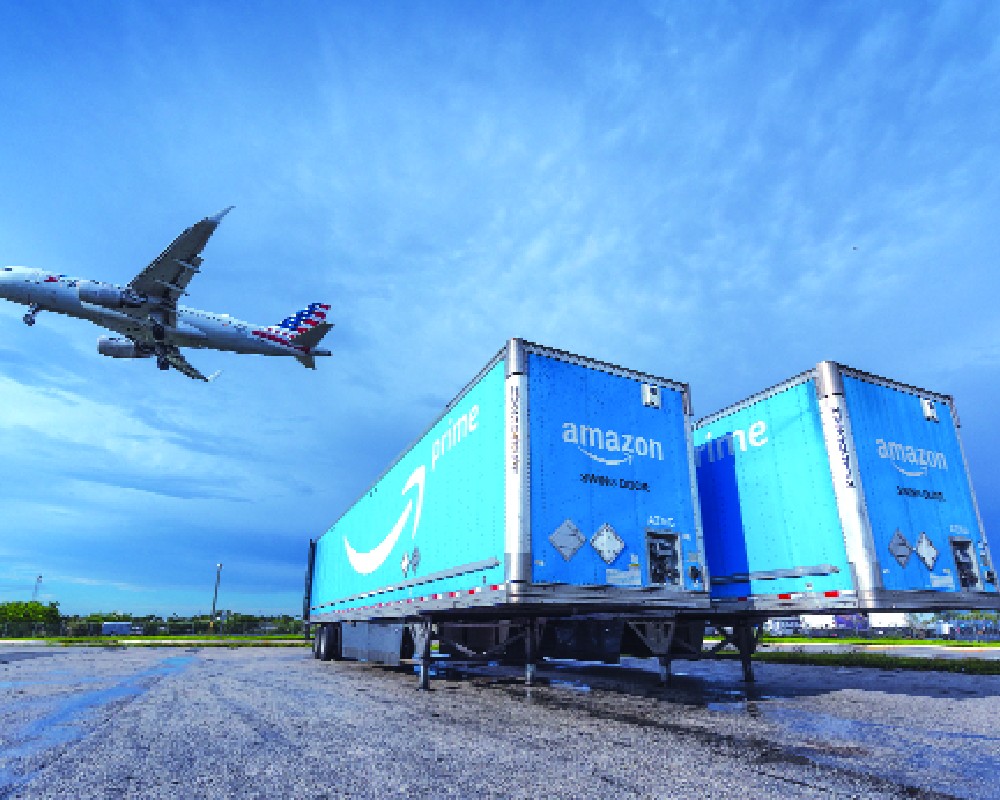
However, the likes of Microsoft, Amazon, Google, and Apple, the Indian MAGA, announced major investment plans for their Indian operations. This was despite Trump’s threats to reduce their exposures to the subcontinent, and invest more in the US. The tech giants did both. Satya Nadella, the CEO of Microsoft, said that he had a wonderful meeting with the Indian Prime Minister Narendra Modi, and that his firm will commit $17 billion to promote, develop, and encourage AI (Artificial Intelligence) in India.
Nadella added that this was the largest investment by Microsoft in Asia. Not to be outdone, within no time, Amazon, which is the largest e-commerce platform in India, claimed that it would invest a much-higher $30 billion until 2030 to improve, develop, and upgrade the# AI capabilities in India. The firm stated that it saw endless potential and possibilities in the Indian market. Some weeks ago, if you recall, Sundar Pichai of Google said that the firm would invest $17 billion in Andhra Pradesh to set up a massive data centre, the largest of its kind in Asia, and develop AI capabilities in India.
Now, we come to Apple. Until November 2025, iPhone exports and shipments from India to the US broke previous records, despite the US’ tariffs, and Trump’s antics. Total iPhone exports may cross the $25 billion in 2025 (calendar year), or surely in 2025-26 (fiscal year). Apple is committed to manufacturing 25 per cent of iPhones meant for global sales within India, and the process is under way. This completes the quartet of India’s MAGA, which will counter Trump’s MAGA, and maybe come out trumping America.
What India needs to do is something quite simple. It needs to ride out the Trump threats, and the hostility of the US administration. This is not something new. We have done it before, after the two nuclear tests, and during the 1980s. India has experienced hostile US administrations for the last six decades, but since the 1980s the negatives were accompanied by business-investment positives. Remember, it is not charity, sympathy, or altruism that is forcing India's MAGA weapon to pay attention to India.
We have a population of 1.6 billion, who are the future and potential testing guinea pigs for the AI geeks, who work for the global tech giants to tweak their algorithms. Where else in the world can they find such a large captive consumer base? This is precisely the business key to unlock the diplomatic shackles. Back in the 1990s, China used the power of its consumers, selectively dangled access to the US firms, and extracted huge concessions. India may not be as ruthless, but can use MAGA wisely, patiently, and strategically.
However, we need to be careful so that we are not carried away by rhetoric, and posturing. For example, when Pepsi entered India in the 1980s, it spoke eloquently about how it could instantly transform Indian farming through the exports of processed food (read potato wafers). The change happened but over a longer period. The US and European pharma giants were cagey to transfer research knowhow. The same slowness, laziness, or apprehensions can propel the MAGA tech giants to promise much more than they wish to chew.
Let me give you a recent example. While Amazon promised to pump in $30 billion, it claimed that it had already invested $40 billion in India. A closer look revealed that the latter figure included salaries paid to the Indian employees for decades. Recurring expenses, which are funded by local and export revenues cannot be deemed as investment. Only capital expenditure on infrastructure, and other heads can. More importantly, for an outsider, foreign investment inflow is crucial. If Amazon reinvests the profits and cash flows it earns from the Indian operations, it is capex but not FDI.
The author has worked for leading media houses, authored two books, and is now Executive Director, C Voter Foundation; views are personal