It was a manufacturing marathon. While India and China were the favourites, South Korea, Taiwan, and Brazil were the dark horses. India lost, China won, and the smaller Asian nations stood on the podium. In the steeplechase in the software and hardware space, India and China are the joint winners. The former vaulted over the oceans to emerge as the world’s IT leader, and China overcame the obstacles to directly compete with the US in chips, and Artificial Intelligence. In the ongoing healthcare sprint, while China is about to touch the tape, India has not even left the blocks.
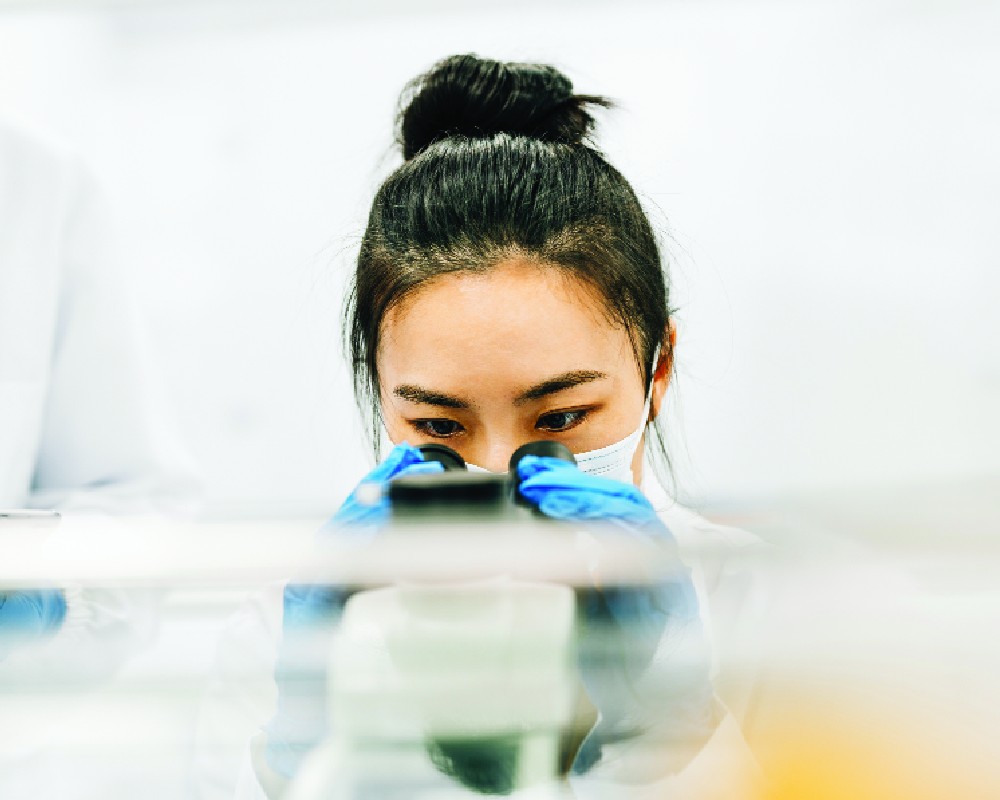
Until a few years ago, ‘Big Pharma’ in the West focused on the discovery and launches of billion-dollar blockbuster drugs, India became the global supplier of generics (off-patent medicines), and China mastered the science of Active Pharma Ingredients (APIs). Today, after America, China is the world’s largest developer of new molecules and drugs. According to a recent article in ‘The Economist,’ Chinese firms conducted a third of the global clinical trials last year and, in the first six months of 2025, they were responsible for a third of the licensing deals signed by ‘Big Pharma.’
Over the next decade, the battles in areas such as biosciences, medical research, and discovery of life-saving medicines (cancer) will be aggressively fought between China and America. India is more likely to pursue its generics journey, and take advantage of the steep ‘patent cliffs,’ “as drugs expected to generate more than $300 billion in total revenues over the next six years will lose their patent protection by 2030. Yet again, India will be left behind in this third global race. Americans and Europeans, who will intensify their global searches for new molecules, will increasingly find them in China.
The signs are visible, and the writing on the medical wall is getting clearer. Early this year, Pfizer, the largest manufacturer in the US, paid $1.25 billion to a Chinese biotech firm for the rights to make-and-sell a new cancer drug. GlaxoSmithKline of Britain paid $500 million to another Chinese firm for lung-disease treatment, and unbelievably committed a further $12 billion for 11 drugs in the pipeline. China’s share in global licensing has gone up four times in four years. In comparison, except for a small oasis of new discoveries, India is way behind despite a slew of ongoing clinical trials.
Like the Indian market, the Chinese one is rugged, and difficult. Both are price-sensitive, with political and social pressures to enable the poor to access the medicines. In China, “state insurance covers most purchases,” which forces private firms into “bidding wars.” Drugmakers need to “slash prices by half or more to reach a wide patient pool.” Hence, it made sense for the Chinese, as well as Indians, to work with generics, which are cheaper. India extended the business model in the overseas markets, either by exporting, or setting up generics’ plants in the West. China chose differently.
In conjunction with the policy-makers, Chinese firms looked at America and Europe as “big prizes,” or markets where they could sell new drugs, rather than continue to export generics or APIs. They decided to boost research, and ink licensing agreements with ‘Big Pharma’ to boost profits, and margins. According to the article in ‘The Economist,’ “A growing model is the ‘New-Co,’ under which a biotech company sets up a legally distinct company in America, often backed by foreign investors, and spins off promising assets into it.” Since ‘Big Pharma’ spends billions of dollars to launch a new drug, the deals with Chinese pharma seem lucrative, and tempting.
Governance models make a huge difference. In the recent past, India has struggled with clinical trials due to irregularities, even illegality, which were highlighted by the judiciary, and activists. These rightfully delayed, and derailed them. In China, the period to secure human trials shrank from more than 500 days to less than 90. Unlike India, the workforce at China’s regulator quadrupled, and cleared a backlog of 20,000 drug applications within two years. Despite reforms, Indian drugmakers continue to complain about red tape. In a sense, China has reinvented regulation. One is not sure if it is for better or worse, but it has speeded up the approval processes.
Of course, given the existing security, economic, energy, business, defence, and trade tensions between China and the West, China’s regulatory framework is being questioned and scrutinised. The US drug regulator is stricter when it deals with medicines based on clinical trials only in China. There are concerns about data security, and data privacy. The US halted trials that exported American genetic data to China. The US policy-makers, states the piece in ‘The Economist,’ “fret about the security risks at the junction of pharmaceuticals and biotechnology.” India faces some of these challenges as the US questions its drug-efficacy data.
This explains the Indians’ penchant to make generics in America through the inorganic M&A route. China innovated to produce “fast followers,” which enhance the safety and/or delivery of the existing drugs. The next step was to move on to the “first-in-class” medicines, which have proteins or genes, or mechanisms to boost functions. The first, according to experts, provided the firms with the courage to do the second. This led to the making of new drugs. For example, according to a media report, of the 160 obesity drugs in development across the world, a third are being made in China.
India has the potential for drug discoveries. The skills, management, and research were evident during the pandemic, when India emerged as a leading drugmaker, and a low-cost exporter. But this was due to the help from the Government, which cajoled and pushed the private sector. Similar impetus lacks in other cases, and Indian firms are generally happy with their march in the generics segment. They are low-hanging fruits, with ample margins, especially when they are sold in the US and Europe. In most cases, Indian firms lack the risk-taking abilities to spend billions on a new discovery.
However, as of now, China, which won the manufacturing race comfortably, and raced ahead in chips and AI, is comfortably placed in healthcare and biosciences. India needs to build an efficient ecosystem to achieve similar results. It has the right ingredients such as scientific temper, cheap manpower, research and manufacturing units, and government support. What it requires is access to foreign capital, and a change in entrepreneurial mindset so that producers switch from off-patent mentality to new-patent one.