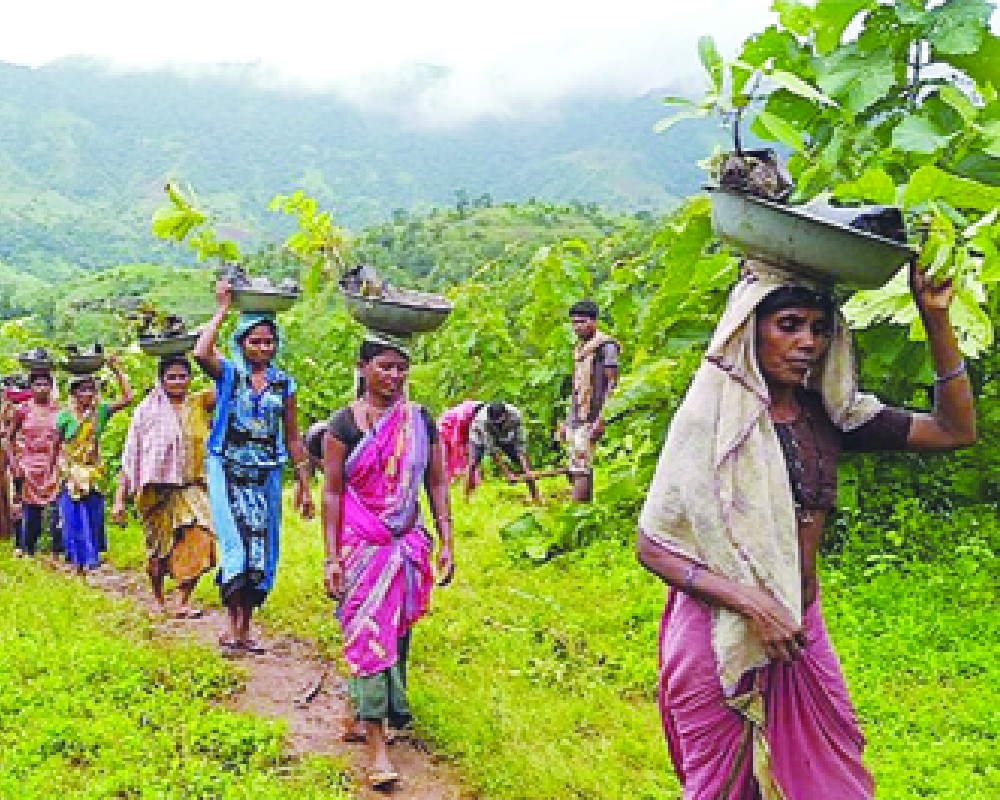
Although the Forest Survey of India, in its 2023 report, indicates an increasing trend in the country’s forest cover, a major undisclosed ailment is affecting the heart of India’s forest conservation efforts: the alleged widespread misuse of the Forest Rights Act (FRA), 2006. Apart from procedural irregularities and misreading of provisions noticed in the implementation of the FRA, the major and substantive issues are the recognition of post-2005 encroachments on forest land as Individual Forest Rights (IFR) for habitation or cultivation, and the mass-scale grant of management rights (named Community Forest Resource Rights, or CFRR, under the FRA Rules amended in 2012) in cases of grossly ineligible claims.
The pattern of misuse of the FRA was initially highlighted by the 2011 NC Saxena Committee Report. The Committee, an inter-ministerial body, raised serious concerns about the recognition of ineligible claims. It found evidence that “fresh encroachers, with business interests in forest lands”, were manipulating the Act in states such as Maharashtra and Assam. The Committee pointed to specific instances of forest land being cleared after the cut-off date of December 13, 2005 in protected areas such as Kawal Sanctuary and Yaval Sanctuary, stressing that the FRA was never intended to be a “ploy to distribute national wealth of forest land to all claimants irrespective of their real legal eligibility”. The FRA is meant exclusively for Forest Dwelling Scheduled Tribes (FDSTs) and Other Traditional Forest Dwellers (OTFDs).
The Maharashtra Forest Department launched a detailed study in 2012 covering 35,044 finally approved Individual Forest Rights (IFR) cases, encompassing over 60,000 hectares of forest land across
six districts.
The Department established a system using Cartosat-1 satellite images from 2005, 2007, and 2011, overlaid with GPS polygons delineating land parcels for each claim. Data on granted cases was available on the website of Maharashtra’s Tribal Research and Training Institute (TRTI), which had developed and utilised a robust, transparent, and technology-driven verification system for comparing land-use status before and after the December 2005 cut-off date, documenting approximately 2.9 lakh polygons under IFR claims.
Despite this technological safety net based on satellite imagery, it was found that about 16 per cent of the studied cases were granted IFRs on lands that were clearly ineligible-being fully barren, tree-covered, or a mixture of both, as seen in satellite images. More than 3,000 cases showing land-use change, specifically conversion to cultivation after the 2005 cut-off date, were also found to have been cleared as valid claims. Additionally, approximately 4 per cent of cleared claims exceeded the maximum permissible limit of four hectares.
The Ministry of Tribal Affairs (MoTA) amended the FRA Rules in 2012, effectively downgrading the evidentiary value of satellite imagery. Such imagery, as well as other uses of technology, could thereafter be used only to “supplement” other forms of evidence and not as a replacement. Critics argue that this move prioritised subjective claims over objective science. As a result, while many states, including major ones such as Madhya Pradesh and Andhra Pradesh, reportedly discontinued their use, Maharashtra’s well-grounded system was not only derailed but the invaluable dataset of 2.9 lakh GPS polygons embedded in satellite imagery also reportedly became untraceable. Notably, in response to a requirement from the Forest Survey of India (FSI) for analysis in compliance with the Hon’ble Supreme Court’s February 2019 order in Writ Petition (C) No. 109/2008, Maharashtra did not make the data available. With regard to eviction of encroachers, no state has initiated proceedings against those with rejected claims, and even the Hon’ble Supreme Court, on February 28, 2019, stayed its own eviction order within fifteen days.
The right to minor forest produce is mandated to be limited to the quantity traditionally collected by beneficiaries. However, the recognition process has been misused to grant rights over the entire commercial MFP output and trade, often to Gram Sabhas, disregarding the heterogeneity and occupational diversity of their members. As a result, new intermediaries are emerging in states such as Maharashtra and Odisha. They operate as contractors in league with tendu leaf traders, while the intended empowerment of FDST and OTFD communities for resource conservation and democratic local governance envisioned by the FRA is subverted. A similar atmosphere is being created in Madhya Pradesh and Chhattisgarh to dismantle their federation-based systems.
With regard to CFRRs, these are being illegally recognised almost unabated on government forest lands (such as Reserved or Protected Forests under working plans), even though their specified location is statutorily limited to “customary common forest land” or “community forest resource” as defined in the Act. Further, CFRRs are being granted to ineligible communities that do not meet the criteria under Section 3(1)(i), which requires proof of a traditional role in protection and conservation of the land under claim. Such grants to ineligible entities have been facilitated by amendments to the FRA Rules themselves, whereby the presence of even a few Scheduled Tribes or OTFDs qualifies a Gram Sabha to submit a claim. Shockingly, scrutiny of 80 randomly selected sanctioned cases from districts in Maharashtra and Chhattisgarh reveals that all are illegal recognitions. Meanwhile, genuine communities and eligible
lands, such as sacred groves and customary rule-based managed areas awaiting formalisation under the FRA, have been excluded.
Unfortunately, misuse of the FRA has been continuously and systematically ignored despite repeated complaints. Foresters objecting to ineligible claims in Sub-Divisional and District-level Committee meetings are often branded anti-tribal and persecuted. Pressurised, and frequently backed by political authorities and civil society, Committees tend to exceed the Act’s provisions with impunity, without recognising that the long-term sustenance of forest rights depends on the sustainability of forest resources. While the MoTA issues regular instructions for reconsideration of rejected claims, it has never mandated scrutiny of approved claims, even on a sample basis. By reiterating that implementation responsibility lies with States and Union Territories, it overlooks the implication that reviewing rejected cases while ignoring illegally granted ones amounts to implicit permission for continued misuse.
Objective and verifiable scientific evidence must be treated as the primary defence against fraudulent claims, not merely a supplement to easily manipulated traditional evidence. The FRA Rules must therefore be amended to restore the high evidentiary value of satellite imagery and GPS data. The government, in accordance with Section 13 of the FRA, must demonstrate a genuine commitment to enforcing all existing laws.
Prosecution of powerful individuals misusing the FRA for land speculation or for harming the interests of genuine beneficiaries can act as a strong deterrent. While the Central Empowered Committee’s recent action regarding alleged irregularities in IFRs granted to Podu cultivators in Telangana is welcome, rectifying errors requires significant resources and political neutrality. Comprehensive retraining must therefore be provided to Committee members to ensure strict implementation of the Act, and they must be held accountable for permitting demonstrably false claims.
The government should prioritise the establishment of a National Audit Mechanism for technology-based scrutiny of approved cases and cancellation of all illegally recognised rights. The MoTA, in collaboration with the FSI and the National Remote Sensing Centre (NRSC), must develop and maintain a centralised database to securely store GPS polygons and records of recognised claims nationwide. Given the scale of potential error, the FRA must not be allowed to undermine conservation laws or the rights of genuine, eligible forest dwellers.
BKP Sinha is Former PCCF, UP and Arvind Kumar Jha is Former PCCF, Maharashtra; views are personal