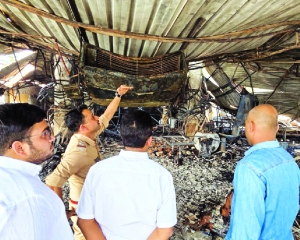
On November 10th , after a decade, India experienced its first terror attack on its heartland, starting from the capital, which killed 13 and injured more than 20. The largest bomb strike in India since the 2006 Mumbai train bombings has nearly blurred the red lines of terror against India. The bomb blast at the Red Fort must be seen as a serious warning or sign of upcoming dangers for India, as it indicates multiple significant pattern shifts in the terror cycle against India and possibly a new beginning of jihad against India.
The Shift
There are three shifts worth noting after the horrific terror incident in Delhi. First, terror gloves are off now, which shows the audacity to strike India in its heartland — a dangerous stance that was prominent from the early to mid-2000s, diminished after 2014, and shifted focus to Kashmir. Second, the tone and nature of terror modules have also undergone a major change. Earlier, the pattern was direct, with terror outfits and their splinter groups directly recruiting and carrying out attacks with full responsibility. Third: complexity and silence-until now, no terror outfit has claimed responsibility for the Red Fort terror attack, which is a troubling shift — indicating an increasing depth of subversive terrorism aimed at staging both direct and indirect attacks through multiple methods — sabotage, institutional infiltration, front groups, kidnappings, assassinations, etc. The shift may resemble what LeT-supported Indian Mujahideen and SIMI did, where radicalisation focused on youth and students who formed the core of IM and SIMI.
Both terrorist groups targeted urban areas and used high-impact serial blasts to create shock. The SIMI group had about 90 per cent of its members as students with bachelor’s degrees, supporting Osama bin Laden’s goals through radical social activities such as violence and protests. The main factor that drove SIMI, an organisation historically established for religious education and reform, towards more terror and extremist activities was fractured communal lines and some external inspiration from the 1979 Iranian revolution, rejecting secularism and democracy. However, after the government banned SIMI, it received support from external terror groups such as LeT and the Bangladesh-based Harkat-ul-Jihad, which later contributed to the formation of the Indian Mujahideen in 2003, two years after the ban on SIMI. This led to a phase of indirect attack methods, where the main outfit enabled strikes by indirectly facilitating bombings. The infamous ISI Karachi Project involved LeT and other terror groups training Indian youth to carry out terror attacks in India. The modus operandi was to train these youths through brainwashing and operational training with IEDs, then facilitate their movement to major cities and wait for instructions to carry out bomb strikes. Interestingly, they were taught how to construct IEDs using locally available materials to avoid leaving a clear trail of Pakistani involvement, giving Pakistan a chance at plausible deniability and creating a band of radicalised Indian youths, especially Muslims.
This indirect method — the Karachi Project-became a nightmare for India from 2005 to 2010, leading to bombings in Jaipur, Pune, and Ahmedabad. The case of Sayed Zabiuddin Ansari, aka Abu Hamza, who was Indian-born in Maharashtra, played a role in planning the 26/11 attacks, especially teaching Hindi to terrorists and giving them instructions through VoIP. Another interesting case is Yasin Bhatkal, who was born in Karnataka and later became a prominent figure and co-founder of Indian Mujahideen. Bhatkal played a key role in carrying out a series of bombings, including the 2011 Mumbai bomb blasts, 2012 Pune, and 2013 Hyderabad blasts. This indirect method involved spotters who identified uneducated youth and some educated individuals, exploiting communal fault lines to brainwash them, which mainly involved blue-collar workers. The cases of Bhatkal and Ansari are examples of blue-collar individuals, as both of them did not complete their education.
The Dangerous Shift
Perhaps for the first time in India’s terror landscape, a complete group of white-collar recruits with full professional degrees and skillsets has carried out a bomb strike. The emergence of white-collar terror could signal another shift from Pakistan’s ISI. This shift involves a
hybrid of indirect and inspired methods, where online propaganda and training by terror outfits like Jaish and LeT motivate self-radicalised individuals to carry out attacks, especially lone-wolf attacks.
The case of four doctors, one of whom carried out a bomb strike near the Red Fort, indicates a pattern more aligned with inspired terror, but it also includes some indirect elements, such as establishing contact with certain outfits, Kashmiri terror modules’ top commanders, and facilitating support from outside if some reports are to be believed. However, what is concerning is the strike pattern, which leans more towards inspired methods. If this inspired method develops further, it could trigger a wave of lone-wolf attacks. An example is the 2016 Nice attack. Though the perpetrator, Mohamed Lahouaiej-Bouhlel, acted on his own, ISIS later claimed responsibility for his actions.
Conversely, there is the 7 April 2017 truck attack in Stockholm, Sweden, where a similar vehicle-ramming incident occurred. In this case, ISIS did not claim responsibility for the self-radicalised man’s attack. The organisation was under intense pressure at that time, and US-led coalition forces had significantly damaged its presence and capabilities; by the end of the year, ISIS was defeated in Iraq.
Pakistan’s New Terror Plan
Pakistan’s ISI may have transformed its informal Karachi Project into a more advanced and intricate operation, potentially denying involvement and remaining concealed during terror attacks in India through this new initiative. The hybrid approach of indirect and inspired tactics could enhance terror groups’ capacity for subversive activities by targeting more professional and skilled operatives to maintain cover and infiltrate institutions. Most concerningly, it provides a range of strike options, from bombings to lone-wolf attacks. The modus operandi would be simple-execute a strike, avoid claiming responsibility, and spark a wave of radicalism in India, rekindling the nightmare that IM once caused, but this time with minimal human or direct terror network involvement, thus sidestepping India’s large-scale retaliatory measures. While much remains to be understood and determined about this potential shift and new terror module, India must consider strategies beyond kinetic operations and focus on non-kinetic counter-terrorism methods to prevent, counter, and address the conditions enabling terrorism.
Abhinav is an advocate and columnist, and Srijan is a national security analyst; views are personal