




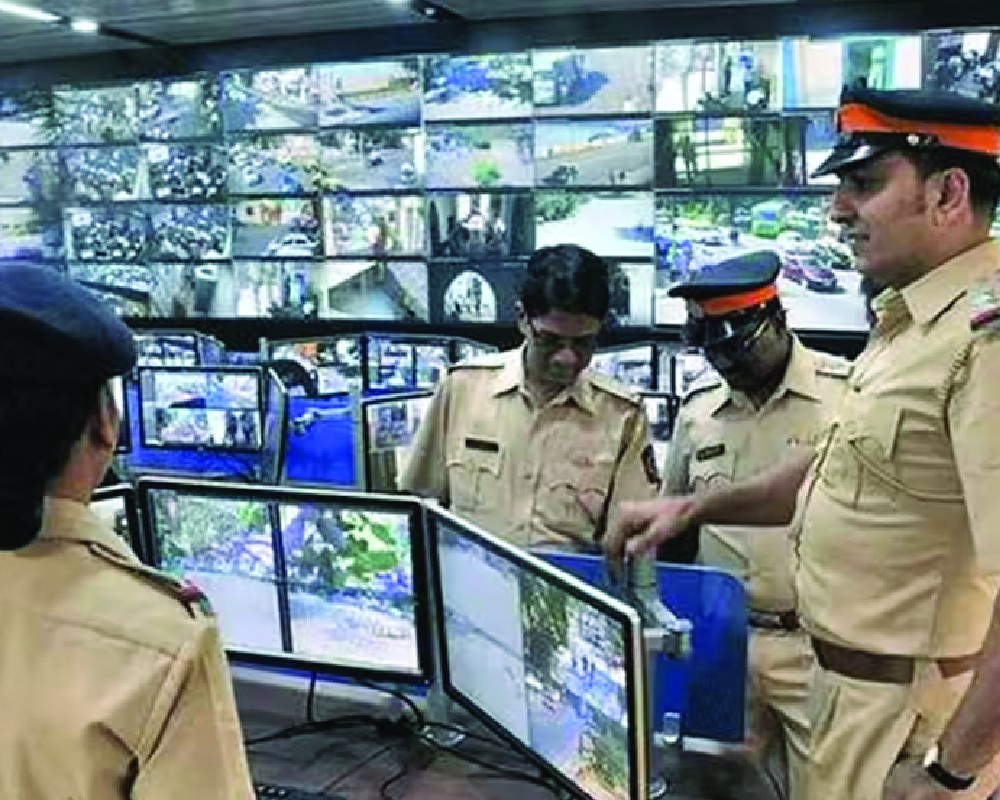
The Supreme Court of India’s recent intervention into the disturbing pattern of custodial deaths has revived a long-standing and uncomfortable debate: Why does custodial violence persist despite decades of judicial directions, committees, and constitutional safeguards? On September 4, 2025, a Bench comprising Justices Vikram Nath and Sandeep Mehta registered a suo motu Public Interest Litigation (PIL) after taking cognisance of a Dainik Bhaskar report revealing that 11 people had died in police custody in Rajasthan in just the first eight months of 2025. The trigger was not only the shocking number but also the wider pattern of deliberate non-compliance with directives mandating CCTV surveillance in police stations across India. For years, courts have emphasised that CCTV cameras are not optional but essential tools for ensuring transparency, curbing torture, and upholding constitutional rights. Yet, police stations across states continue to function without operational cameras, or worse, with cameras that are conveniently “faulty” or whose footage is “unavailable.” According to media reports, police routinely withhold CCTV footage in custodial death cases, citing technical glitches, storage issues, ongoing investigations, or legal barriers. These excuses have created fertile ground for impunity, where the monitor of oversight-the CCTV camera-is neutralised precisely when accountability is most needed.
This is not the first time the Supreme Court has intervened. Earlier rulings — DK Basu, Paramvir Singh Saini, and Shafhi Mohammad-laid down clear and mandatory directions for installing functional video and audio surveillance in police stations. In 2020, the Court issued detailed guidelines requiring uniform installation across all states and Union Territories. It even made Station House Officers personally responsible for maintaining CCTV systems, preserving recordings, and ensuring timely repairs. Yet, five years later, the Court has been forced to confront the same systemic neglect. During the hearing on November 25, 2025, the Supreme Court minced no words: “Custodial violence and deaths are a blot on the system. This country will not tolerate this practice. You cannot have deaths in custody.” The Court demanded compliance affidavits from all states and Union Territories, posting the matter for further hearing on December 16, 2025. Its concern stems from the constitutional premise that surveillance in police stations is a fundamental safeguard-an obligation, not a discretionary administrative decision. High Courts have echoed similar concerns.
In Akhilesh Pandey v. State of Madhya Pradesh (2018), the Madhya Pradesh High Court warned that failure to provide full CCTV coverage in any police station would be treated as contempt of court. This, however, has done little to change the ground reality. The disconnect between judicial directives and executive action has allowed custodial violence to fester. India’s struggle with custodial brutality is not new. In 1997, the Supreme Court in D.K. Basu recognised custodial torture as an assault on the rule of law.
In later cases-Shafhi Mohammad (2018) and Paramvir Singh Saini (2021)-the Court expanded guidelines, with Justice Rohinton Nariman stressing that installing CCTV cameras was a constitutional necessity rooted in Articles 21 and 22. Yet, the implementation remains half-hearted, largely because custodial violence thrives in opacity, and the state machinery shows little urgency to disrupt this culture. The judiciary’s frustration draws from a long history of ignored reform efforts. From the National Police Commission reports (1977-81) to the Ribeiro and Padmanabhiah Committees, from the Malimath Committee to the landmark Prakash Singh judgment of 2006, India has been inundated with recommendations for transforming the police from a “force” to a “service.”
Despite this, real change has remained elusive. Justice AN Mulla’s searing 1961 remark that no group in India matches the police force’s record of lawlessness-though later expunged-continues to resonate with uncomfortable accuracy. Recent events have only reinforced these concerns. During the COVID-19 lockdowns, countless videos surfaced showing policemen mercilessly beating civilians, including pregnant women and elderly citizens. Such images laid bare the deep-seated culture of unrestrained power. One of the most horrifying examples remains the 2020 Sathankulam case in Tamil Nadu, where the CBI charge sheet revealed the savage torture of 59-year-old P. Jeyaraj and his 31-year-old son, J. Bennicks. Over seven hours, police personnel stripped, beat, and humiliated the father-son duo, forcing them to clean their own blood from the floor. Despite Jeyaraj’s pleas, citing diabetes and high blood pressure, the brutality continued until both men succumbed to their injuries. Their clothes were drenched in blood to such an extent that police officers had to change their uniforms twice before presenting them in court. The investigation also exposed medical negligence-Dr Vinila, who examined them, failed to document their injuries or provide medical support that might have saved their lives. This case stands as a grim reminder that custodial torture is not an aberration but a structural crisis embedded in policing culture. CCTV cameras alone cannot eradicate it, but they can act as a crucial deterrent-if the system allows them to function. The Supreme Court’s recent intervention is not merely a legal exercise; it is a moral reckoning. India cannot claim to be a constitutional democracy while allowing citizens to be brutalised behind closed doors. The real test now is whether states will finally act-or whether custodial deaths will continue to be treated as tragic but inevitable statistics. The nation’s conscience demands more than compliance affidavits; it demands genuine accountability.
The writer is a legal expert and author; views are personal