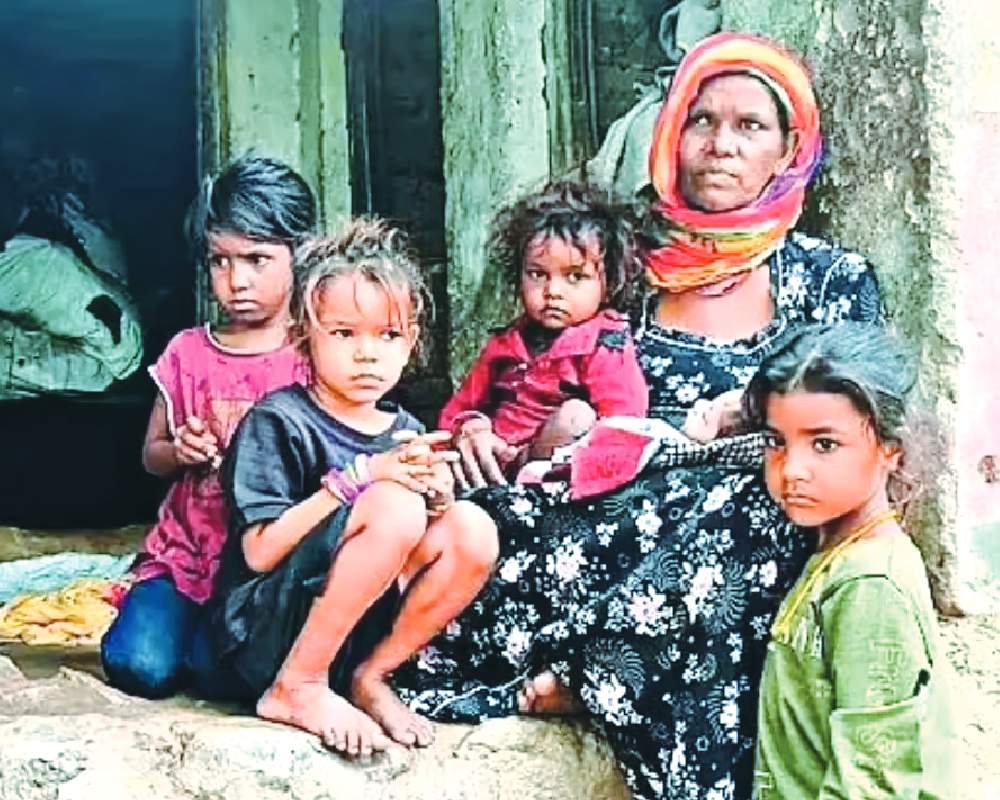
The community health centre in Jhadol, Rajasthan, was recently in the news for a startling reason. It was here that Rekha Galbelia, a 55-year-old tribal woman, gave birth to her 17th child. Not only were the doctors taken aback by Galbelia’s multiple pregnancies and deliveries, it led the health department to flag high fertility rates among residents of tribal villages in southern Rajasthan as the primary challenge in population stabilisation. They also pointed out that multiple pregnancies among tribal women of the region were increasing maternal and neonatal health risks.
Luckily for Galbelia, she overcame the risks associated with pregnancy at a late age. But five of the 17 children she gave birth to over the years were not so fortunate, dying shortly after their birth. At 28.8 deaths per 1,000 live births, neonatal mortality, or the proportion of children dying in their first month after birth, is higher among the tribal population than the national average of 24.9. Poor or no access to healthcare and skilled health professionals, a lack of sexual and reproductive health information, and poverty are the leading causes of mortality.
Did Galbelia or her husband Kanvara, who has taken a loan to feed his large family, have access to family planning services? Was Galbelia aware of safe abortion services she could have accessed if the pregnancy was unintended or unwanted? Did she go through the high-risk pregnancy because the couple did not have the resources to fund the costs of the procedure? Or was it also because of the stigma associated with abortion?
Studies have shown that when women are able to make an informed choice, there is a dip in maternal and neonatal health risks and mortality. This is where the media can play a crucial role. Not only can it help in busting misconceptions and stigma related to abortion, it can disseminate news that can help women make an informed choice. Importantly, it can highlight how such services can be life-saving for women. It was the media coverage of Savita Halappanavar, who died in 2012 after she was denied an abortion in Ireland despite pregnancy difficulties, that led to a public demand for a referendum on Ireland’s restrictive abortion laws. This collective action helped to reform the laws and advance sexual and reproductive health and rights (SRHR).
Knowledge is power, and reporting on innovative campaigns raising SRHR awareness can challenge stigmatisation and normalise abortion as an integral part of reproductive rights and choice. The media can help to connect many dots by sharing good practices around the world.
Just as women and health activists in India can learn from successful advocacy and litigation strategies by PROMSEX, an NGO in Peru, to tackle abortion misconceptions, or from Colombian NGO Profamilia, on how they worked with both medical and administrative staff to address abortion stigma, activists in other countries can take inspiration from how Indian NGO Hidden Pockets Collective’s understanding of local social media behaviours and music preferences resulted in the use of Bollywood-style music videos, which helped to raise awareness of the right to sexual and reproductive health services, including respectful, affordable and safe abortion. Similarly, Asia Safe Abortion Partnership in India has used an animated short film on social media channels to put a face to the sensitive issue.
The purpose of using animation was to help reduce the stigma against abortion, pregnancy and sex, and share anecdotal evidence to bust myths.
Cross-country learnings can be especially useful in the present environment where pronatalism is on the rise. Demands for women to have more children are being made not just in Europe, which is seeing declining populations, but also in India, the most populated country in the world. In this scenario, there is greater pressure on women who may not want children. Further, reduced SRHR funding and the overturning of the Roe vs Wade judgment by the US Supreme Court in 2022, restricting access to safe and legal abortion, have had domino effects all over the world. Even in India, where abortion is legal, the cacophony against abortion has grown bolder and louder. Denial of such services is leading women to resort to herbal concoctions and painful physical methods like inserting sticks in the uterus to terminate the pregnancy. Such methods are not only unsafe and ineffective but fatal at times, with women being admitted for severe internal injuries and sepsis.
Almost 67 per cent of abortions in India are unsafe, underlining why sustained media engagement on gender equality and the human right to health is imperative. In this context, the SHE (Sexual Health with Equity and Rights) media initiative launched in September last year has been doing stellar work in bringing together civil society practitioners, activists and journalists to work together to disseminate informed and accurate reports on sexual and reproductive health rights.